Table of Contents
Deadly Highway Accident Shocks Eastern Afghanistan
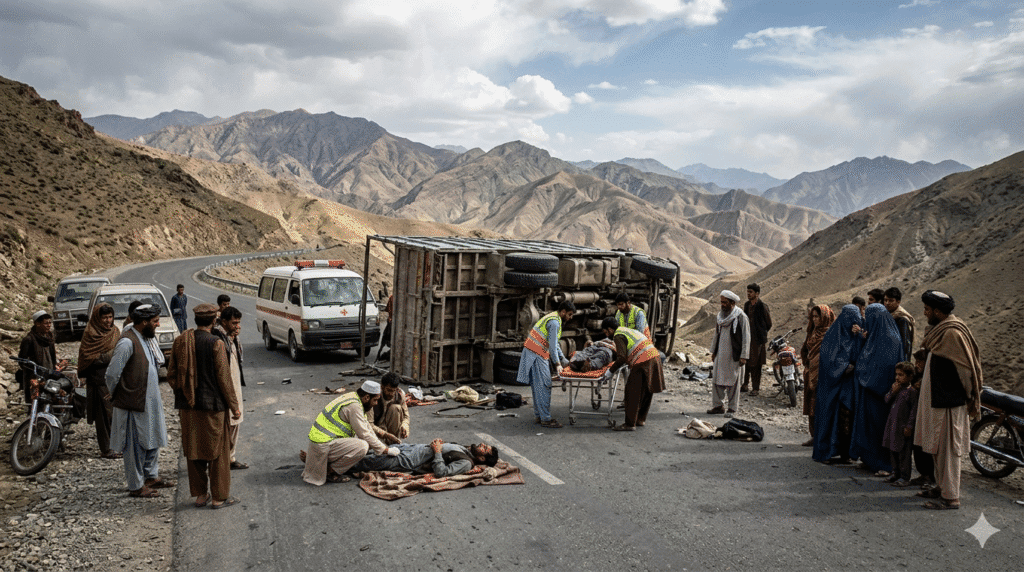
A devastating Afghanistan truck crash has claimed the lives of 18 people, including 10 children, after a vehicle carrying Afghan families returning from Pakistan overturned on a major highway in eastern Afghanistan. The tragic accident occurred on Saturday along the route connecting Jalalabad and Kabul, one of the country’s busiest transportation corridors.
Provincial officials confirmed that the truck was transporting families who had recently crossed back into Afghanistan after living in neighboring Pakistan. In addition to those killed, at least 29 people were injured and rushed to nearby medical facilities for treatment.
The incident highlights the ongoing challenges facing thousands of Afghan families returning home amid changing migration policies in Pakistan. It also underscores persistent concerns about road safety in Afghanistan, where traffic accidents continue to cause significant loss of life each year.
What Happened on the Jalalabad-Kabul Highway?
According to local authorities, the truck overturned while traveling along the road connecting Jalalabad, a major city in eastern Afghanistan, with the national capital, Kabul. The exact cause of the accident remains under investigation, but officials believe the vehicle may have lost control on a difficult stretch of roadway.
Abdul Malik Niazay, spokesperson for the governor of Laghman province, confirmed the death toll and provided details about the victims.
The victims included:
- 10 children.
- Five women.
- Three men.
- Twenty-nine injured passengers.
Emergency teams responded quickly to the scene, but the severity of the crash left many passengers trapped inside or beneath the overturned vehicle. Witnesses described chaotic scenes as rescuers worked to pull survivors from the wreckage.
The accident has drawn attention across Afghanistan, where families continue to grapple with economic hardship, displacement, and limited transportation infrastructure.
Afghan Families Returning From Pakistan
The passengers involved in the crash were reportedly among the growing number of Afghan nationals returning from Pakistan. In recent months, Pakistan has intensified efforts to regulate undocumented migrants and refugees, leading many Afghan families to return to their homeland.
Many returnees travel long distances carrying personal belongings and household items, often using overcrowded trucks and buses due to limited transportation options and financial constraints.
Humanitarian organizations have expressed concern about the conditions under which many families are making these journeys. Large groups frequently travel through difficult terrain while facing limited access to healthcare, shelter, and transportation services.
For many returning families, the journey itself has become one of the most dangerous parts of the migration process.
Pakistan’s Migration Policies Drive Return Movement
The flow of Afghan returnees has increased significantly since Pakistan adopted stricter measures regarding migrants and refugees. Authorities have expanded efforts to identify and repatriate individuals without legal documentation, resulting in a substantial movement of people back into Afghanistan.
According to figures released by international organizations, hundreds of thousands of Afghans have returned from Pakistan since the beginning of the year.
The return process presents significant challenges for both countries. Pakistan faces domestic pressures related to migration management, while Afghanistan continues to struggle with limited resources needed to absorb large numbers of returning citizens.
Many returnees arrive with few financial resources and face uncertainty regarding employment, housing, education, and access to essential services.
Road Safety Remains a Major Challenge in Afghanistan
The latest tragedy is part of a broader pattern of deadly road accidents across Afghanistan. Traffic collisions remain one of the country’s most persistent public safety concerns.
Several factors contribute to the high number of traffic-related deaths:
- Poorly maintained roads.
- Limited transportation infrastructure.
- Overloaded vehicles.
- Dangerous driving practices.
- Weak enforcement of traffic regulations.
- Mountainous and challenging terrain.
Decades of conflict have damaged much of Afghanistan’s infrastructure, leaving many roads in poor condition. In rural areas, narrow highways and inadequate safety measures increase the risks faced by drivers and passengers.
Public transportation options are often limited, leading many people to rely on trucks and informal transport services that may not meet modern safety standards.
Previous Fatal Accidents Highlight Ongoing Risks
This is not the first major transportation disaster involving Afghan migrants returning home. In August of the previous year, a catastrophic collision involving a bus carrying Afghan migrants returning from Iran resulted in the deaths of 78 people, including 19 children.
That incident was among the deadliest traffic accidents recorded in Afghanistan in recent years and prompted calls for stronger transportation safety measures.
Despite such tragedies, progress has been slow due to financial constraints, infrastructure challenges, and ongoing security concerns in various parts of the country.
The recurrence of these incidents has raised questions about the safety of long-distance travel routes used by returning migrants and displaced populations.
Humanitarian Concerns Grow as Return Numbers Rise
The increasing number of Afghans returning from neighboring countries is creating new humanitarian pressures. International aid agencies have warned that large-scale population movements require coordinated support to ensure safe transportation, temporary shelter, healthcare, and social services.
Many returning families arrive after years or even decades of living abroad. Children often face challenges integrating into local schools, while adults struggle to find stable employment opportunities.
Transportation safety has become an important part of broader discussions surrounding migrant returns. Humanitarian experts argue that safer travel arrangements and improved infrastructure could help reduce the risks facing vulnerable families during their journeys.
The latest crash serves as a reminder that migration-related challenges extend beyond border crossings and continue long after families begin their return home.
Impact on Communities and Families
The loss of 18 lives, particularly the deaths of 10 children, has deeply affected communities both in Afghanistan and among Afghan diaspora populations abroad. Many of the victims were reportedly traveling with relatives as they attempted to rebuild their lives after returning from Pakistan.
For survivors and family members, the tragedy represents not only a devastating personal loss but also a setback during an already difficult period of transition and uncertainty.
Local officials have expressed condolences to the affected families and pledged support for those injured in the accident. Medical teams continue to monitor the condition of the wounded, some of whom reportedly sustained serious injuries.
Calls for Improved Transportation Safety
The deadly Afghanistan truck crash is likely to renew calls for stronger transportation regulations, improved road infrastructure, and safer travel conditions for returning migrants. Experts argue that reducing road fatalities will require long-term investment in highways, vehicle inspections, driver training, and emergency response systems.
As the number of returning Afghan families continues to rise, ensuring their safety during transit remains a critical challenge. The tragedy on the Jalalabad-Kabul highway serves as a stark reminder of the dangers many families face while seeking a new beginning in their homeland.
While investigations into the cause of the crash continue, the incident has once again highlighted the urgent need for improved road safety measures and stronger support systems for vulnerable populations traveling across Afghanistan.