Table of Contents
Satellite Images Reveal Massive Expansion Near China’s Nuclear Missile Sites
The scale of China’s expanding nuclear infrastructure is drawing renewed global attention after newly reviewed satellite images revealed more than 80 launch pads and several large military installations near the country’s nuclear missile facilities. The discovery has intensified concerns among security experts and Western governments about the pace of China’s military modernization and its long-term strategic ambitions.
The latest findings indicate that Beijing is significantly strengthening the infrastructure supporting its land-based nuclear forces. Analysts believe the construction project is designed to improve China’s ability to maintain a credible nuclear deterrent while protecting key military assets against potential attacks.
The revelations come as tensions between China and the United States continue to rise over regional security, military competition, and Taiwan, placing China’s nuclear strategy under increasing international scrutiny. The satellite imagery has provided one of the clearest indications yet of how rapidly Beijing is expanding and modernizing its strategic military capabilities. :contentReference[oaicite:0]{index=0}
What the Satellite Images Reveal
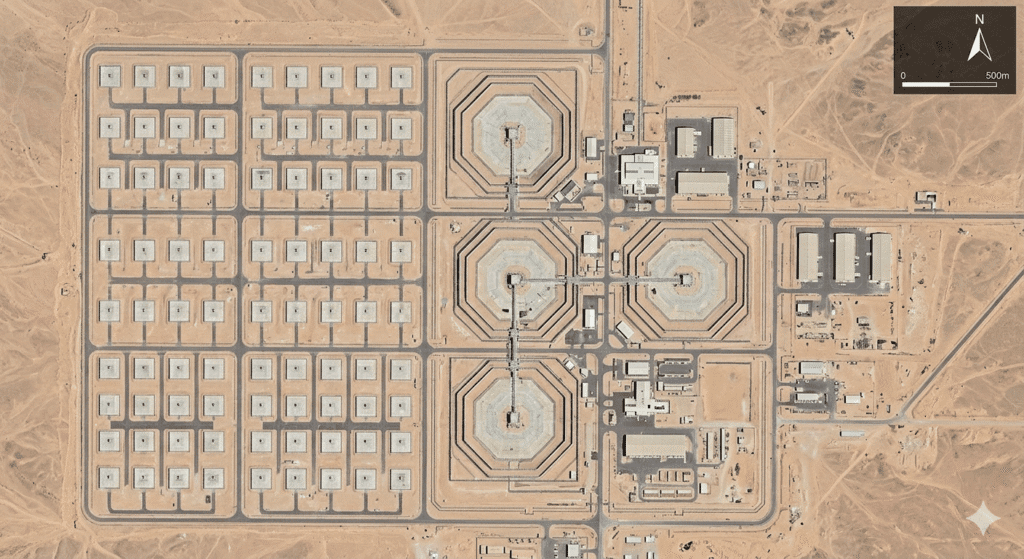
According to security analysts who reviewed the satellite imagery, China has constructed more than 80 launch pads near the Hami nuclear missile silo field located in the country’s remote northwestern desert region. The images also show three large octagon-shaped military facilities believed to support command operations, communications systems, and electronic warfare capabilities.
The infrastructure extends across thousands of square kilometers and appears to form a highly coordinated military network designed to strengthen operational readiness and strategic survivability.
Analysts believe the facilities may support:
- Mobile missile launch operations.
- Air-defense systems.
- Electronic warfare capabilities.
- Military communications networks.
- Command and control operations.
- Nuclear force protection infrastructure.
The sheer scale of the project has surprised many experts who have spent years monitoring global nuclear programs. Several analysts described the construction effort as one of the most ambitious military infrastructure projects currently underway anywhere in the world. :contentReference[oaicite:1]{index=1}
Why China’s Nuclear Expansion Matters
China already possesses intercontinental ballistic missiles capable of reaching targets across the globe, including the continental United States. However, the newly discovered facilities suggest Beijing is focusing not only on missile development but also on ensuring the survivability of its nuclear forces during potential conflicts.
A central objective appears to be strengthening what military strategists refer to as a second-strike capability. This concept refers to a nation’s ability to launch a nuclear response even after sustaining an initial attack.
For nuclear powers, maintaining a reliable second-strike capability is considered essential for deterrence. If a country’s nuclear forces can survive a first strike, potential adversaries may be less likely to launch an attack in the first place.
China has consistently maintained that its nuclear doctrine is defensive in nature. Beijing officially follows a “no first use” policy, stating that nuclear weapons would only be used in response to a nuclear attack. Nevertheless, rapid infrastructure growth has generated questions about the future direction of China’s strategic planning.
Pete Hegseth Warns of Growing Regional Concerns
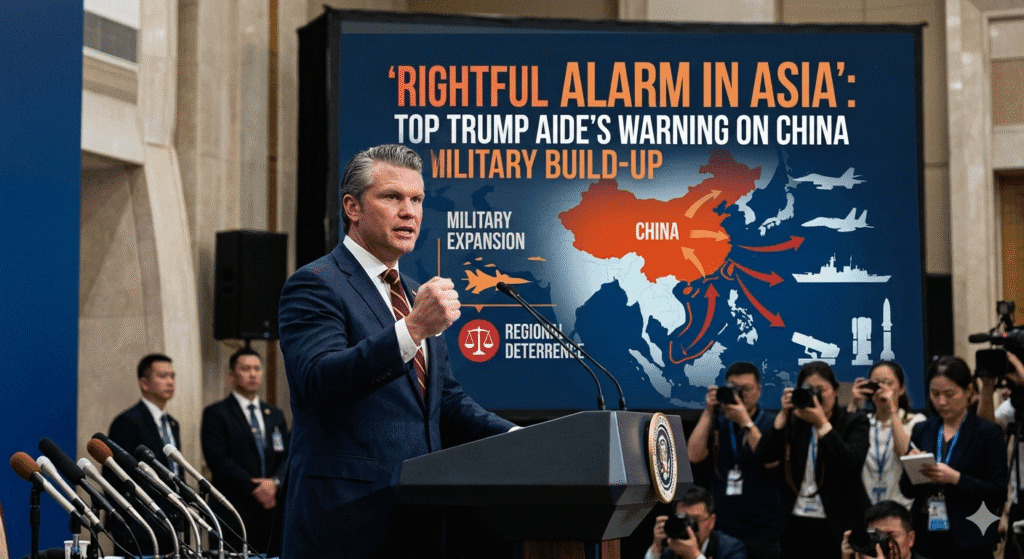
The satellite findings emerged alongside fresh comments from US Defense Secretary Pete Hegseth during the Shangri-La Dialogue security summit in Singapore.
Hegseth stated that countries across the Indo-Pacific are increasingly concerned about China’s military expansion. He described the military build-up as a source of “rightful alarm” throughout the region while emphasizing that Washington does not seek unnecessary confrontation with Beijing.
His remarks reflected growing concern among US allies regarding China’s expanding military reach, both within the Indo-Pacific region and beyond. Governments across Asia have closely monitored China’s naval expansion, missile development programs, and military modernization efforts over the past decade.
The Pentagon has repeatedly argued that maintaining a stable balance of power remains essential for preserving regional security and economic stability.
The Strategic Importance of the Hami Missile Silo Field
The Hami missile silo field has become one of the most closely watched military sites in China. Located in a remote desert region, the facility forms a key component of Beijing’s land-based nuclear deterrent.
Experts note that missile silos remain central to China’s strategic defense structure despite advancements in submarine-launched and air-based nuclear capabilities. Fixed missile installations provide reliable deployment options while supporting command and control systems necessary for deterrence operations.
The newly identified infrastructure appears specifically designed to strengthen operational flexibility around these missile fields. Mobile launch pads and defensive installations could complicate efforts by adversaries to neutralize China’s nuclear forces during a conflict.
Such developments suggest Beijing is investing heavily in protecting critical military assets while expanding the overall resilience of its nuclear command structure.
Taiwan Remains a Key Source of Tension
The growing focus on China’s military modernization cannot be separated from ongoing tensions surrounding Taiwan. The self-governed island remains one of the most sensitive issues in relations between Beijing and Washington.
China considers Taiwan part of its territory and has repeatedly stated that reunification remains a national objective. Taiwan, however, continues to operate independently with its own democratic institutions and government.
Western governments and regional allies have expressed concern that military modernization could provide Beijing with greater leverage during future crises involving Taiwan. Some analysts argue that expanding nuclear capabilities may serve as a strategic deterrent against foreign intervention in a potential conflict scenario.
As tensions over Taiwan continue, military developments on both sides are being monitored closely by governments around the world.
Global Security Experts React to the Findings
The newly revealed infrastructure has attracted attention from defense experts, intelligence analysts, and policymakers worldwide.
Several security specialists noted that while the United States and Russia maintain larger nuclear arsenals, the scale and design of China’s infrastructure expansion appear unusually ambitious. The combination of launch pads, defensive systems, communications networks, and command facilities points toward a comprehensive modernization effort rather than isolated upgrades.
Analysts have also highlighted concerns regarding transparency. Western governments have repeatedly requested greater clarity regarding China’s nuclear strategy, force structure, and future objectives.
However, Beijing has generally provided limited public information regarding the specifics of its nuclear modernization programs, contributing to ongoing uncertainty among international observers.
What This Means for US-China Relations
The latest satellite findings are likely to further complicate an already challenging relationship between the world’s two largest economies.
Military competition has become one of the defining features of US-China relations, alongside disputes involving trade, technology, cybersecurity, and regional influence. As both nations continue investing heavily in defense capabilities, concerns over strategic stability are becoming increasingly important.
Defense experts warn that misunderstandings or miscalculations between major powers could increase risks during periods of heightened geopolitical tension. This is why military communication channels and diplomatic engagement remain critical despite growing rivalry.
The expansion of China’s nuclear infrastructure will likely remain a major topic in future security discussions between Washington and Beijing.
The Future of Strategic Competition in Asia
The discovery of more than 80 launch pads and extensive military infrastructure near China’s nuclear missile sites underscores the broader transformation taking place across the Indo-Pacific security landscape.
As China continues expanding its strategic capabilities, neighboring countries and global powers are reassessing defense priorities, alliance structures, and long-term security planning. The developments also highlight the growing importance of military technology, deterrence strategies, and regional stability in shaping international relations.
While China maintains that its nuclear policy remains defensive, the pace and scale of construction revealed by satellite imagery have intensified concerns about the future trajectory of military competition in Asia.
With tensions surrounding Taiwan, expanding defense budgets, and growing geopolitical rivalry between major powers, the region is entering a period of heightened strategic uncertainty. The infrastructure emerging in China’s desert regions may ultimately become one of the defining symbols of a new era in global security competition.