Table of Contents
Diplomatic Breakthrough Still Elusive as Iran and US Send Mixed Signals
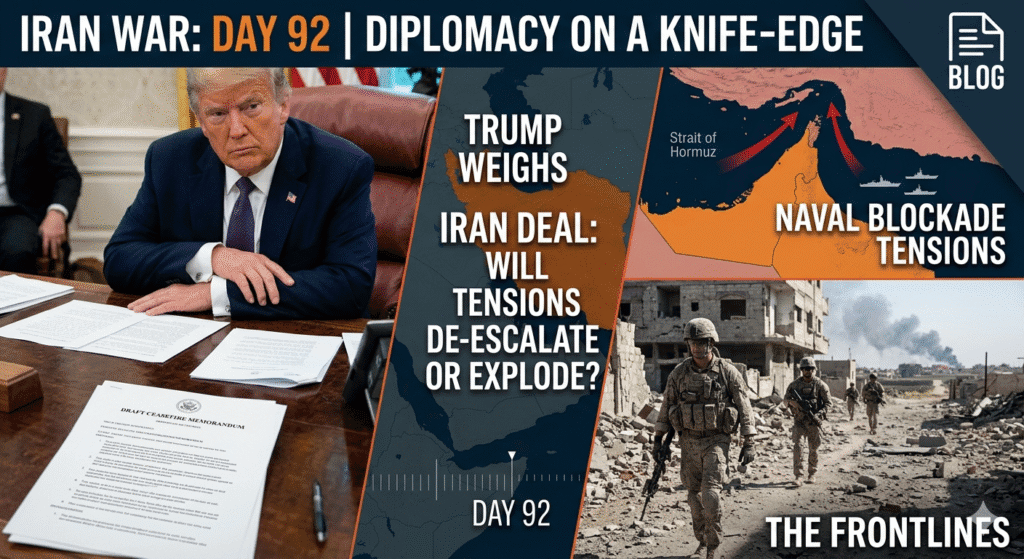
As the Iran war enters its 92nd day, uncertainty continues to surround the prospects of a potential diplomatic breakthrough between Washington and Tehran. United States President Donald Trump has indicated that a final decision on a possible Iran deal could be made soon, but Iranian officials insist that negotiations remain ongoing and that no final agreement has been reached.
The latest developments come at a critical moment for the Middle East, where military operations, diplomatic efforts, and regional security concerns remain deeply intertwined. While discussions between the United States and Iran continue behind closed doors, fighting across neighboring countries has highlighted the fragile security environment facing the region.
Statements from both governments suggest that significant gaps remain despite weeks of intensive diplomatic engagement. The uncertainty has left regional allies, global energy markets, and international observers waiting for clarity on what could become one of the most consequential diplomatic agreements of Trump’s presidency.
Trump Signals Decision Could Be Near
Speaking after high-level discussions at the White House, President Donald Trump suggested that a final determination regarding negotiations with Iran could be made in the near future. However, officials have provided few details regarding the specific terms under discussion.
The administration’s approach has focused on securing guarantees related to regional security, military activity, and Iran’s strategic capabilities. Trump has repeatedly emphasized that the United States remains committed to preventing Iran from developing a nuclear weapon while also seeking greater stability throughout the Middle East.
Despite those objectives, uncertainty remains over whether both sides have moved close enough to reach a mutually acceptable agreement. Observers note that previous rounds of negotiations have often been complicated by disagreements over enforcement mechanisms, sanctions, and verification procedures.
Iran Rejects Claims of a Final Agreement
Iranian officials have pushed back against suggestions that negotiations have reached a final stage. Foreign Ministry spokesperson Esmaeil Baghaei stated that discussions with Washington continue but stressed that Tehran does not consider any agreement finalized.
According to Iranian leaders, future decisions will be based on concrete actions rather than political statements. Tehran has also maintained its opposition to what it describes as pressure-based diplomacy, arguing that trust can only be built through practical measures.
Mohammad Bagher Ghalibaf, one of Iran’s key figures involved in the diplomatic process, echoed those concerns. He emphasized that Iran expects tangible changes before committing to any major concessions.
This position reflects a broader strategy that has defined Tehran’s approach throughout recent negotiations. Iranian officials have consistently argued that previous agreements failed because commitments were not fully implemented by all parties involved.
Regional Security Concerns Continue to Shape Negotiations
Even as diplomatic discussions continue, military activity across the region remains intense. Security analysts believe ongoing conflicts are influencing both the pace and substance of negotiations between Washington and Tehran.
US Central Command recently reaffirmed that American forces remain active throughout the Middle East. Images released by CENTCOM showed fighter aircraft conducting patrol operations, signaling that the United States continues to maintain a significant military presence despite ongoing diplomatic efforts.
The military posture reflects concerns that any breakdown in negotiations could trigger further instability. Regional waterways, energy infrastructure, and strategic shipping routes remain particularly sensitive issues.
Strait of Hormuz Remains a Key Factor
One of the most closely watched developments involves the Strait of Hormuz, one of the world’s most important maritime trade routes. A significant portion of global oil exports passes through the narrow waterway, making it critical to international energy markets.
Analysts suggest that any easing of restrictions or security concerns around the strait could be interpreted as a positive signal regarding diplomatic progress. Conversely, continued tensions could have immediate implications for oil prices and global supply chains.
The strategic importance of the Strait of Hormuz means that developments there are often viewed as a barometer of broader US-Iran relations.
Pentagon Pushes Stronger Defense Commitments
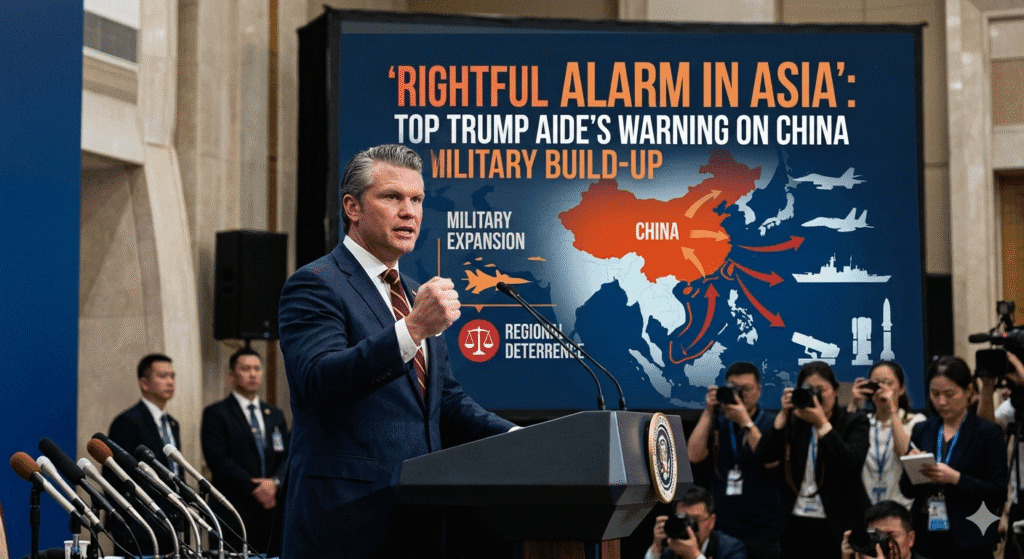
While discussions with Iran continue, US Defense Secretary Pete Hegseth used the Shangri-La Dialogue in Singapore to outline Washington’s broader security priorities.
Hegseth announced plans for substantial defense investments and urged allies to increase military spending. He argued that a stronger collective security framework is necessary to address emerging threats across multiple regions.
The comments highlighted the administration’s dual-track approach: pursuing diplomacy where possible while maintaining strong military deterrence capabilities.
Israel and Lebanon Add New Complications
The broader regional picture remains complicated by continuing hostilities between Israel and Lebanon. Israeli Prime Minister Benjamin Netanyahu announced that Israeli forces had advanced beyond the Litani River, marking a significant development in ongoing military operations.
Meanwhile, reports of casualties from Israeli strikes across southern Lebanon have intensified international concerns about the potential for wider escalation. Air raid sirens also sounded in northern Israel following projectile launches from Lebanon, underscoring the persistent security challenges facing both sides.
These developments create additional pressure on diplomatic efforts involving Iran, as many regional conflicts remain interconnected through broader geopolitical rivalries.
Why the Outcome Matters Globally
The outcome of the current negotiations extends far beyond the United States and Iran. Energy markets, international trade routes, regional alliances, and global security calculations could all be affected by the success or failure of a potential agreement.
For global investors, a diplomatic breakthrough could reduce uncertainty and ease concerns about energy supply disruptions. For regional governments, an agreement could provide an opportunity to lower tensions and focus on economic development.
However, failure to reach an understanding could increase the risk of further instability, potentially affecting markets and security conditions well beyond the Middle East.
What Happens Next?
As the Iran war reaches day 92, the coming days could prove decisive. President Trump has suggested a final determination may be approaching, but Iranian officials continue to caution against expectations of an imminent breakthrough.
With military operations continuing across the region and diplomatic channels still active, uncertainty remains the defining feature of the current situation. The decisions made in Washington and Tehran over the coming weeks will likely shape the next phase of Middle Eastern geopolitics and influence international security discussions for months to come.
For now, the world continues to watch closely as negotiations proceed, waiting to see whether diplomacy can succeed where confrontation has repeatedly failed.