A devastating Grand Canyon flash flood has resulted in the death of one person and left approximately 15 individuals missing or unaccounted for, according to the National Park Service (NPS). The sudden and powerful torrent of water swept through popular hiking areas, causing extensive damage and prompting a large-scale emergency response within one of America’s most iconic national parks. The incident has highlighted the inherent dangers of the canyon’s dynamic environment, particularly during periods of intense rainfall.
QUICK OVERVIEW TABLE
| Detail | Information |
|---|---|
| Event | Flash Flood |
| Location | Bright Angel Canyon, Phantom Ranch area, Grand Canyon National Park |
| Latest Status | One confirmed fatality, approximately 15 missing/unaccounted for. Search and rescue ongoing. |
| Main Concern | Safety of missing individuals, ongoing damage assessment, potential for further flooding. |
| Official Response | NPS conducting search and rescue, airlifting stranded individuals, closing trails and facilities. |
What Happened?
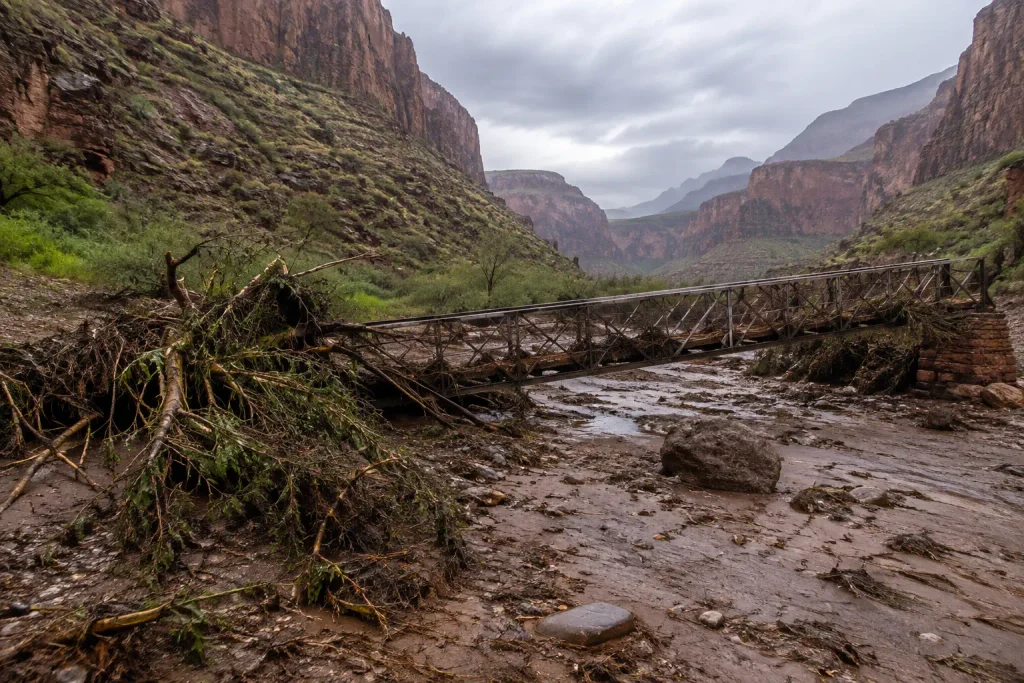
On Saturday afternoon, a sudden and powerful flash flood struck the Bright Angel Canyon and the Phantom Ranch area, located at the bottom of the Grand Canyon. Eyewitnesses described a rapid and “terrifying” surge of water that quickly overwhelmed the normally tranquil environment. The floodwaters were strong enough to wipe out footbridges crucial for hikers and propel large boulders downstream, dramatically reshaping parts of the canyon floor.
The incident triggered an immediate emergency response from the National Park Service. Among those caught in the deluge was Nikki Baggs, 41, who recounted her harrowing experience after being airlifted to safety with her two friends. Baggs described a scene of chaos, with people screaming and running for higher ground as the floodwaters rapidly advanced. Her group, initially planning a steak dinner at Phantom Ranch, found themselves scrambling to safety, eventually waiting for hours on a ledge before their evacuation at around 9:30 PM local time.
Key Facts So Far
- Fatalities: The body of a 46-year-old man was discovered on Sunday evening near Crystal Rapids along the Colorado River, confirmed by the park service to CBS News.
- Missing Persons: While the NPS initially sought information on more than 20 individuals, that number was later revised down to “approximately 15” missing or unaccounted for as search efforts continue.
- Rescues: A total of 62 people have been airlifted out of the affected areas, underscoring the swift and coordinated efforts of park rangers and emergency personnel.
- Damage: The flood caused “significant damage,” including the destruction of footbridges and disruption to the park’s critical water infrastructure.
- Closures: Trails in the affected areas have been closed, and overnight guest lodgings in the South Rim have been halted from Monday until further notice due to the damage.
- Weather Outlook: More thunderstorms and heavy rainfall were forecast for Sunday and Monday, raising concerns about additional flash flooding, debris flows, and rockfall.
Why This Story Matters
This Grand Canyon flash flood is more than just a localized weather event; it underscores the profound power of nature and the inherent risks associated with exploring remote wilderness areas. The Grand Canyon is one of the most visited national parks in the United States, attracting approximately five million people annually, with the Bright Angel trail being its most popular hike. An event of this magnitude in such a heavily trafficked area highlights critical issues of visitor safety, emergency preparedness, and the resilience of park infrastructure against natural forces. The loss of life and the ongoing search for missing individuals cast a somber light on the unpredictable nature of the canyon’s environment, even in seemingly benign weather conditions. For those who visit or plan to, it serves as a stark reminder of the importance of vigilance and adherence to park advisories.
Background: What Led to This?
The Grand Canyon, while appearing arid, is highly susceptible to flash floods, particularly during what is known as the monsoon season in the American Southwest. This period, typically from July through September, brings increased humidity and intense, localized thunderstorms. The canyon’s steep, narrow geological formations act as natural funnels, rapidly channeling large volumes of rainwater into powerful torrents. Even a relatively short burst of heavy rain on the rim can quickly transform dry washes and creek beds at the canyon’s bottom into raging rivers.
Phantom Ranch, situated at the confluence of Bright Angel Creek and the Colorado River, is particularly vulnerable. The creek itself drains a vast area, and sudden rainfall can cause its water levels to rise dramatically and swiftly. Hikers in these low-lying areas often have little time to react once floodwaters begin to gather momentum, making early warning systems and awareness of weather forecasts absolutely critical for safety. This specific event appears to be a direct consequence of such a localized, intense rainfall, typical of the region’s monsoonal patterns.
What Officials Have Said
The National Park Service (NPS) has been at the forefront of the response, providing updates and coordinating rescue efforts. Park officials initially issued a press release seeking information about more than 20 people believed to be missing or unaccounted for. This number was later revised to “approximately 15,” reflecting ongoing assessments and successful airlifts. The NPS has explicitly requested that anyone with knowledge of hikers or backpackers who were in the inner canyon along the Bright Angel Creek corridor on Saturday to contact them immediately.
Officials have also detailed the extent of the damage, noting that flooding has caused “extensive damage” to the national park’s water infrastructure, leading to the suspension of overnight guest lodgings in the South Rim from Monday until further notice. Throughout their communications, the NPS has emphasized the “uniquely coordinated effort” of park rangers and emergency teams, a sentiment echoed by survivors like Nikki Baggs, who praised the swift and effective response. The park service continues to warn visitors about the potential for further severe weather.
Impact and Damage
The immediate impact of the Grand Canyon flash flood has been severe and widespread across the Bright Angel Canyon corridor. The most visible damage includes the destruction of several footbridges, which are vital for hikers navigating the steep terrain and crossing Bright Angel Creek. These bridges are not only pathways but also crucial safety points, and their loss complicates access and egress for both visitors and rescue teams.
Beyond the visible destruction, the flood has caused significant damage to the national park’s essential water infrastructure. This includes pipelines and pumping stations that supply water to various facilities within the canyon and along the South Rim. The disruption to the water supply has directly led to the closure of overnight guest lodgings in the South Rim, impacting visitors and park operations. Furthermore, the sheer force of the water has propelled rocks and debris downstream, altering trail conditions and creating new hazards. The affected trails are currently closed, underscoring the comprehensive nature of the damage and the time it will take for assessments and repairs.
Timeline of Events
| Date/Time | Event |
|---|---|
| Saturday P.M. | Flash flood hits Bright Angel Canyon and Phantom Ranch areas. Footbridges destroyed. |
| Saturday P.M. | Emergency response initiated; stranded hikers begin seeking higher ground. |
| Saturday ~9:30 PM | First groups of hikers, including Nikki Baggs and friends, airlifted to safety. |
| Sunday Evening | Body of a 46-year-old man found near Crystal Rapids along the Colorado River. |
| Sunday | NPS revises number of missing/unaccounted for to “approximately 15.” |
| Sunday & Monday | More thunderstorms and heavy rainfall forecast, increasing risk of further flooding and rockfall. |
| Monday Onwards | Overnight guest lodgings in South Rim suspended due to extensive damage to water infrastructure. |
What Happens Next?
The immediate focus for the National Park Service remains on search and rescue operations to locate the approximately 15 individuals who are still missing or unaccounted for. These efforts will involve ground teams, air support, and specialized rescue personnel working in challenging and potentially dangerous conditions. Concurrently, park authorities will continue to assess the full extent of the damage to trails, bridges, and critical infrastructure.
Repairs to the water system are a high priority to restore essential services and allow for the eventual reopening of affected areas and facilities. Given the forecast for additional severe weather, the park will also monitor conditions closely and issue further warnings or closures as necessary. Decisions regarding the reopening of trails and lodgings will depend entirely on the safety of the environment and the completion of necessary repairs and assessments.
What We Still Don’t Know
Despite the rapid response and ongoing efforts, several critical questions remain unanswered following the Grand Canyon flash flood:
- Exact Number of Missing: While the NPS has revised the number to “approximately 15,” the precise count and identities of all individuals still unaccounted for are not yet fully confirmed. This number could fluctuate as more people are located or reported.
- Full Extent of Damage: A comprehensive assessment of all infrastructure, including trails, footbridges, and especially the underground water pipelines, is still underway. The total cost and timeline for repairs are unknown.
- Cause of Death: While one fatality has been confirmed, the exact circumstances and official cause of death for the 46-year-old man found near Crystal Rapids have not been detailed.
- Timeline for Reopening: There is currently no firm timeline for when the closed trails, particularly the Bright Angel Creek corridor, or the South Rim overnight lodgings will be reopened. This depends heavily on damage assessment, repairs, and future weather conditions.
Additional Context: The Grand Canyon’s Vulnerability to Flash Floods
The Grand Canyon’s majestic beauty belies its inherent geological and meteorological vulnerabilities. Its distinctive V-shaped side canyons and narrow gorges, carved over millions of years, act as highly efficient conduits for water. During intense thunderstorms, rainwater quickly accumulates and accelerates down these channels, gathering debris such as rocks, mud, and vegetation. This creates a powerful, fast-moving wall of water—a flash flood—that can surge with little to no warning.
Hikers at the bottom of the canyon, often miles from the rim and cellular service, are particularly at risk. The sheer scale of the canyon means that weather conditions at the bottom can be vastly different from those at the top, and a storm miles away can still send floodwaters rushing through their immediate area. The Bright Angel Trail, despite its popularity and well-maintained status, traverses areas directly adjacent to Bright Angel Creek, making it susceptible to such events. Park rangers continuously monitor weather patterns and issue warnings, but the localized and sudden nature of these phenomena means that awareness and preparedness are paramount for anyone venturing into the inner canyon. This incident underscores that even in a well-managed national park, nature’s forces can be overwhelming.
What This Means for Grand Canyon Visitors
For anyone planning a visit to Grand Canyon National Park, especially those intending to hike into the inner canyon, the recent Grand Canyon flash flood carries significant implications.
- Check Park Status Regularly: Before and during your visit, it is crucial to check the official National Park Service website for the latest updates on trail closures, facility status, and weather advisories. Conditions can change rapidly, particularly during monsoon season.
- Avoid Closed Areas: All visitors must strictly adhere to warnings and closures. Entering closed areas not only puts your life at risk but also strains emergency resources.
- Be Weather Aware: Pay close attention to weather forecasts, even if the sky above you seems clear. Be aware of the signs of an impending flash flood: sudden increases in water levels, changes in water color (murky, muddy), and the sound of roaring water upstream.
- Seek Higher Ground Immediately: If you are in a low-lying area or near a wash and observe any signs of flooding, move to higher ground as quickly and safely as possible.
- Water Conservation: With damage to the park’s water infrastructure, be prepared for potential water restrictions or limited availability, especially in remote areas. Carry sufficient water for your planned activities.
- Emergency Preparedness: Always inform someone of your hiking plans, carry essential safety gear, and understand that cell service is often unavailable in the inner canyon.
Related: Explore more verified breaking news updates on The News Update.
IMPORTANT LINKS AND SOURCES TABLE
| Source | Why It Matters | Original Link |
|---|---|---|
| National Park Service (NPS) Official Updates | Latest confirmed information on status and closures | https://www.nps.gov/grca/index.htm |
| CBS News Report (via BBC’s US partner) | Original reporting and survivor accounts | https://www.cbsnews.com/ |
FAQ SECTION
What caused the Grand Canyon flash flood?
The Grand Canyon flash flood was caused by intense, localized heavy rainfall and thunderstorms, characteristic of the region’s monsoon season. The canyon’s steep terrain funnels water rapidly, leading to sudden and powerful surges.
How many people are still unaccounted for?
As of the latest official update, approximately 15 people remain missing or unaccounted for after the flash flood. Search and rescue operations are ongoing.
Which areas of the park are closed?
Bright Angel Canyon, the Phantom Ranch area, and trails within that corridor are closed. Additionally, overnight guest lodgings in the South Rim have been suspended due to damage to the park’s water infrastructure.
Can visitors still enter the Grand Canyon?
While parts of the park remain open, visitors should check the official National Park Service website for the latest closures and advisories, especially concerning inner canyon access and South Rim lodging.
Could more flooding occur?
Yes, more thunderstorms and heavy rainfall were forecast for the days following the initial flood, increasing the potential for additional flash flooding, debris flows, and rockfall in the area.
Read More :