Table of Contents
Key Highlights
- US President Donald Trump described Prime Minister Narendra Modi as a “good friend” during a discussion on trade relations.
- Trump expressed confidence that India and the United States will reach a trade agreement soon.
- The remarks come amid ongoing negotiations over tariffs and bilateral trade issues.
- The US recently proposed additional tariffs on imports from multiple countries, including India.
- Both nations continue discussions aimed at strengthening economic cooperation and market access.
Story Snapshot
| Category | Details |
|---|---|
| Topic | India-US Trade Deal |
| Key Leaders | Donald Trump, Narendra Modi |
| Main Issue | Trade Agreement and Tariffs |
| Status | Negotiations Ongoing |
| Potential Impact | Trade, Investment, Exports and Economic Growth |
Trump’s Latest Comments Highlight Strong India-US Relations
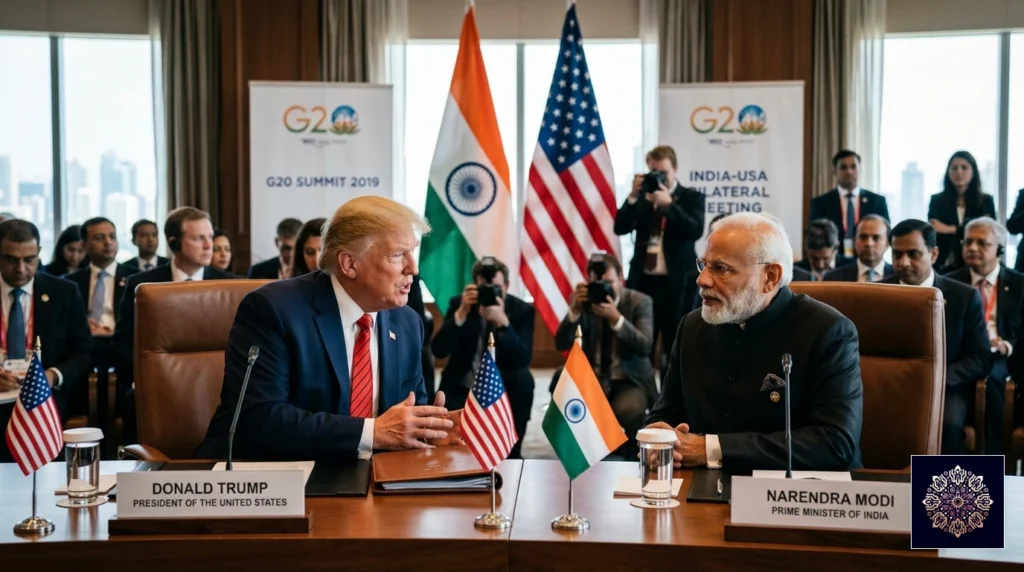
The India-US trade deal has once again become a major talking point after US President Donald Trump publicly praised Prime Minister Narendra Modi and expressed optimism about future economic cooperation between the two countries.
Speaking to reporters at the White House, Trump referred to Modi as a “good friend” and said he believed Washington and New Delhi would ultimately reach a mutually beneficial trade agreement. His remarks come at a time when both countries are engaged in extensive discussions aimed at resolving long-standing trade concerns.
The statement has attracted significant attention because trade relations between India and the United States remain one of the most important economic partnerships in the world. Any breakthrough could have far-reaching consequences for businesses, exporters, investors and consumers across both nations.
Why The India-US Trade Deal Matters
The United States and India share one of the fastest-growing economic relationships globally. Bilateral trade between the two countries spans sectors such as technology, manufacturing, pharmaceuticals, agriculture, defense, energy and services.
A comprehensive trade agreement could help reduce barriers, improve market access and create new opportunities for businesses on both sides. Industry experts believe stronger trade cooperation could increase exports, encourage investment and support job creation.
For India, improved access to the American market would strengthen its position as a global manufacturing and services hub. For the United States, a stronger trade relationship with India offers access to one of the world’s largest consumer markets.
What Trump Said About Tariffs
During his comments, Trump alleged that India had imposed high tariffs on American goods for many years and claimed that previous trade arrangements favored India more than the United States.
He argued that his administration’s policies were aimed at creating a more balanced trade relationship. Trump also suggested that the current negotiations could result in a framework that benefits both economies while addressing long-standing concerns about tariffs and market access.
The tariff issue remains one of the most sensitive topics in the ongoing negotiations, as both countries seek to protect domestic industries while expanding international trade opportunities.
Understanding The Current Trade Negotiations
| Issue | India’s Focus | US Focus |
|---|---|---|
| Tariffs | Protect Domestic Industries | Reduce Import Duties |
| Market Access | Expand Export Opportunities | Increase Access For US Products |
| Investment | Attract Foreign Capital | Strengthen Business Presence |
| Trade Balance | Boost Exports | Reduce Trade Gaps |
Officials from both countries have described recent discussions as constructive and pragmatic. Negotiators continue working toward an agreement that balances economic priorities while strengthening strategic ties.
The Harley-Davidson Example Explained
Trump once again referenced Harley-Davidson motorcycles while discussing trade barriers. He argued that high import duties in previous years made it difficult for the iconic American motorcycle manufacturer to compete in India.
The Harley-Davidson example has frequently been used during trade discussions as a symbol of broader concerns surrounding tariffs and market access. While trade conditions have evolved over time, the example continues to highlight the challenges faced by companies operating across international markets.
For policymakers, resolving such issues is essential to creating a more predictable and business-friendly trading environment.
Potential Benefits For India
- Greater access to American markets.
- Increased exports across multiple sectors.
- Higher foreign direct investment inflows.
- Expansion of manufacturing opportunities.
- Enhanced technology and innovation partnerships.
- Strengthened global supply chain integration.
Many economists believe that deeper economic engagement with the United States could accelerate India’s long-term growth ambitions and support its efforts to become a leading global economic power.
Potential Benefits For The United States
- Access to a rapidly growing consumer market.
- Improved opportunities for American exporters.
- Expansion of business operations in India.
- Stronger strategic partnership in the Indo-Pacific region.
- Increased cooperation across technology and manufacturing sectors.
The United States views India as an increasingly important economic and geopolitical partner, particularly as global supply chains continue to evolve.
What Businesses Are Watching Closely
Several industries are closely monitoring the outcome of the trade negotiations. Technology companies, automobile manufacturers, pharmaceutical firms, agricultural exporters and energy businesses could all be affected by any changes to tariffs and market access rules.
Investors are also paying attention because a successful agreement could improve business confidence and encourage additional cross-border investment.
For multinational corporations, greater trade certainty often translates into stronger long-term planning and expansion opportunities.
Timeline Of Recent India-US Trade Developments
- February 2026 – Initial framework discussions gain momentum.
- March 2026 – Bilateral trade consultations continue.
- April 2026 – Additional negotiations focus on tariff structures.
- May 2026 – Delegations meet to advance trade discussions.
- June 2026 – Trump signals optimism about reaching a deal.
Expert Analysis
Trade experts believe both countries have strong incentives to reach an agreement. India continues to attract global investment and expand its manufacturing capabilities, while the United States seeks stronger economic partnerships in Asia.
Although disagreements remain on several issues, analysts generally expect negotiations to continue moving forward due to the strategic importance of the relationship.
Many observers view the current talks as part of a broader effort to deepen cooperation beyond trade, including technology, defense, energy and innovation.
Frequently Asked Questions
What did Trump say about PM Modi?
Trump described Narendra Modi as a “good friend” and said he believes India and the United States will reach a trade agreement.
Why is the India-US trade deal important?
The agreement could improve market access, boost exports, attract investment and strengthen economic ties between the two countries.
What role do tariffs play in the negotiations?
Tariffs remain one of the key issues under discussion as both sides seek a balanced trade framework.
Which industries could benefit most?
Technology, manufacturing, pharmaceuticals, agriculture, energy and automotive sectors could see significant benefits.
When could the trade deal be finalized?
No official timeline has been announced, but negotiations are ongoing and both sides have expressed optimism about reaching an agreement.
What Happens Next?
Trade negotiators from India and the United States are expected to continue discussions in the coming weeks. Key areas such as tariffs, market access, investment and regulatory cooperation remain central to the talks.
Any breakthrough could strengthen one of the world’s most important economic partnerships and create new opportunities for businesses and consumers alike.
Key Takeaway
Donald Trump’s latest comments about Prime Minister Narendra Modi and the India-US trade deal signal continued momentum in bilateral economic relations. While challenges remain, both countries appear committed to finding common ground. If successful, a future trade agreement could strengthen trade flows, encourage investment and deepen strategic cooperation between two of the world’s most influential democracies.