Table of Contents
Key Highlights
- The monsoon season has officially arrived in India.
- Rainfall is expected to play a crucial role in agriculture and food production.
- Farmers are preparing for the key sowing season for major crops.
- Food prices and inflation could be influenced by rainfall patterns.
- Economists are closely monitoring the monsoon’s impact on growth.
Story Snapshot
| Category | Details |
|---|---|
| Event | Monsoon Arrival |
| Main Impact | Agriculture & Economy |
| Key Sector | Farming |
| Economic Factor | Food Inflation |
| National Importance | High |
Why India’s Monsoon Matters More Than Most People Realize
The arrival of the monsoon marks one of the most important annual events for India’s economy. While many people associate the season with cooler temperatures and relief from summer heat, its importance extends far beyond weather conditions.
The monsoon directly influences agriculture, food production, rural incomes, inflation, consumer spending, and overall economic activity. For a country where millions of livelihoods depend on farming, rainfall remains a key driver of prosperity.
This year’s monsoon is being closely watched by farmers, policymakers, businesses, and financial markets alike.
The Backbone Of Indian Agriculture
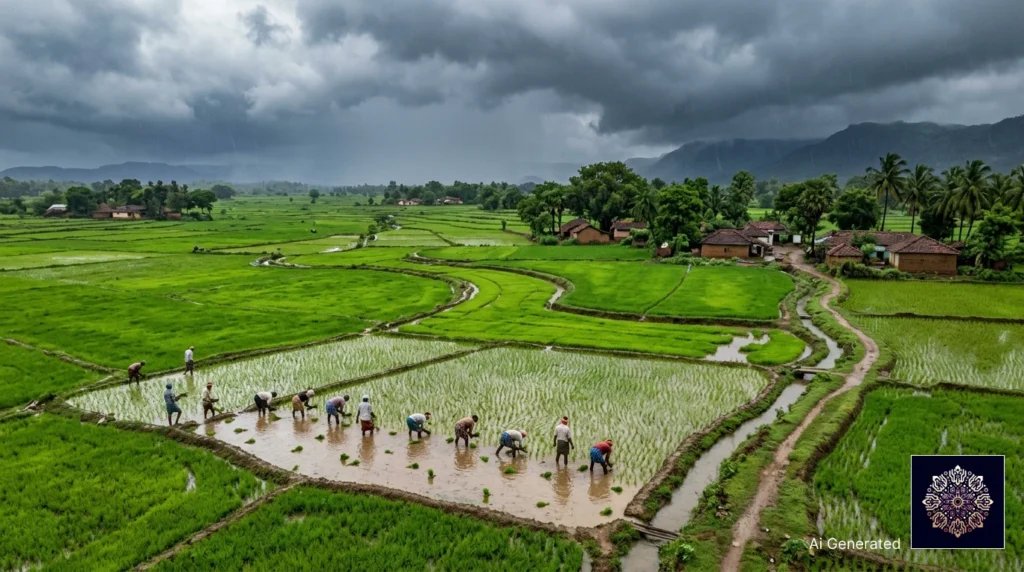
A large portion of India’s agricultural land depends on seasonal rainfall. Monsoon rains help replenish water reservoirs, improve soil moisture, and support the cultivation of key crops.
Farmers across the country use the monsoon season to sow major crops such as rice, maize, pulses, cotton, and oilseeds.
Good rainfall often leads to higher agricultural output, while weaker or uneven rainfall can affect production and farm incomes.
How Monsoon Influences Food Prices
| Factor | Impact Of Good Rainfall |
|---|---|
| Crop Production | Higher Output |
| Food Supply | Improved Availability |
| Food Prices | Potential Stabilization |
| Inflation | Reduced Pressure |
Food inflation remains one of the biggest concerns for households. Since agricultural production depends heavily on rainfall, the monsoon can significantly influence the availability and pricing of essential food items.
A healthy crop season may help stabilize supplies and reduce pressure on food prices over the coming months.
What It Means For Farmers
For farmers, the monsoon represents opportunity and uncertainty at the same time.
Timely rainfall allows farmers to begin sowing operations and improves crop prospects. Better yields often translate into stronger incomes, increased spending power, and improved financial stability in rural regions.
However, excessive rainfall or prolonged dry spells can create challenges even during a generally favorable monsoon season.
Impact On India’s Economy
| Economic Area | Potential Impact |
|---|---|
| Agriculture | Higher Productivity |
| Rural Consumption | Increased Spending |
| Food Inflation | Possible Moderation |
| Economic Growth | Positive Contribution |
A strong agricultural season often boosts demand for goods and services in rural areas. This creates ripple effects across industries including consumer goods, automobiles, fertilizers, banking, and retail.
As a result, economists often consider the monsoon a major factor influencing overall economic performance.
What Businesses Are Watching
- Crop sowing trends.
- Reservoir water levels.
- Food inflation data.
- Rural demand indicators.
- Agricultural commodity prices.
Companies operating in sectors linked to agriculture closely track rainfall patterns throughout the season.
Monsoon And Inflation: The Key Connection
One of the biggest reasons policymakers pay attention to the monsoon is its relationship with inflation.
Food items make up a significant portion of household spending in India. When agricultural production improves, food supplies generally become more stable, helping contain inflationary pressures.
This can influence interest rates, consumer confidence, and broader economic decision-making.
Timeline: India’s Monsoon Journey
- June – Monsoon enters India.
- June-July – Major crop sowing begins.
- July-August – Peak rainfall period.
- September – Harvest preparations start.
- October – Kharif crop harvesting begins.
Frequently Asked Questions
Why is the monsoon important for India?
The monsoon supports agriculture, food production, rural incomes, and economic growth.
How does monsoon affect food prices?
Good rainfall can improve crop yields and food supplies, helping stabilize prices.
Which sectors benefit most from a strong monsoon?
Agriculture, consumer goods, rural retail, banking, fertilizers, and transportation sectors often benefit.
Can monsoon affect inflation?
Yes. Food inflation is closely linked to agricultural output and rainfall conditions.
Key Takeaway
The arrival of the monsoon is one of the most important events in India’s economic calendar. Beyond providing relief from summer heat, it shapes agricultural output, food prices, inflation, rural incomes, and overall economic growth. As the season unfolds, millions of farmers, businesses, and households will be watching closely to see whether this year’s rainfall delivers the boost that India’s economy hopes for.