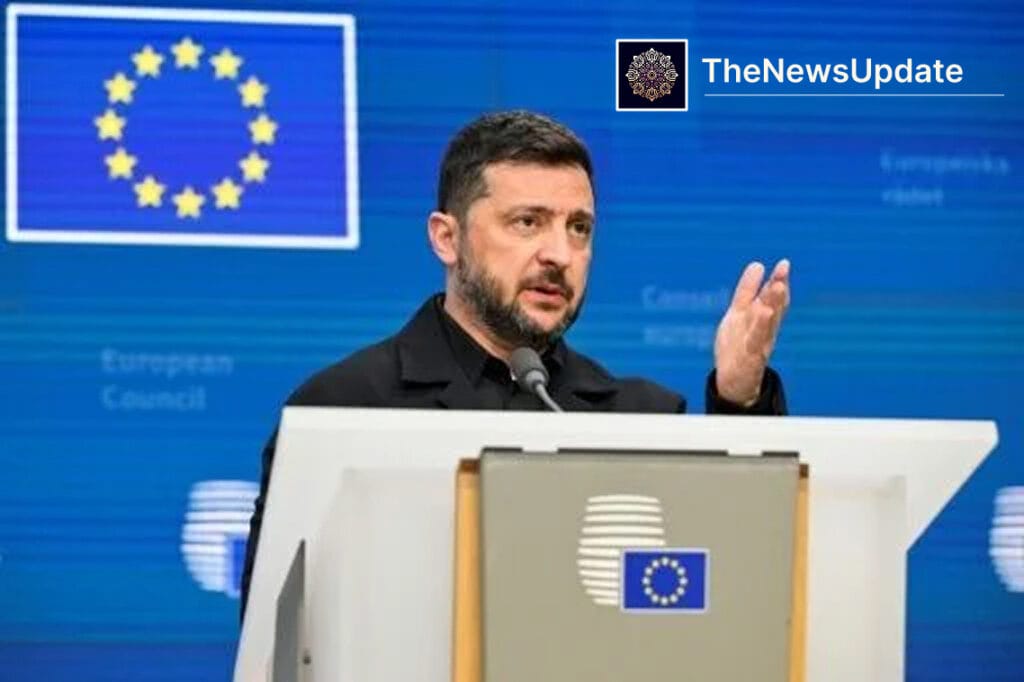
Ukrainian President Volodymyr Zelensky warning EU has delivered a stark warning to European Union leaders as they gather in Brussels for high-stakes talks on whether to unlock billions of euros in frozen Russian assets to support Ukraine’s war effort and economic survival.
Speaking on the sidelines of the summit, Zelensky made it clear that without urgent financial backing, Ukraine could face severe challenges within months. “I hope we will be able to get a positive decision,” he told reporters. “Without this there will be a big problem for Ukraine.”
The summit comes at a pivotal moment in the war, nearly four years after Russia launched its full-scale invasion of Ukraine in February 2022. With Kyiv’s finances under immense strain and Western aid packages slowing, the debate over Russia’s frozen assets has moved from theory to necessity.
यह भी पढ़े:
 Osman Hadi Killers Fled to India via Meghalaya Border: Dhaka Police Reveal Shocking Escape Route
What Are Russia’s Frozen Assets and Why Do They Matter?
Following Russia’s invasion of Ukraine, Western nations froze hundreds of billions of euros worth of Russian state assets as part of sweeping sanctions aimed at crippling Moscow’s ability to fund the war.
In the European Union alone, an estimated €210 billion of Russian assets are frozen. The majority of this money is held by Euroclear, a Belgium-based financial services company that plays a central role in global securities settlements.
Until now, the EU has only allowed Ukraine to receive the interest generated by these frozen assets, not the principal amount itself. That interest has provided some financial relief, but it falls far short of what Ukraine needs to sustain both its military operations and its economy.
यह भी पढ़े:
 Bulldozer Raj Karnataka Demolitions: Congress Govt Faces Backlash After 400 Muslims Left Homeless
The European Commission has now proposed a dramatic shift: loaning Kyiv around €90 billion over the next two years, using the frozen Russian assets as collateral.
Zelensky’s Warning: Time Is Running Out
Zelensky’s message to EU leaders was blunt. Without a significant infusion of funds, Ukraine’s ability to defend itself and function as a state could be jeopardised.
Ukrainian officials estimate that Kyiv will need around €137 billion to get through 2026 and 2027. The proposed EU loan would cover roughly two-thirds of that amount.

“This is not just about continuing the war,” Zelensky said. “This is about survival.” He stressed that the money would be used either to support Ukraine’s armed forces if fighting continues, or to fund recovery and reconstruction if a peace settlement is reached.
Behind the scenes, Ukrainian diplomats have been pressing EU capitals hard, arguing that using Russian assets would send a powerful signal to Moscow that aggression comes with long-term consequences.
Belgium’s Central Role and Its Reservations Zelensky warning EU
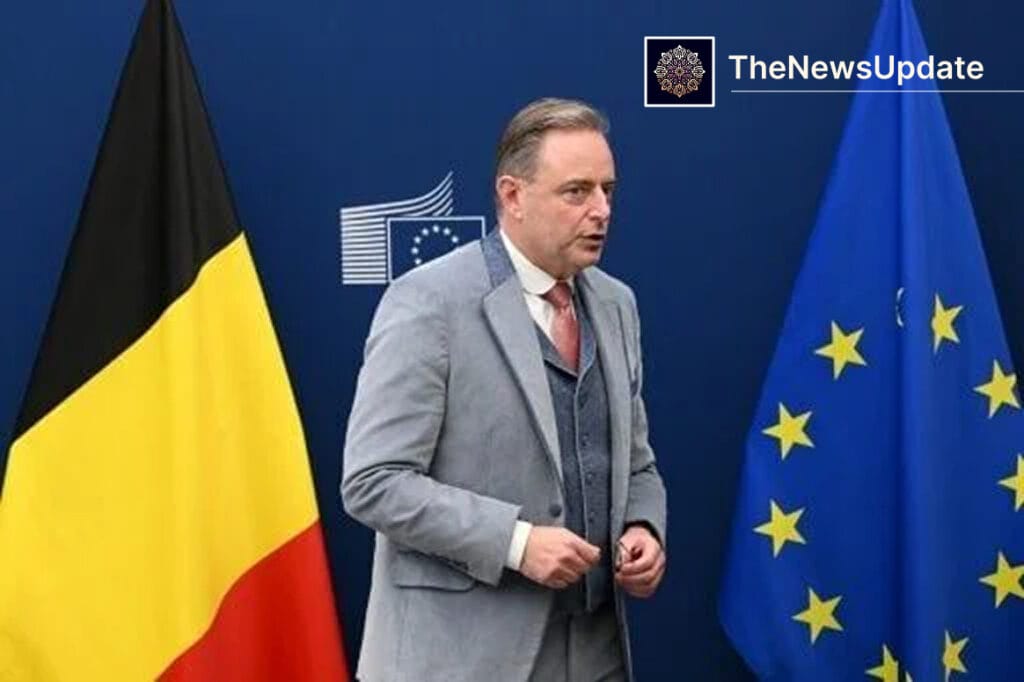
All eyes at the Brussels summit are on Belgium, where most of the frozen Russian assets are held. Belgian Prime Minister Bart De Wever has so far remained unconvinced by the European Commission’s proposal.

Speaking in the Belgian parliament ahead of the summit, De Wever said: “I haven’t yet seen any text that would persuade me to change Belgium’s position.”
Belgium’s concerns are primarily legal and financial. There is fear that if courts later rule against the EU’s use of the assets, Belgium could be ordered to return the money to Russia — potentially exposing the country and Euroclear to massive liabilities.
Belgium’s defence minister, Theo Francken, has also warned that loaning out the frozen assets could be a serious mistake if legal risks are not fully addressed.
यह भी पढ़े:
 Canada Hospital Killed Indian-Origin Man: Wife Alleges Medical Negligence After 8-Hour Wait
Russia Pushes Back With Legal Action and Threats
Moscow has reacted angrily to the EU’s plans. Russia has warned repeatedly that using its frozen assets would amount to theft under international law.
In a further escalation, Russia has filed a lawsuit against Euroclear in a Moscow court in an attempt to recover the frozen funds. While the chances of enforcement outside Russia are unclear, the legal move adds another layer of complexity to the EU’s deliberations.
Russian President Vladimir Putin has also stepped up his rhetoric. Speaking this week, he accused Europe of being in a state of “total degradation” and used derogatory language to describe Ukraine’s European allies, accusing them of hoping to profit from Russia’s collapse.

EU Leaders Divided but Under Pressure
Within the EU, opinions are sharply divided. European Commission President Ursula von der Leyen has made it clear that she wants a breakthrough.
“We will not leave the summit without a solution,” she told reporters, emphasising the urgency of the moment. Addressing the European Parliament, she said the choice facing leaders was stark and unavoidable.
Some EU officials are cautiously optimistic. One senior official described the mood as “cautiously optimistic, not overly optimistic,” reflecting both the stakes and the uncertainties.

Germany has emerged as one of the strongest supporters of using the frozen assets. Chancellor Friedrich Merz told the Bundestag that approving the loan would send a “clear signal” to Moscow that continuing the war was pointless.
Hungary, Slovakia, and Others Raise Objections
Not all member states are on board. Hungary has positioned itself as the strongest opponent of the proposal.
Prime Minister Viktor Orban has made it clear that he will not approve any additional EU funding for Ukraine. Ahead of the summit, Hungarian officials even suggested that the frozen assets plan had been dropped from the agenda — a claim later denied by European Commission sources.

Slovakia’s Prime Minister Robert Fico has also voiced opposition, particularly if the funds are used to purchase weapons rather than for reconstruction.
Other countries, including Italy, Malta, Bulgaria, and the Czech Republic, have expressed varying degrees of concern. Italian Prime Minister Giorgia Meloni has said she would support the plan only if the legal basis is rock-solid.
“If the legal basis for this initiative were not solid, we would be handing Russia its first real victory since the beginning of this conflict,” Meloni warned.

The Legal and Voting Hurdles Ahead
For the proposal to pass, it must secure the backing of at least 15 EU member states representing 65% of the bloc’s population.
Even if that threshold is reached, European Council President António Costa has promised that the EU will not force the decision over Belgium’s objections.
“We’re not going to vote against Belgium,” Costa said in an interview with Belgian broadcaster RTBF. “We’ll continue to work very intensively with the Belgian government because we don’t want to approve something that might not be acceptable for Belgium.”

Legal concerns remain significant. Ratings agency Fitch has placed Euroclear on a negative watch, citing legal risks linked to the European Commission’s plans. Euroclear’s own chief executive has also warned against rushing into a decision.
Alternative Funding Options on the Table
Russia’s frozen assets are not the only option under discussion. One alternative, supported by Belgium, would involve the EU borrowing money on international markets, using the EU budget as a guarantee.
However, this approach would require unanimous approval — something that appears unlikely given Hungary’s firm opposition.

Some countries have suggested providing financial guarantees to limit Belgium’s exposure if the frozen assets are used. Talks are ongoing over whether such guarantees could sufficiently reduce the risks.
“There are many hiccups and obstacles still on the way,” a Finnish government official told reporters. “We have to find a way to respond to Belgium’s worries.”
Ukraine’s Leverage and the Peace Talks Factor
The timing of the summit is also significant because of renewed diplomatic efforts to end the war.

US President Donald Trump has claimed that a deal to end the conflict is closer than ever. US and Russian officials are expected to meet in Miami this weekend to discuss a potential peace plan.
Ukrainian officials are also travelling to the United States, and Zelensky has emphasised that access to the frozen assets would strengthen Kyiv’s position at the negotiating table.
“This gives Ukraine leverage,” said a Finnish official. “It allows Kyiv to say: we’re not desperate, and we have the funds to continue fighting if needed.”
यह भी पढ़े:
 Indie Band Claims AI Stole Their Billie Eilish Cover, Raising Fresh Fears Over Music Copyright
What Happens if the Deal Goes Through?
If EU leaders approve the plan, Ukraine would receive a massive financial boost at a critical moment. Supporters argue it would help deter Russia from prolonging the war and demonstrate Europe’s long-term commitment to Kyiv.
In a worst-case scenario, Belgium fears a court could order the return of the money to Russia. EU officials counter that the only realistic way for Russia to recover the assets would be by paying reparations to Ukraine — at which point Kyiv would repay the EU loan.
For now, uncertainty remains. But the stakes could hardly be higher.

Conclusion: A Defining Moment for Europe and Ukraine
The Brussels summit represents a defining moment not only for Ukraine but for the European Union itself.
EU leaders must decide whether to take an unprecedented step by leveraging frozen Russian assets, balancing legal risks against the urgent need to support a country fighting for its survival.
Zelensky’s warning has underscored the gravity of the situation. For Ukraine, the decision could determine whether it can sustain itself through the next phase of the war — or whether its options narrow dramatically.

As negotiations continue behind closed doors, one thing is clear: whatever decision emerges from Brussels will shape the future of the conflict and Europe’s role in it for years to come.
For continued updates on India’s fintech and digital finance developments, visit our Tech News section and The News Update.
By The News Update— Updated December 18, 2025