Table of Contents
- Background: BJP Leadership Transition
- Why BJP Appointed a Working President
- Role of JP Nadda and Pending Elections
- Kharmas, Party Constitution, and Timing
- Who Is BJP Working President Nitin Nabin
- What Happens Next for BJP Leadership
Background: BJP Leadership Transition
The appointment of Nitin Nabin as the BJP working president has triggered widespread discussion within political circles. Many observers have questioned why the Bharatiya Janata Party chose to appoint a working president instead of immediately naming a full-time national president.
At the heart of the matter lies the BJP’s internal organisational structure and its adherence to constitutional procedures. JP Nadda, the current BJP national president, has been serving beyond his original term after receiving an extension until June 2024 to steer the party through the Lok Sabha elections.
यह भी पढ़े:
 Osman Hadi Killers Fled to India via Meghalaya Border: Dhaka Police Reveal Shocking Escape Route
With Nadda also holding a Cabinet position in the Narendra Modi government, the BJP found itself balancing leadership continuity with its long-standing “one person, one post” principle. The BJP working president arrangement emerged as a practical solution to this organisational challenge.
Why BJP Appointed a Working President
The BJP working president role is not a symbolic position. It is an operational one, designed to ensure that day-to-day party affairs continue smoothly while a formal election process is underway.
Unlike many political parties, the BJP elects its national president through an internal electoral process rather than nomination. This means the leadership transition must follow a defined timeline involving state unit elections and national-level consultations.
यह भी पढ़े:
 Bulldozer Raj Karnataka Demolitions: Congress Govt Faces Backlash After 400 Muslims Left Homeless
By appointing Nitin Nabin as the BJP working president, the party ensured:
- Continuity in organisational functioning
- Compliance with constitutional election rules
- Avoidance of leadership uncertainty ahead of key political developments
This approach allows the BJP to test leadership readiness while keeping the final decision subject to a democratic process within the party.
Role of JP Nadda and Pending Elections
JP Nadda’s extended tenure plays a crucial role in understanding why the BJP working president model was adopted. His term extension was widely seen as necessary to avoid experimentation before a high-stakes general election.

However, with the Lok Sabha elections now concluded, the BJP is moving towards a leadership change. Party sources indicate that elections for the national president are likely to be held around mid-January.
Until then, the working president serves as the de facto organisational head, handling coordination with state units, overseeing internal reviews, and preparing the party for the formal transition.
Importantly, this is not the first time the BJP has followed this route. JP Nadda himself was appointed working president in June 2019 before being unanimously elected national president in January 2020.
Kharmas, Party Constitution, and Timing
Timing is another key factor behind the BJP working president decision. According to party insiders, the BJP refrained from holding the national president election during the Kharmas period, which began in mid-December and lasts until Makar Sankranti on January 14.
In Hindu tradition, Kharmas is considered an inauspicious period for major ceremonial or organisational changes. While political parties are not bound by religious calendars, the BJP has historically shown sensitivity to cultural sentiments.
Beyond tradition, the BJP’s constitution also shapes leadership decisions. The party revised its rules in 2003 and again in 2012 to define term limits and ensure continuity. These amendments allowed leaders like Amit Shah to serve extended tenures while maintaining institutional balance.
यह भी पढ़े:
 Canada Hospital Killed Indian-Origin Man: Wife Alleges Medical Negligence After 8-Hour Wait
The BJP working president arrangement fits neatly within these constitutional boundaries, providing flexibility without bypassing internal democracy.
Who Is BJP Working President Nitin Nabin
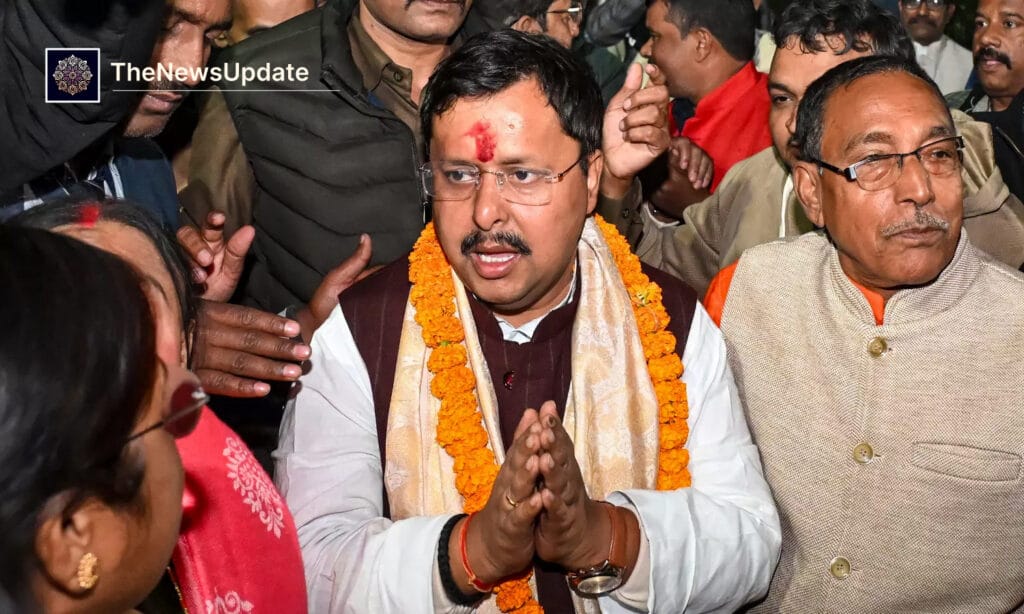
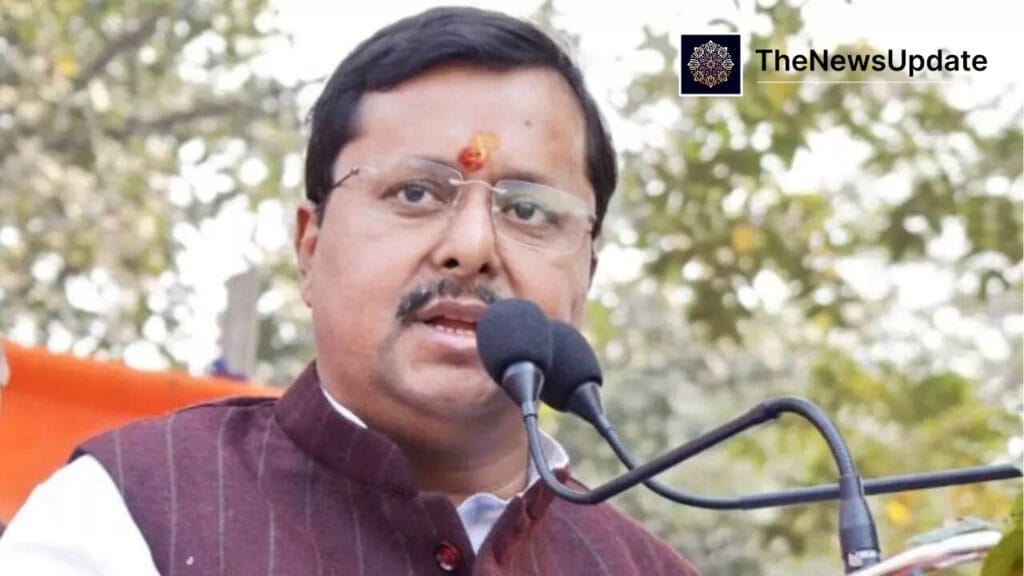
Nitin Nabin, a five-time MLA from Patna’s Bankipur constituency, is one of the youngest leaders to assume the role of BJP working president at the age of 50. His elevation signals a generational shift within the party’s organisational hierarchy.
Known for his strong organisational skills, Nabin has spent years working within the BJP’s youth wing, the Bharatiya Janata Yuva Morcha. His reputation as a disciplined and effective organiser reportedly made him a consensus choice among senior leaders.
He is the son of late BJP leader Nabin Kishore Sinha and belongs to the Kayastha community. His political journey reflects a blend of legacy, grassroots experience, and organisational competence.
Party insiders suggest that Nitin Nabin is the frontrunner for the full-time post, provided he wins the internal election. His current role as BJP working president places him in a position to demonstrate leadership capability on a national scale.
What Happens Next for BJP Leadership
The BJP working president phase is widely viewed as a transitional arrangement rather than a long-term solution. Once the Kharmas period ends and internal preparations are complete, the party is expected to formally elect its national president.
If Nitin Nabin secures the mandate, he will follow the same path as JP Nadda — moving from working president to full-time national president through a structured and constitutional process.
For the BJP, this approach reinforces its emphasis on organisational discipline, internal democracy, and leadership continuity. For political observers, it offers a glimpse into how India’s largest political party manages change without disruption.
The BJP working president decision, therefore, is less about delay and more about method — a calculated step in a carefully managed leadership transition.
Related Reads
By The Morning News Informer Desk — Updated December 15, 2025