Table of Contents
- Background: Why Warner Bros Is Up for Sale
- The Warner Bros Sale Battle Explained
- Netflix vs Paramount: Two Very Different Futures
- Hollywood Reactions: Fear, Anger, and Exhaustion
- David Zaslav and the Fallout of Corporate Leadership
- What This Means for Jobs, Theatres, and Creativity
- Conclusion: What Happens Next for Warner Bros
Background: Why Warner Bros Is Up for Sale
The Warner Bros sale battle did not emerge overnight. It is the result of years of consolidation, debt-heavy mergers, and an entertainment industry still reeling from the aftershocks of the pandemic. Once synonymous with Hollywood glamour and creative risk-taking, Warner Bros has gradually become a symbol of corporate overreach.
The turning point came in 2022, when Discovery, Inc., led by CEO David Zaslav, merged with AT&T’s WarnerMedia to form Warner Bros Discovery. The merger promised scale, efficiency, and shareholder value. Instead, it delivered mass layoffs, project cancellations, and growing resentment among creative workers.

By 2023, simultaneous writer and actor strikes froze production across Hollywood. Although work resumed later that year, the pre-strike boom never returned. Studios pulled back on spending, greenlights became scarce, and thousands of freelancers were left without steady income.
Against this backdrop, Warner Bros’ financial struggles deepened. The company reported losses exceeding $11bn, while its stock continued to slide. For many in Hollywood, the announcement that Warner Bros was effectively for sale felt less like a shock and more like an inevitability.
The Warner Bros Sale Battle Explained
At the heart of the Warner Bros sale battle are two competing visions for the future of entertainment. On one side stands Netflix, the tech-driven streaming giant that transformed how the world consumes film and television. On the other is Paramount Skydance, a more traditional studio-backed bidder with deep political and international financial ties.

Netflix’s interest reportedly focuses on Warner Bros’ most valuable assets: the historic studio lot, HBO, and its vast archive of films and television shows. Under this scenario, legacy networks such as CNN, TNT Sports, and Discovery would be sold separately.
Paramount Skydance, led by David Ellison, has launched a hostile takeover bid valued at around $108bn. The offer is backed by funding from Saudi Arabia, Abu Dhabi, Qatar, and a fund started by Jared Kushner, the son-in-law of US President Donald Trump.
This has raised serious concerns within Hollywood. While Netflix is criticised for undermining theatrical releases, Paramount’s bid has sparked fears about political influence, censorship, and foreign government involvement in American media.

Netflix vs Paramount: Two Very Different Futures
For creative workers, the Warner Bros sale battle feels like choosing between two uncomfortable options. Netflix represents efficiency, scale, and global reach, but also ruthless data-driven decision-making.
Many film exhibitors blame Netflix for accelerating the decline of movie theatres. The company’s streaming-first strategy has led several major US theatre chains to refuse Netflix films altogether.
Paramount, by contrast, is seen as more committed to theatrical releases. Producers note that Paramount did not “kill movie theatres” and still values the traditional cinema experience.

Yet Paramount’s political associations trouble many in the industry. David Ellison, son of Oracle co-founder Larry Ellison, is viewed by critics as closely aligned with right-wing politics. President Trump’s recent comment that “it’s imperative that CNN be sold” has only intensified fears of editorial interference.
Netflix has attempted to calm industry nerves by promising to maintain Warner Bros’ existing operations, including theatrical releases. Whether Hollywood believes those assurances remains an open question.
Hollywood Reactions: Fear, Anger, and Exhaustion
Interviews with actors, producers, camera operators, and sound technicians paint a bleak picture of morale in Hollywood. Words like “disaster,” “catastrophe,” and “nightmare” are used repeatedly to describe the Warner Bros sale battle.

Many workers say they no longer have the luxury of caring who wins. Their focus has shifted to survival in an industry that feels smaller and more hostile by the day.
One actor, now homeless with his wife and two children, described waking up each morning feeling like he has failed “in every direction.” He said he would prefer Netflix over “foreign money,” but admitted neither option offers real security.
Others fear Netflix’s dominance even more. A film exhibitor warned that a Netflix-owned Warner Bros could further marginalise theatres, accelerating a trend that has already shuttered hundreds of cinemas across the US.

David Zaslav and the Fallout of Corporate Leadership
If there is one figure nearly everyone agrees on in the Warner Bros sale battle, it is the villain. Warner Bros Discovery CEO David Zaslav has become a lightning rod for industry anger.
Critics point to his $51.9m compensation package last year, awarded while the company posted massive losses and cut thousands of jobs. Several insiders compared him to Gordon Gekko, the fictional symbol of corporate greed from the 1987 film Wall Street.
Producers accuse Zaslav of prioritising shareholder value over creative legacy. Projects were shelved for tax write-offs, long-term deals were scrapped, and morale on the Warner Bros lot plummeted.

Warner Bros has strongly defended Zaslav’s record. In a statement, the company said the studio has regained leadership with a strong slate of original films, a unified ten-year DC Universe plan, and a streaming service that has become profitable for the first time.
What This Means for Jobs, Theatres, and Creativity
The biggest fear surrounding the Warner Bros sale battle is not who wins, but what is lost along the way. Every merger means fewer buyers for film and TV projects. Fewer buyers mean fewer opportunities for writers, directors, actors, and crews.
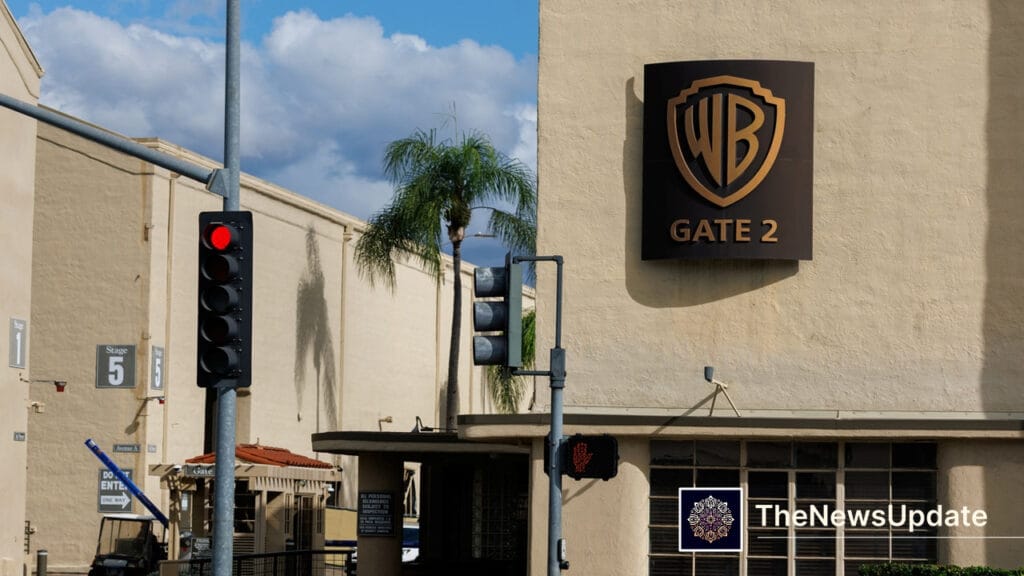
- Mass layoffs following pandemic-era consolidation
- Extended strikes that drained savings and careers
- Reduced production budgets and shorter episode orders
- Growing reliance on AI tools that threaten creative jobs
Even if Warner Bros survives under new ownership, it will no longer exist as it once did. The loss of an independent studio buyer reshapes the entire ecosystem.

Tourists may continue to pose in front of the Friends Central Perk set, but behind the scenes, uncertainty dominates writers’ rooms and production offices.
Conclusion: What Happens Next for Warner Bros
The Warner Bros sale battle is far from over. Paramount Skydance’s hostile bid has already complicated Netflix’s plans, and insiders would not be surprised if another billionaire or tech titan enters the fray.
For Hollywood’s workers, the outcome may feel predetermined regardless of the winner. The industry they once knew is shrinking, consolidating, and becoming more risk-averse.

Yet many cling to a simple belief: good stories still matter. As long as audiences crave compelling films and television, creativity will find a way to survive.
Related Reads
By The News Update— Updated December 2025