The United States has carried out air strikes against militants linked to the Islamic State (IS) group in north-western Nigeria, marking a significant escalation in US involvement in the country’s long-running fight against jihadist violence US strikes against Islamic State in Nigeria.
According to the US military, the strikes targeted militant camps in Sokoto state, a region bordering Niger where IS-linked fighters have recently attempted to establish a foothold. An initial assessment suggested that the operation resulted in multiple fatalities.
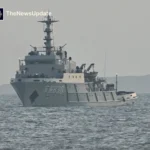
The US Department of Defense released a short video appearing to show a missile being launched from a military vessel, though it did not disclose the precise platforms or weapons systems involved.
Trump Confirms Christmas Day Strikes:US strikes against Islamic State in Nigeria
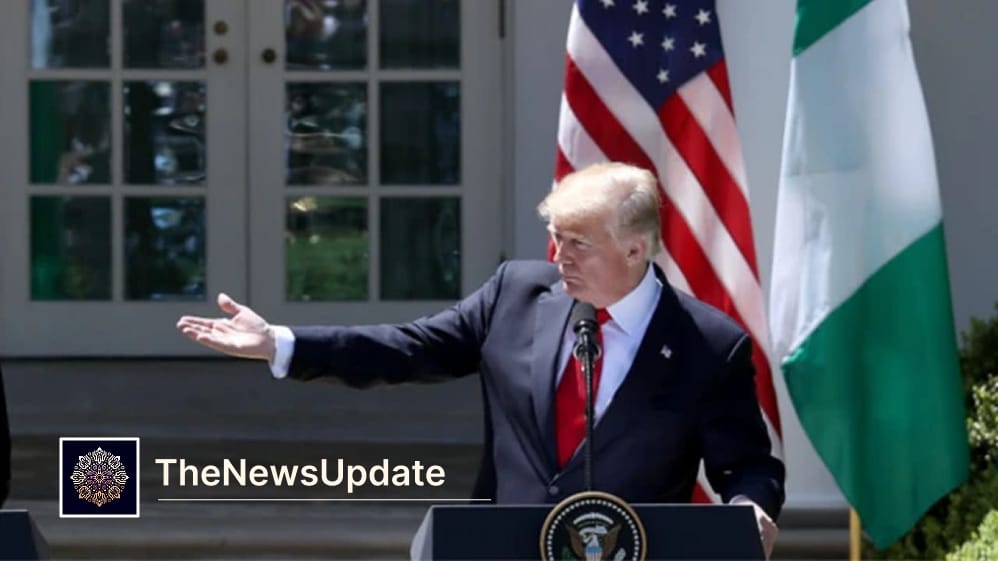
US President Donald Trump confirmed that the strikes were carried out on Christmas Day, describing them as “powerful and deadly”. In a statement posted on social media, Trump referred to the militants as “terrorist scum” and accused them of targeting and killing innocent Christians.
“I will not allow Radical Islamic Terrorism to prosper,” Trump wrote, reinforcing his administration’s hardline approach to global counterterrorism operations.
US Defence Secretary Pete Hegseth also acknowledged the operation, thanking the Nigerian government for its cooperation and support. “Merry Christmas!” he added in a post on X, drawing criticism from some observers over the timing and tone.
Nigeria Says Operation Was Joint and Non-Religious
Nigerian Foreign Minister Yusuf Maitama Tuggar told the BBC that the strikes were part of a joint operation between Nigeria and the United States and were not motivated by religion.
“This has nothing to do with a particular religion,” Tuggar said, stressing that the operation was aimed solely at terrorists who have been killing Nigerians. He added that the strikes had been planned for a long time and were based on intelligence provided by Nigerian authorities.
Tuggar also did not rule out further military action, saying Nigeria remains engaged in structured security cooperation with international partners to counter violent extremism.
Conflicting Accounts From the Ground
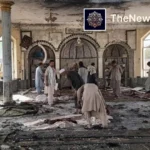
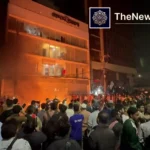
Eyewitnesses in Sokoto state described explosions late on Thursday night. Umar Jabo, a local resident, told BBC News that people initially thought a plane had crashed.
“Everyone thought it was a plane. It crashed in fields,” he said, adding that residents later gathered to film the burning aftermath.
However, Jabo denied that any Islamic State fighters had been killed in the area, insisting that his community lived peacefully. “Here in Jabo, we live peacefully, and there is no conflict between us and Christians,” he said.
Local lawmaker Bashar Isah Jabo also rejected claims that militants were present, noting that the missile reportedly landed less than 500 metres from a local hospital.
Islamic State’s Expanding Presence in Nigeria
For more than a decade, Nigeria has been battling a complex web of jihadist groups, including Boko Haram and several IS-linked splinter factions. Until recently, most of this violence was concentrated in the north-eastern state of Borno.
Security analysts say the strikes likely targeted a newer IS-aligned group that originated in the Sahel and has gradually moved fighters into north-western Nigeria.

Nigerian human rights lawyer and conflict analyst Bulama Bukati told the BBC that the smaller group, known locally as Lakurawa, has established camps in Sokoto and Kebbi states over the past 18 to 24 months.
“They have been launching attacks and imposing their social laws over people in Sokoto state,” he said, warning that the group represents a growing threat beyond Nigeria’s traditional conflict zones.
The largest IS-linked faction in the country, Islamic State West Africa Province (ISWAP), continues to operate mainly in the north-east, according to security experts.


Religious Persecution Claims Disputed
The Trump administration has previously accused Nigeria of failing to protect Christians from jihadist attacks, at times claiming that a “genocide” is taking place.
Nigeria has been designated by the US as a “country of particular concern” for religious freedom, a status that can trigger sanctions.
However, multiple independent monitoring groups dispute the claim that Christians are being disproportionately targeted. Data from ACLED, which tracks political violence globally, indicates that most victims of jihadist violence in Nigeria have been Muslims.
Nigerian officials have consistently maintained that militant groups attack communities across religious lines.
Regional and International Context
The Nigeria strikes mark the second major US military operation against Islamic State targets in recent weeks.
Earlier this month, the US carried out what it described as a “massive strike” against IS positions in Syria, targeting more than 70 locations with fighter jets, helicopters, and artillery. Aircraft from Jordan were also involved in that operation.
Those Syria strikes were launched in retaliation for an ambush that killed three Americans, including two US soldiers and a civilian interpreter.
Security analysts note that the twin operations reflect a renewed US focus on preventing Islamic State from regrouping or expanding in fragile regions.
What Happens Next
While Nigerian authorities have confirmed continued cooperation with the United States, questions remain over civilian safety, intelligence accuracy, and the long-term effectiveness of air strikes in countering insurgency.
As militant groups adapt and shift locations, experts warn that sustained regional coordination, ground intelligence, and community engagement will be critical to preventing further violence.
The US strikes in Nigeria underscore the evolving nature of the global fight against Islamic State — one that increasingly spans continents far beyond the group’s former strongholds in the Middle East.
Related Reads
By The News Update Desk — Updated December 26, 2025