Table of Contents
- Background: A New Chapter in US–South Korea Defence Ties
- Inside the US South Korea Nuclear Submarine Deal
- Why Seoul Wants Nuclear Attack Submarines
- North Korea’s Nuclear Submarine Ambitions
- Will This Deal Escalate Regional Tensions?
- What the US Gains from the Submarine Agreement
- What Happens Next?
- Related Reads
Background: A New Chapter in US–South Korea Defence Ties
The US South Korea Nuclear Submarine Deal comes at a time of unprecedented tension across East Asia. While Washington and Seoul have long maintained a robust military partnership, this new agreement marks one of the most strategically significant defence collaborations in decades.
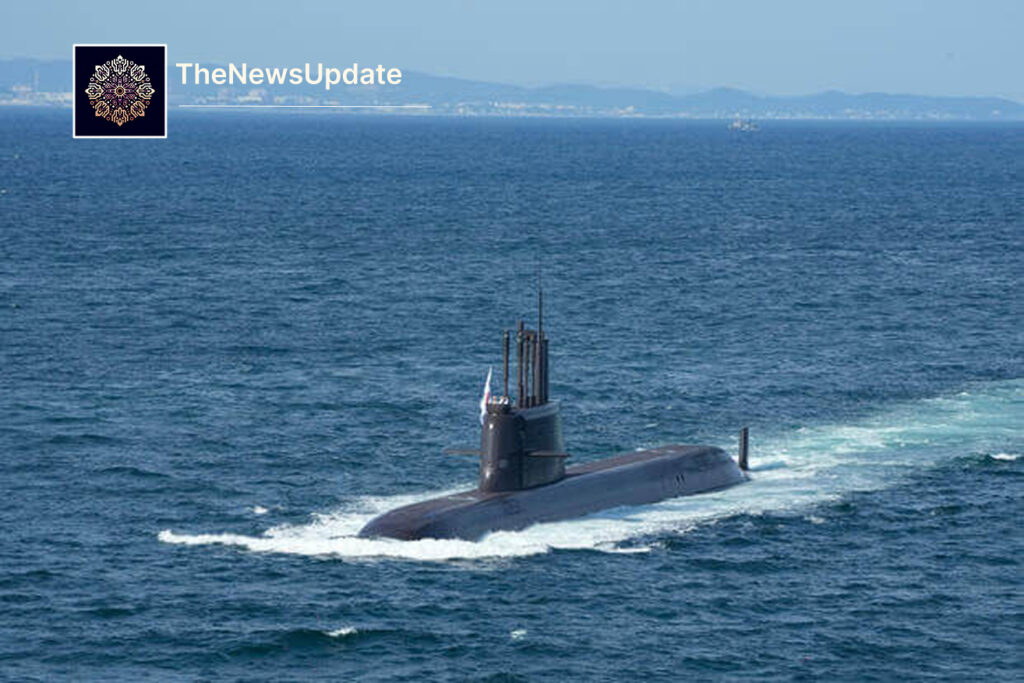
South Korea, long reliant on diesel-electric submarines, has sought nuclear-powered vessels for years. These submarines offer unmatched stealth, endurance, and range—qualities that are particularly crucial when countering North Korea’s rapidly expanding nuclear arsenal and China’s aggressive maritime posture.

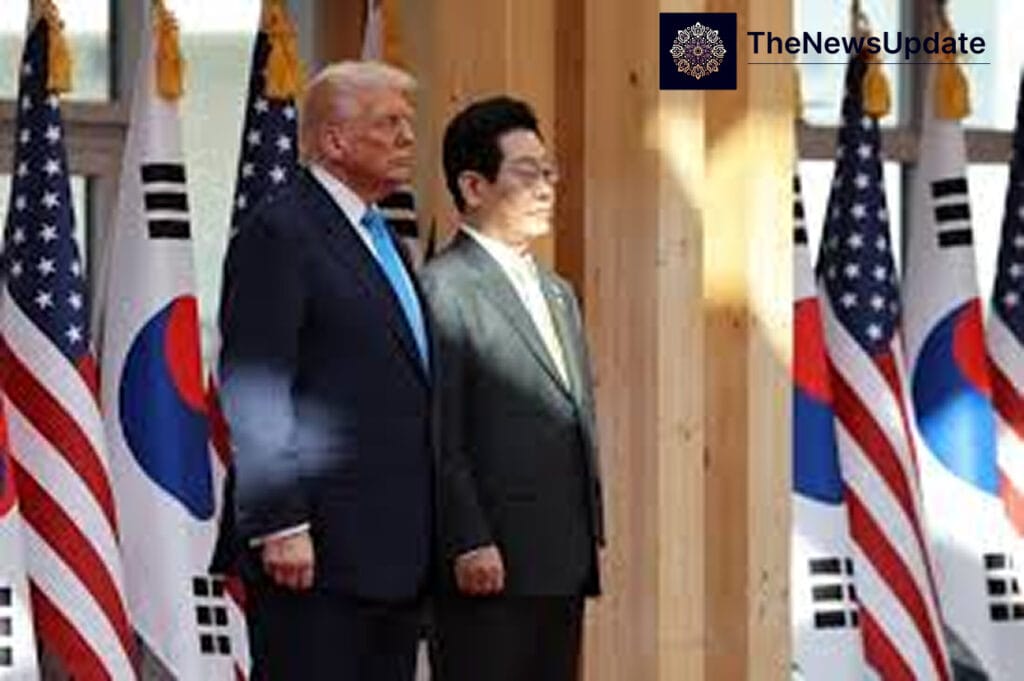
The deal also arrives shortly after a sweeping trade agreement that reduced tariffs between the two countries from 25% to 15%, following extensive negotiations and Seoul’s commitment to a massive $350 billion investment in the United States. This broader cooperation laid the political groundwork for Washington’s approval of nuclear-powered submarine construction—something no US administration had previously authorised for South Korea US South Korea Nuclear Submarine Deal.
Inside the US South Korea Nuclear Submarine Deal
According to a White House fact sheet, the United States has formally approved South Korea’s plan to build nuclear-powered attack submarines, often considered the backbone of modern naval warfare. These vessels are expected to be co-developed with US support, especially in areas such as nuclear fuel sourcing and technological standards.
President Donald Trump revealed on Truth Social that the submarines would be constructed “at a shipyard in Philadelphia” managed by Hanwha, a South Korean conglomerate. South Korean officials, however, dispute this, noting that the Philadelphia facility does not possess the capability to build such advanced vessels. Seoul has made clear that submarine construction must occur domestically, where local shipyards have decades of expertise.

Only six countries currently operate nuclear-powered strategic submarines:
- United States
- China
- Russia
- United Kingdom
- France
- India
South Korea’s entry into this elite club of naval powers would significantly shift the balance of capabilities in the region.
South Korea already operates about 20 advanced diesel-electric submarines, but these require frequent surfacing and have limited endurance. Nuclear submarines, by contrast, can operate submerged for months at a time, travel at higher speeds, and are far harder to detect.

Why Seoul Wants Nuclear Attack Submarines
At the heart of the US South Korea Nuclear Submarine Deal is one core objective: deterring North Korea’s escalating nuclear and missile threats.
North Korea’s recent revelation of a nuclear submarine construction program alarmed Seoul’s defense leadership. According to South Korean President Lee Jae Myung, nuclear-powered submarines would provide “critical deterrence” and ensure that Pyongyang cannot operate with impunity.
Ahn Gyu-back, South Korea’s Minister of Defence, described nuclear submarines as a “proud achievement” that will keep North Korean leader Kim Jong Un “awake at night.” This dramatic phrasing reflects the urgent need Seoul feels to match North Korea’s fast-changing military capabilities.

South Korea does not possess nuclear weapons and remains committed to non-proliferation under the US nuclear umbrella. Therefore, acquiring nuclear-powered submarines offers Seoul a powerful, non-nuclear way to strengthen deterrence.
North Korea’s Nuclear Submarine Ambitions
North Korea has long sought to diversify and hide its nuclear arsenal. Submarines—particularly nuclear-powered ones—would allow Pyongyang to deploy nuclear weapons covertly and potentially evade US and South Korean surveillance.
In March 2025, the regime unveiled images of a nuclear submarine under construction, allegedly visited by Kim Jong Un himself. Though experts believe the vessel remains years away from deployment, its existence underscores the urgency behind Seoul’s decision.

Estimates place North Korea’s nuclear stockpile at around 50 warheads. Should Pyongyang succeed in mounting these weapons on submarines, the threat landscape in the Indo-Pacific would shift dramatically.
Dr. Jo Bee-yun of the Sejong Institute argues that Seoul’s move to acquire nuclear submarines is part of a broader regional arms race driven by North Korea, China, and even Russia’s geopolitical ambitions.
Will This Deal Escalate Regional Tensions?
The US South Korea Nuclear Submarine Deal has sparked significant debate among regional experts. Some argue that while it strengthens South Korea’s defensive posture, it may not fundamentally alter the military balance on the Korean Peninsula.

Dr. Yang Uk of the Asan Institute for Policy Studies notes that the submarines serve as a political reassurance to South Korean citizens who feel increasingly vulnerable to North Korea’s nuclear program.
However, North Korea may exploit the deal for propaganda, claiming it justifies maintaining or expanding its nuclear arsenal. Pyongyang may also use the agreement to resist denuclearization talks more aggressively.
China has reacted with predictable displeasure. Beijing’s Ambassador to Seoul, Dai Bing, urged South Korea to “act prudently,” underscoring that the regional security environment is “complex and sensitive.” China, already engaged in maritime confrontation with South Korea, will likely view the nuclear submarine deal as yet another extension of US influence.

What the US Gains from the Submarine Agreement
For Washington, the benefits of this agreement span far beyond submarine technology. The United States aims to counterbalance China’s growing naval footprint and North Korea’s missile program by empowering regional allies.
Trump’s administration has leaned heavily on the principle of “burden-sharing,” encouraging South Korea to increase its defense spending and take on a more active role in regional security. The nuclear submarine deal allows Seoul to become what some analysts call a “proxy naval power,” extending US strategic reach without expanding America’s own military footprint.
Strengthening South Korea also acts as a counterweight to Chinese influence in the Indo-Pacific, particularly at a time when Beijing is expanding naval operations near South Korea’s maritime borders.

What Happens Next?
Although Trump claims the submarines will be built in Philadelphia, South Korea insists that domestic shipyards possess better capabilities and can deliver the vessels faster. The truth will likely emerge once further technical assessments are conducted.
The next major step involves updating the nuclear cooperation agreement between Washington and Seoul to legally permit the transfer of nuclear fuel meant for military propulsion—an unprecedented move in US foreign policy.
Hanwha, the conglomerate identified by Trump, has not yet commented publicly, suggesting that more negotiations and logistical planning are still underway.

Once the amended nuclear agreement is formalized, South Korea will begin designing and constructing the first of its nuclear-powered attack submarines. This process may take years, but the strategic impact will be felt far sooner.
Related Reads
By The Morning News Informer — Updated 16 November 2025