Table of Contents
- Background: Fragile Peace Amid Endless Conflict
- Pakistan’s Blame Game: Pointing Fingers at India
- The U.S. Drone Connection: The Hidden Trigger
- How the Drone Pact Changed Negotiation Dynamics
- Reactions from Kabul, Washington, and the Region
- Conclusion: The Future of Regional Stability
Background: Fragile Peace Amid Endless Conflict
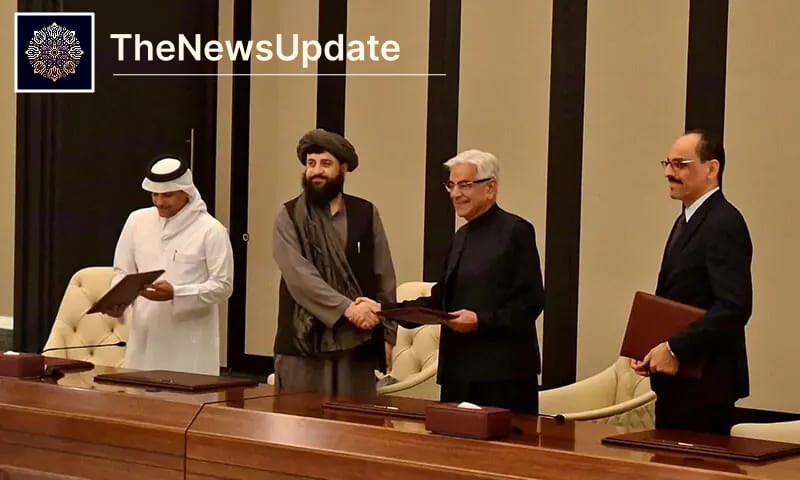
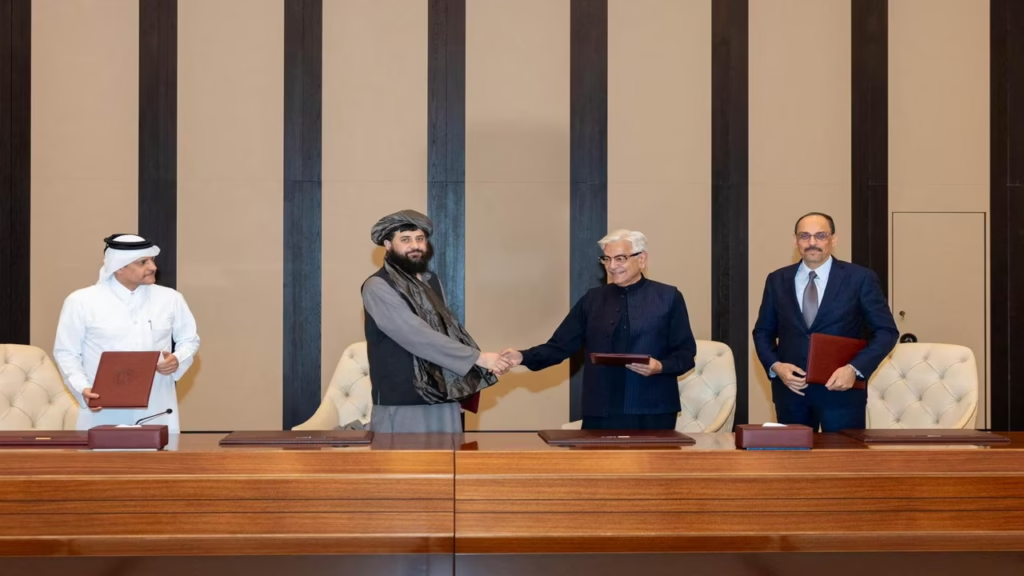
The Pakistan-Afghanistan peace talks were meant to mark a turning point in one of South Asia’s most volatile relationships. After years of conflict, border skirmishes, and mutual blame, delegations from both nations gathered in Turkey to negotiate a ceasefire. Yet, despite international mediation, the talks collapsed before any real progress could be made.
At first glance, Pakistan’s Defence Minister Khwaja Asif claimed that India was behind the derailment. But as emerging details reveal, the real reason lay much closer to home — in the skies above Afghanistan, where U.S. drones were operating freely with Islamabad’s quiet approval.
यह भी पढ़े:
 Osman Hadi Killers Fled to India via Meghalaya Border: Dhaka Police Reveal Shocking Escape Route

Pakistan’s Blame Game: Pointing Fingers at India
In the aftermath of the failed peace negotiations in Istanbul, Pakistani officials quickly shifted the blame to India. Defence Minister Khwaja Asif accused New Delhi of “pulling the strings” behind the Taliban leadership, alleging that Indian interference sabotaged every effort toward reconciliation.
“The people in Kabul pulling the strings and staging the puppet show are being controlled by Delhi,” Asif declared on Geo News. His comments suggested that every time progress was made, India intervened to halt the peace process. But analysts and Afghan sources painted a different picture — one that pointed to U.S. involvement through ongoing drone operations launched from Pakistan itself.
The U.S. Drone Connection: The Hidden Trigger
According to reports from TOLO News, Afghan negotiators demanded that Islamabad stop U.S. drone flights from its territory as a condition for peace. Pakistan, however, refused to comply. Sources confirmed that Pakistan had already signed an agreement with the United States allowing drones to use its airspace for “surveillance and potential strikes” within Afghanistan.
यह भी पढ़े:
 Bulldozer Raj Karnataka Demolitions: Congress Govt Faces Backlash After 400 Muslims Left Homeless
Kabul-based journalist Tameem Bahiss posted on X (formerly Twitter) that Pakistan had “acknowledged signing an agreement with a foreign country” — later identified as the United States. During the peace talks, Pakistani negotiators reportedly accepted some terms, only to backtrack after a mysterious phone call, likely from top military leadership.
That call changed everything. Suddenly, Pakistan’s delegation reversed its position, claiming it could not control U.S. drones or prevent strikes targeting ISIS inside Afghanistan. Turkish and Qatari mediators were reportedly “stunned” by the abrupt shift, which effectively doomed the talks.
How the Drone Pact Changed Negotiation Dynamics
For Afghanistan’s Taliban-led government, Pakistan’s refusal to rein in U.S. drones was a betrayal. The Afghan side insisted that sovereignty violations — especially airstrikes originating from Pakistani soil — had to stop before any peace deal could proceed Pakistan-Afghanistan.

When Islamabad admitted it couldn’t restrict American drone activity, the Taliban delegation saw no reason to continue. The Pakistan-Afghanistan revelation exposed Pakistan’s dependence on Washington and highlighted the limits of its autonomy in regional security matters.
Meanwhile, Asif’s fiery remarks about India were seen as an attempt to deflect public attention from the drone controversy. By invoking the India threat narrative, Islamabad sought to rally domestic support and distract from its own internal contradictions.
In reality, Pakistan’s long-standing partnership with the U.S. on counterterrorism — including covert drone cooperation — undermined its credibility as a peace broker. The contradiction was clear: how could Pakistan advocate peace while enabling drone warfare across its border?

Reactions from Kabul, Washington, and the Region
The fallout was immediate. Afghan officials expressed outrage, accusing Pakistan of hypocrisy and deception. “If Pakistan cannot stop drones launched from its own territory, then these talks are meaningless,” one Afghan negotiator told TOLO News.
In Washington, officials offered no confirmation of the alleged deal but emphasized the United States’ “right to defend against terror threats emanating from Afghanistan.” Analysts, however, see the renewed drone activity as part of a broader U.S. strategy to maintain regional influence after the 2021 withdrawal.
Regional observers also noted the irony: Pakistan, once a victim of U.S. drone strikes during the Obama years, is now enabling the same operations against Afghanistan. Journalist Ali M. Latifi from Kabul commented that “Pakistan admitting the U.S. conducts drone strikes from its territory is quite telling.”
यह भी पढ़े:
 Canada Hospital Killed Indian-Origin Man: Wife Alleges Medical Negligence After 8-Hour Wait
Adding to the tension, Pakistan’s economy continues to falter. Analysts suggest Islamabad’s dependence on U.S. military and financial support has made it more vulnerable to American pressure. “Pakistan has been renting out its soldiers and territory as launchpads — and now it’s paying the political price,” one regional expert observed.
Even as Islamabad insists that drone operations are part of a counterterrorism effort, Afghans view them as violations of sovereignty. Civilian casualties from airstrikes and JF-17 bombings have further fueled anti-Pakistan sentiment in Kabul.
Conclusion: The Future of Regional Stability
The breakdown of the Pakistan-Afghanistan peace talks underscores the complex power play shaping South Asia. Beyond rhetoric and diplomacy, it exposes Pakistan’s limited agency under the shadow of U.S. strategic interests.

While Islamabad blames India for stoking tensions, the truth lies in its own quiet agreement with Washington — one that allows drone warfare to continue unchecked. Until Pakistan reclaims control over its airspace and narrative, peace with Afghanistan will remain elusive.
The real casualty here isn’t diplomatic ego or political prestige — it’s regional stability. The renewed drone war threatens to reopen old wounds, destabilize fragile borders, and further alienate the two neighboring nations that most need cooperation to survive.
Related Reads
By The Morning News Informer — Updated October 30, 2025