Table of Contents
- Background of Trump’s Criticism
- Details of the US-Drafted Peace Plan
- International Reactions and Pushback
- Kyiv’s Challenges Amid Negotiations
- Conclusion and Outlook
Background of Trump’s Criticism
US President Donald Trump intensified his criticism of Ukraine’s leadership on Sunday, describing Kyiv as showing “zero gratitude” for Washington’s efforts in resolving the ongoing Russia-Ukraine war Trump slams Ukraine peace plan. Posting on Truth Social, Trump reiterated that the conflict “would have never happened” with what he termed strong US and Ukrainian leadership. He argued that he inherited a war “that should have never happened,” highlighting his ongoing narrative that Kyiv owes its Western supporters recognition for sustained military and economic aid.
The remarks coincided with high-level talks in Geneva, Switzerland, where American, Ukrainian, and European officials convened to review a controversial US-drafted plan designed to end the conflict. According to sources, the atmosphere was tense, as the plan demands significant territorial and military concessions from Ukraine, a stance heavily criticized for favoring Moscow.

Details of the US-Drafted Peace Plan
The 28-point peace proposal, largely promoted by Trump, includes highly controversial terms: Ukraine must cede significant territory, scale back its military capabilities, and formally abandon ambitions of joining NATO. Trump initially gave President Volodymyr Zelenskyy a deadline to approve the document, though he later clarified that this was not the “final offer.”
Among the core provisions is the ceding of the eastern Donbas region, much of which remains under Ukrainian control. Trump justified these measures by claiming Zelenskyy lacks sufficient leverage to continue fighting effectively, insisting that a settlement heavily tilted in Moscow’s favor is the most pragmatic approach Trump slams Ukraine peace plan.
- Territorial concessions in the Donbas region
- Significant reduction in Ukraine’s military capabilities
- Abandonment of NATO membership ambitions
- Media and educational clauses echoing Russian narratives
Military historians have noted that several clauses mirror Russian talking points, including abolishing “discriminatory measures” and rejecting “all Nazi ideology,” which analysts warn could legitimize Moscow’s justification for the invasion.
International Reactions and Pushback
Reactions to the plan have been mixed. Within Washington, lawmakers questioned whether the proposal resembled a “wish list of the Russians,” though the State Department defended the plan as an American initiative. European allies expressed concern that they were not consulted during drafting. Germany’s Chancellor Friedrich Merz emphasized that Europe’s role is to ensure any framework is acceptable to Ukraine, while EU Commission President Ursula von der Leyen highlighted the inviolability of Ukraine’s borders.
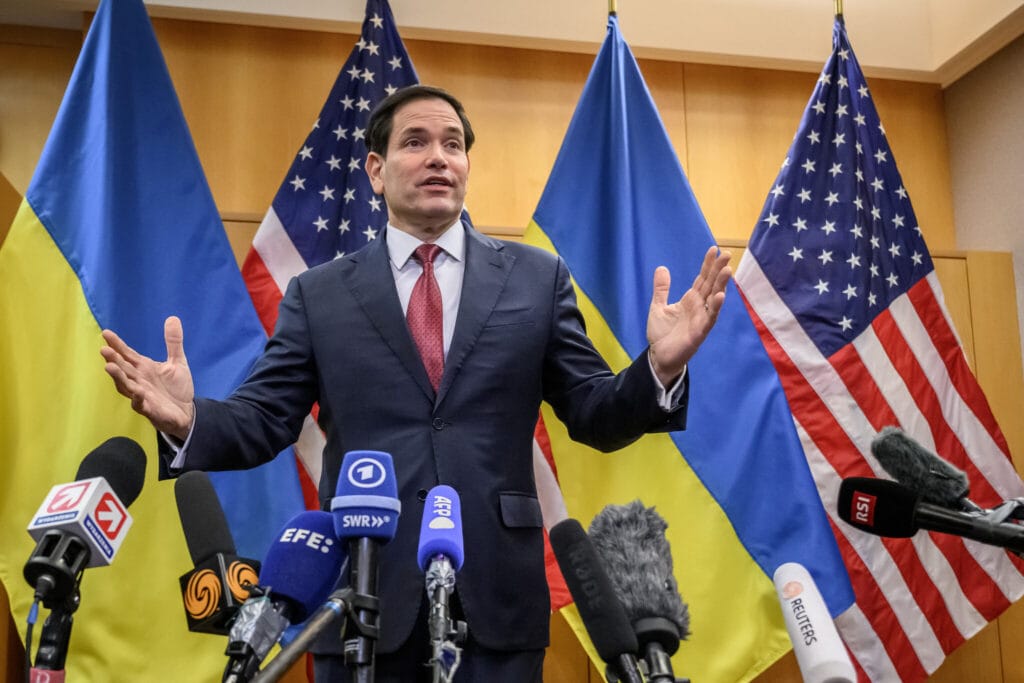
In Geneva, Ukrainian negotiators, led by Andriy Yermak, met with US officials including Secretary of State Marco Rubio, Special Envoy Steve Witkoff, and Jared Kushner. Talks with British, French, and German advisers preceded the bilateral sessions with the US. Turkish President Tayyip Erdogan indicated plans to consult Russian President Vladimir Putin and report back to European and US partners, reflecting the high-stakes diplomatic environment.
Ukrainian President Zelenskyy publicly expressed gratitude to the US, attempting to counter Trump’s narrative of “zero gratitude.” In a social media post, he emphasized the importance of US leadership in Ukraine’s security, reinforcing Kyiv’s commitment to constructive engagement in Geneva.

Kyiv’s Challenges Amid Negotiations
Ukraine faces one of its most vulnerable periods since the start of the conflict. Russian advances continue, including partial occupation of strategic hubs like Pokrovsk, creating severe operational and humanitarian pressure. Rolling blackouts, damaged infrastructure, and political scandals have further strained domestic governance.
Military and political observers warn that the terms of the US-drafted plan could damage Ukraine’s credibility with its public. Acceptance may be seen as capitulation, undermining morale and public trust. Despite these challenges, Ukraine has managed tactical successes, such as long-range strikes on Russian facilities and leveraging US sanctions on Russian oil, providing some leverage in negotiations.
Conclusion and Outlook
The “Trump slams Ukraine peace plan” episode illustrates the complex interplay of diplomacy, military strategy, and domestic politics. While Geneva negotiations offer hope for a settlement, significant hurdles remain. Any agreement must balance territorial integrity, military capability, and political legitimacy for Ukraine, while accommodating international partners’ interests.

Trump’s insistence on concessions heavily favoring Moscow, coupled with Kyiv’s domestic pressures, means the path forward is fraught with uncertainty. Analysts predict that the outcome of these negotiations could redefine regional security dynamics and influence global geopolitical alignments for years to come.
Related Reads
By The News Update — Updated 24 November 2025