Table of Contents
- What Musk Actually Said — The Joe Rogan Tease
- What “Flying Roadster” Could Mean Technically
- Regulatory and Safety Hurdles
- Market Context and Competitors
- Why Skepticism Is Healthy
- Conclusion: Expect a Spectacle — Not an Immediate Product
What Musk Actually Said — The Joe Rogan Tease
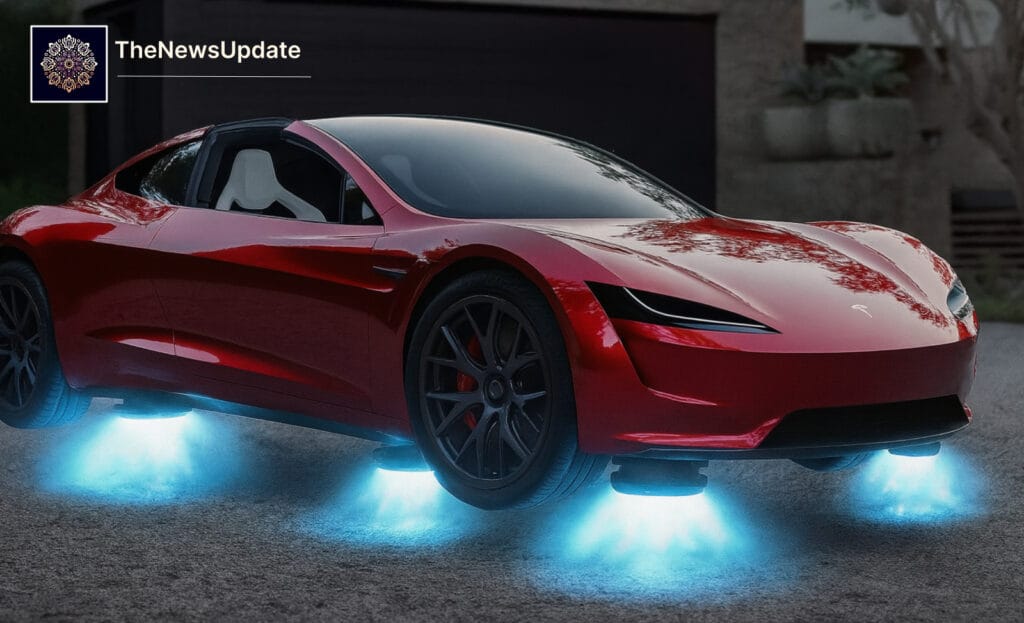
On a recent episode of The Joe Rogan Experience Tesla flying car demo 2025, Elon Musk teased that Tesla is “getting close” to demonstrating a prototype that he called “unforgettable,” adding that he hopes the demo will happen “before the end of the year.”
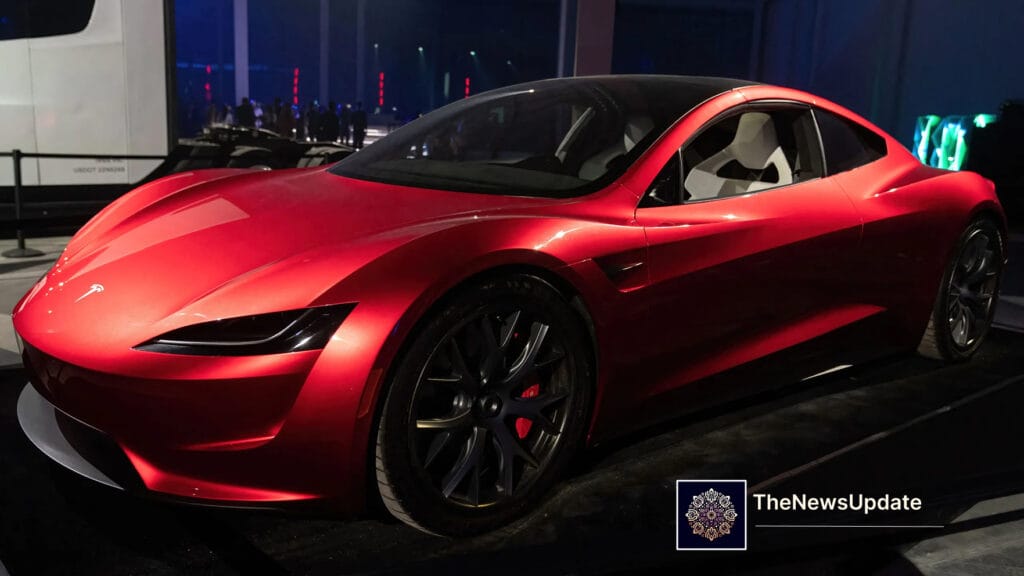
Musk framed the tease in the context of the long-promised Tesla Roadster, which has been delayed for years, but then broadened the claim: the prototype may stretch the definition of a car and could Tesla flying car demo 2025 include radical technologies — possibly even vertical takeoff or retractable-wing systems — though he remained deliberately cryptic.
The soundbite that caught headlines was Musk’s promise that the product demo would be “unforgettable — whether it’s good or bad.” That phrasing, part showmanship and part hedge, reflects Musk’s history of grand proclamations that often outpace near-term reality.
What “Flying Roadster” Could Mean Technically
“Flying car” is a wide umbrella. In practice there are three main technical flavors: road-capable vehicles with deployable wings, VTOL (vertical takeoff and landing) vehicles which behave like small aircraft, and hybrid concepts that drive on roads and fly in limited airspace. If Musk is serious about a demonstrator, the likely form factor would be a prototype optimized for spectacle rather than immediate mass-market use.
Key technical challenges Tesla would need to solve for any credible demo include propulsion-to-weight ratios, battery energy density, thermal management, structural reinforcements for flight loads, and fail-safe control systems. Electric VTOLs today rely on distributed propulsion and lightweight materials—areas where Tesla has EV experience, but aircraft-grade certification standards are a different league. Engineering a vehicle that can both drive like a car and fly like an aircraft multiplies complexity rather than combining two solved problems Tesla flying car demo 2025.

Even as a prototype, the vehicle would require convincing solutions to hover control, redundant power systems, and a flight control architecture that can cope with rapidly changing aerodynamic regimes. Tesla’s autonomy software and electric powertrain expertise could help, but aerospace systems typically demand long cycles of iterative testing.
Regulatory and Safety Hurdles
Tesla flying car demo 2025 anything that carries people is heavily regulated. In most jurisdictions, a flying car would be treated as an aircraft and fall under civil aviation authorities, pilot licensing rules, and strict airworthiness certification — none of which bend easily to marketing timelines. Even for a one-off demo, Tesla would need flight permits, approved test ranges, and contingencies for emergency response. :contentReference[oaicite:5]{index=5}
Beyond formal certification, public safety optics matter. A dramatic demo that goes wrong could trigger regulatory crackdowns that set timelines back by years. History shows that aviation safety regulators are conservative for good reasons: risk to bystanders is non-negotiable. That means any credible flying-car program must plan for layered redundancies and independent safety validation well before a public stunt.

Market Context and Competitors
Musk arriving at the flying-car conversation reignites competition in an emergent market. Companies such as Joby Aviation and Alef (among others) have already been testing eVTOL and air-taxi prototypes, focusing on certification pathways and short-range, urban air mobility services. Their progress reminds us that the flying-car domain is crowded and that incremental, safety-first steps have been the prevailing approach.
That said, Tesla’s brand power and Musk’s showmanship can rapidly shift public attention, investor sentiment, and even regulatory focus. Markets reacted swiftly to Musk’s comments, with coverage noting potential effects on Tesla’s valuation and investor expectations. But market excitement doesn’t substitute for engineering validation — and investors have learned to discount Musk’s “next year” timelines over the years.
Why Skepticism Is Healthy
Musk has a proven track record of making audacious bets that sometimes pay off and sometimes morph into long-term initiatives. The Roadster itself was first teased years ago and has repeatedly slipped timelines — a fact many commentators and tech insiders have pointed out. That historical context is why many experts urge caution: a memorable demo could simply be a theatrical prototype, not a production-ready vehicle.
यह भी पढ़े:
 Samsung Bixby Perplexity AI Integration: 7 Key Signs Samsung Is Reinventing Its Voice Assistant
Practical questions remain: who would be allowed to fly one, what infrastructure would support it, how would traffic be managed in the low-altitude urban airspace, and what would a liability framework look like? Those are policy and planning questions that outlive any single demo. Policymakers, city planners, and aviation authorities would need to collaborate to move past the prototype stage.
Conclusion: Expect a Spectacle — Not an Immediate Product
Elon Musk’s tease that a “Tesla flying car demo 2025” might be “unforgettable” is exactly the kind of headline that will dominate tech and mainstream outlets in the coming days. It’s plausible that Tesla could unveil an attention-grabbing prototype before year-end, leveraging its electric powertrain expertise and Musk’s flair for dramatic reveals.
But there’s a difference between a headline-making prototype and a certified, mass-producible vehicle you can buy, insure and legally use in city skies. Expect the former first, and substantial regulatory, safety and infrastructural work if the latter is ever to follow. For now, buckle up: whether it’s a genuine leap or a spectacular tease, Musk’s promise will be unforgettable — and the follow-up will determine whether the world gets flying cars or just another viral moment in Musk’s long playbook.

Related Reads
By The News Update — Updated November 1, 2025