By The News Update— Updated Nov 13, 2025
The Supreme Court’s recent hearing on petitions challenging the Special Intensive Revision (SIR) of electoral rolls in Tamil Nadu and West Bengal signalled a probing, cautious approach that could make it harder for petitioners to secure immediate relief. The bench’s questions — aimed at distinguishing genuine disenfranchisement from political objections — were shaped in part by the fallout and outcomes of Bihar’s SIR exercise earlier this year.
What is SIR and why are petitioners challenging it?
The Special Intensive Revision (SIR) is a nationwide exercise by the Election Commission of India (ECI) to update and cleanse electoral rolls — a process that includes enumeration, verification and removal of duplicate, deceased or otherwise ineligible entries. Petitioners in Tamil Nadu and West Bengal argue that the timing, method and outreach of the SIR in their states create real risks of disenfranchisement, particularly in areas affected by heavy rains, festival seasons, and poor connectivity. They seek either a stay or stronger safeguards to protect vulnerable voters during the revision.
यह भी पढ़े:
 Osman Hadi Killers Fled to India via Meghalaya Border: Dhaka Police Reveal Shocking Escape Route
How did the Supreme Court react at Tuesday’s hearing?
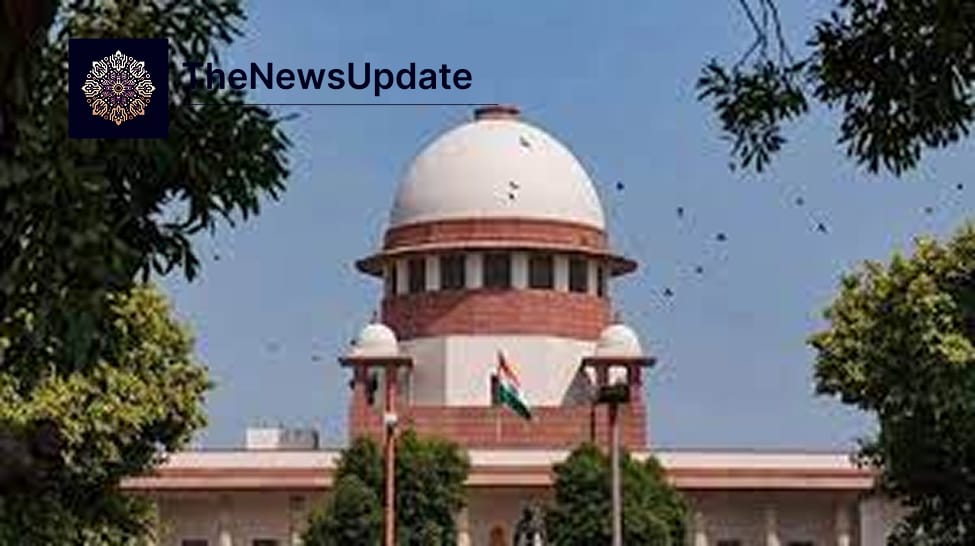
The two-judge bench led by Justices Surya Kant and Joymalya Bagchi pressed petitioners on whether their objections pointed to real exclusion of voters or were predominantly political concerns. The bench emphasised that the ECI has a mandate to carry out roll revisions and that functional deficiencies may often be susceptible to rectification rather than a wholesale suspension of the exercise. The court also underscored the need to protect voter-data privacy and appeared open to procedural solutions such as targeted rectifications and access controls.
Why did the Bihar SIR matter in this hearing?
Bihar’s SIR became the implicit backdrop for the arguments. In Bihar, the ECI’s exercise initially flagged roughly 65 lakh names for potential deletion on grounds like duplication, death or being untraceable — a move that provoked intense political debate and legal scrutiny. Despite that controversy, Bihar later recorded a historic voter turnout of 66.9% during assembly polls, strengthening the narrative that the SIR, with proper safeguards, can enhance electoral integrity rather than suppress votes. The Supreme Court’s questioning in the Tamil Nadu and West Bengal petitions repeatedly returned to whether petitioners could show similar, concrete disenfranchisement risks.
Key observations from the bench
The court made three notable points during the hearing:
यह भी पढ़े:
 Bulldozer Raj Karnataka Demolitions: Congress Govt Faces Backlash After 400 Muslims Left Homeless
- Enable access: Procedures should be geared so the revision reaches the common voter “in the easiest manner,” rather than being an administrative obstacle.
- Rectification over suspension: The bench emphasised the possibility of correcting procedural lapses instead of halting the SIR exercise entirely — placing a higher evidentiary burden on petitioners.
- Privacy safeguards: The justices recognised the Election Commission’s prerogative to protect voter data (for example, by limiting machine-readable public access) while balancing transparency.
What the petitioners argued — and the gaps the Court probed
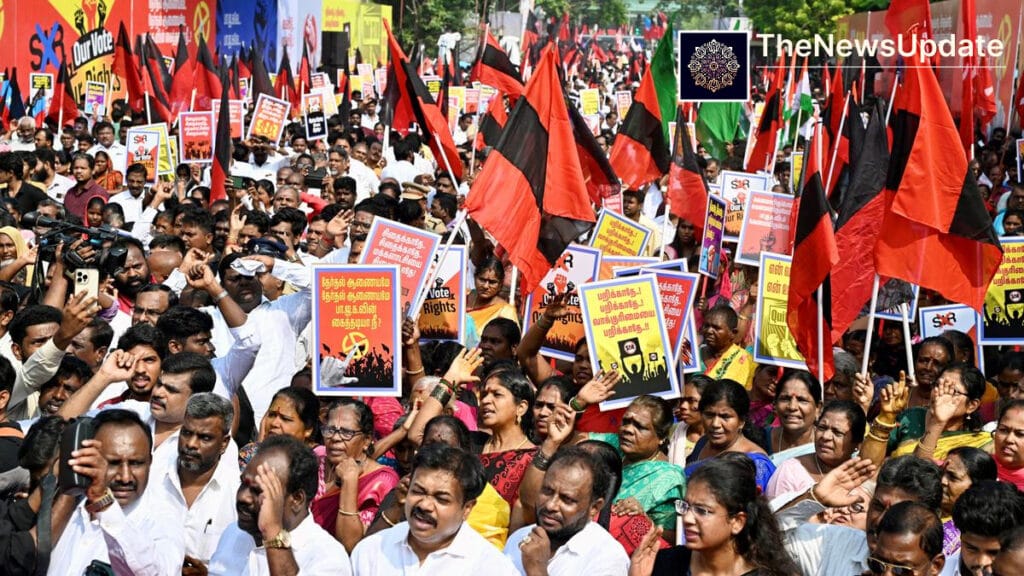
Senior Advocate Kapil Sibal, representing petitioners from both states, highlighted logistical and seasonal hurdles: monsoon disruptions, harvest periods, and festival holidays that could keep citizens away from enumeration points. In West Bengal, he said, basic connectivity issues complicate access for many voters. But the bench repeatedly asked whether these inconveniences, however real, met the threshold for constitutional injury that would justify halting the SIR. In short: are these problems systemic exclusions or transitory operational gaps that can be remediated?
Privacy versus public access: a delicate balance
The court’s remarks on data privacy addressed a point central to several petitions: should voter-roll data be made widely accessible in machine-readable formats? The bench leaned toward allowing layers of privacy — for example, password-protected or resident-only access — to prevent misuse of data, while ensuring voters themselves can verify and correct their entries. This stance suggests the Court is mindful of modern data risks (scraping, profiling) even as it acknowledges the ECI’s obligation to publicise revised rolls.
Why the Court’s preference for rectification matters
Judicial preference for remedies that fix procedural problems (rectification) rather than blanket injunctions (suspension) raises the bar for petitioners. To succeed, challengers may now need to produce direct evidence of disenfranchisement — affidavits from affected voters, proof of systemic exclusion, or data showing mass inability to participate — rather than pointing to generalized hardships or political timing arguments. The Court’s approach signals deference to the ECI’s technical mandate, while still retaining supervisory power to ensure fairness.

How Bihar’s outcome influenced the Court
Bihar’s SIR was controversial because the draft roll removed roughly 65 lakh names — a large number that critics called alarming. The ECI countered by publishing the list with reasons and outreach channels for claims and objections, and the eventual poll turnout in Bihar was high. The Supreme Court took judicial notice of these facts when considering petitions in other states; the Bihar experience appears to have strengthened the Court’s view that administrative exercises like SIR, if conducted with transparency and remedies, can be consistent with democratic participation rather than being inherently exclusionary. Petitioners must therefore show comparable, concrete impairment in their own states to displace the ECI’s exercise.
What remedies did the Court suggest or leave open?
Rather than ordering an immediate stay, the Court signalled that it would prefer the ECI to respond with measures to mitigate operational deficiencies: stronger public notices, extended windows for claims and objections, improved on-ground enumeration drives in difficult-to-reach areas, and technological safeguards to prevent data misuse. The bench also directed High Courts to keep state-level petitions in abeyance while the apex court considers the matter, indicating a centralized, uniform scrutiny of SIR procedures across affected states.
What petitioners need to prove now
Given the Court’s tenor, petitioners will likely need to move beyond abstract policy objections and produce:
- Documented instances of eligible voters being unable to access enumeration facilities due to timing, weather, or lack of notice;
- Evidence of systemic technical failures (connectivity blackspots, non-functioning centres) that prevented adequate participation;
- Proof that specific demographic groups (migrants, agricultural labourers, scheduled castes/tribes, women) face disproportionate exclusion; and
- Concrete examples of administrative opacity — for example, failure to publish reasons for deletions or absence of accessible claims mechanisms.
Why states like Tamil Nadu and West Bengal are wary
Opposition and regional parties in Tamil Nadu and West Bengal have framed their objections around civic realities: harvest seasons and festivals in Tamil Nadu, and connectivity/terrain issues in parts of West Bengal. They also argue that politically sensitive timings can leave migrant communities — who often lack permanent local addresses — particularly exposed to roll-cleaning processes. The petitioners’ fear is that the cumulative effect of several “operational” shortcomings could amount to meaningful disenfranchisement unless corrected.
Potential implications if the Court sides with petitioners
If the Supreme Court were to find in favour of petitioners on substantive grounds, remedies could include orders for (a) suspension or postponement of SIR in certain districts, (b) targeted directions to ECI to expand outreach and claims windows, or (c) judicially supervised audits of the revision process. But the Court’s questioning suggests it will require strong empirical showing before awarding such relief, reflecting a cautious balancing act between electoral integrity and citizens’ franchise rights.
What happens next — timeline and likely outcomes
The Supreme Court has issued notices to the Election Commission and posted the matters for further hearing, asking the ECI to file a response within a specified timeline. Meanwhile, the High Courts have been directed to keep related petitions in abeyance to avoid conflicting orders. The next listing will be watched closely because it will determine whether the Court’s provisional preference for rectification becomes an actionable framework — or whether petitioners can marshal the level of proof the bench appears to demand.
यह भी पढ़े:
 Canada Hospital Killed Indian-Origin Man: Wife Alleges Medical Negligence After 8-Hour Wait
Expert reactions and analysis
Legal commentators say the Court’s posture reflects judicial realism: large-scale administrative exercises like SIR require technical discretion that courts are hesitant to second-guess unless constitutional rights are demonstrably harmed. At the same time, the bench’s insistence on privacy protections and clear rectification mechanisms shows a willingness to police procedural fairness. Political analysts note a second effect: Bihar’s relatively high turnout after SIR may have reduced judicial appetite for pre-emptive stays elsewhere — making the evidentiary threshold higher for states seeking immediate relief.
Bottom line — what readers should watch
1. ECI’s response: How comprehensively the Election Commission addresses procedural gaps and data-privacy concerns in its reply to the Supreme Court.
2. Petitioners’ evidence: Whether petitioners can produce concrete, verifiable proof of likely disenfranchisement specific to their states.
3. Judicial remedy: Whether the Court opts for focused remedial directions (additional outreach, extended deadlines, privacy safeguards) or orders broader suspensions in specific districts.