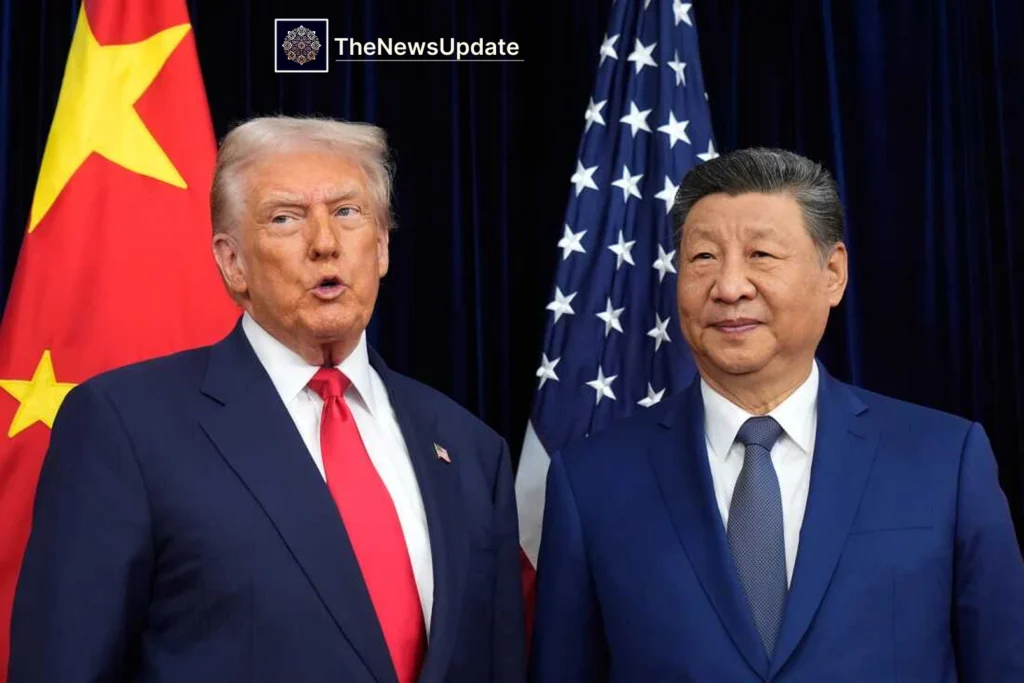
US President Donald Trump’s recent interview on CBS’s 60 Minutes — in which he said Pakistan and China, along with Russia and North Korea, have been testing nuclear weapons — has sent ripples through international security circles and raised acute questions for India’s defence planners. Trump framed the claim while defending his decision to direct US forces to restart nuclear-weapon testing after a 33-year moratorium, an announcement that has itself attracted intense scrutiny.
What Trump Actually Said — and How Officials Responded
In the interview transcript and related coverage, Trump asserted that several nuclear-armed states are conducting tests that the public does not see, calling covert detonations and underground experiments a reality of modern nuclear competition. The CBS transcript records Trump’s remarks about Russia, China, North Korea and Pakistan conducting testing, which he used to justify the U.S. decision to resume “testing” of its nuclear weapons.
Within hours, senior US officials moved to clarify what “testing” would mean in practice. The US Energy Secretary and National Nuclear Security Administration emphasised that planned activities are non-critical and would not necessarily involve explosive nuclear detonations — at least for now — pointing to subcritical experiments, system checks and advanced simulations that assess warhead reliability without a full nuclear blast. Those clarifications were reported by AP and Reuters and underscore the technical, not necessarily detonative, nature of the early-phase work the administration has authorised.
यह भी पढ़े:
 Osman Hadi Killers Fled to India via Meghalaya Border: Dhaka Police Reveal Shocking Escape Route
Are China and Pakistan Really Testing Nukes?
Trump’s claim that China and Pakistan are testing nuclear weapons is politically charged and technically specific. Independent open-source monitoring — including seismic networks, satellite observation and international verification mechanisms — make truly large, overt nuclear detonations hard to hide. Yet, experts note that subcritical tests, hydrodynamic experiments and other non-explosive work can be conducted in ways that are less visible to the public and harder to detect through conventional open reporting. Several international outlets summarised the president’s claim while highlighting the technical nuances involved.
That said, there is no publicly released evidence (such as seismic-confirmed explosive test data) that China or Pakistan have recently performed headline-grabbing nuclear detonations like those of the Cold War era. Most contemporary assessments from watchdogs and think tanks point to rapid stockpile expansion (especially for China), delivery-system tests, and possibly clandestine experiments — but not to confirmed modern nuclear detonations concealed from the global monitoring system. This distinction matters strategically: the difference between explosive nuclear tests and other forms of nuclear-related experimentation influences legal, diplomatic and military responses.
Why India Should Care: Two-Front Nuclear Dynamics
For India, the strategic implications are immediate and uncomfortable. New Delhi already faces two nuclear-armed neighbours with competing capabilities: China’s fast-growing arsenal and Pakistan’s India-focused deterrent. The latest scholarly and think-tank estimates put India’s stockpile at roughly 180 nuclear warheads, Pakistan’s at about 170, and China’s at near 600 warheads as of early 2025 — figures that demonstrate both quantitative gaps and qualitative differences in delivery systems and doctrine. These estimates come from open-source analyses by leading institutions that track global arsenals.
यह भी पढ़े:
 Bulldozer Raj Karnataka Demolitions: Congress Govt Faces Backlash After 400 Muslims Left Homeless
If China is conducting covert tests aimed at improving yield, delivery accuracy or novel systems (for example, FOBS-like capabilities or rapid MIRV production), the balance in the region shifts materially. Pakistan’s arsenal — smaller but increasingly diverse, including tactical nuclear options — complicates conventional deterrence calculations along India’s western front. Any credible indication that either neighbour is actively experimenting to improve warhead performance or deployability would demand a reassessment of India’s deterrent posture and operational plans.
What “Testing” Could Actually Mean
The modern nuclear toolbox is broader than it used to be. States can pursue:
- Subcritical experiments: non-explosive tests of plutonium or weapon components that do not produce a nuclear yield but help validate modelling.
- Hydrodynamic tests: high-explosive-driven experiments that mimic implosion dynamics without a nuclear chain reaction.
- Computer simulators & war-gaming: high-fidelity modelling using advanced supercomputers to predict performance.
- Delivery system trials: missile and re-entry vehicle tests that verify guidance, boost phase, and terminal accuracy — sometimes mistaken for warhead tests in popular commentary.
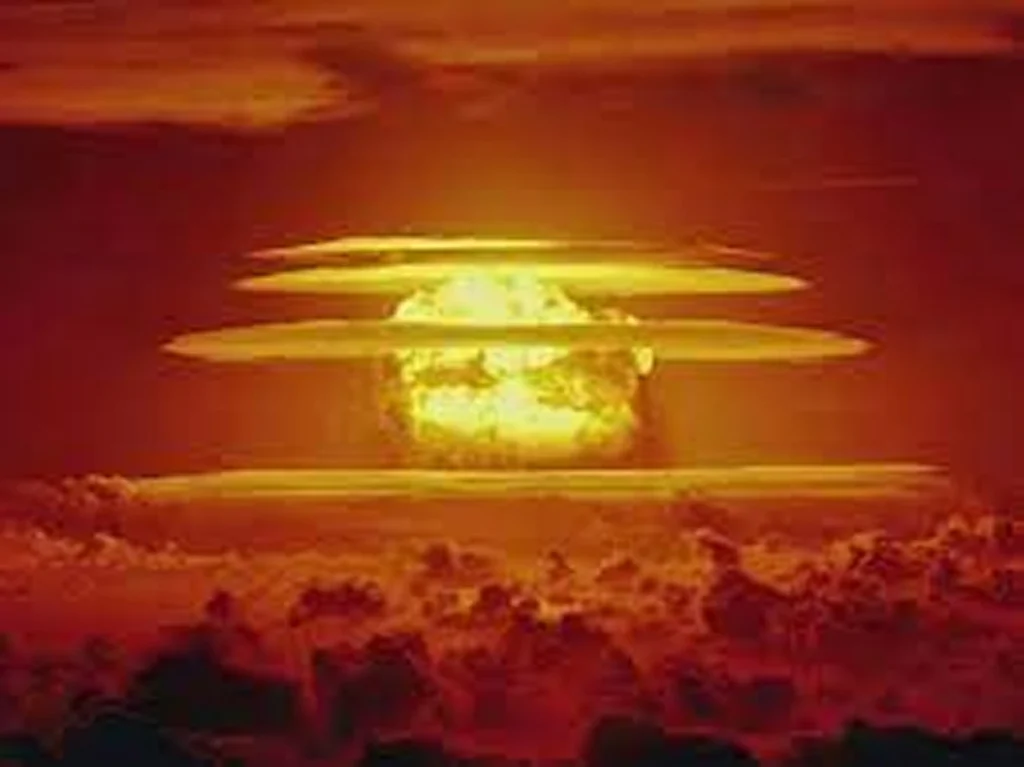
These methods can significantly advance a nuclear weapons program while staying below the international threshold that would trigger immediate, alarmed confirmation through seismic detection networks. That technical opacity is likely what the US president referred to when he described “testing” by other states.

Could This Spark a New Arms Race?
Trump’s announcement — and his public claims about other countries’ testing — have already heightened fears of a renewed arms race. Experts warn of a cascading effect: if the United States publicly restarts some forms of nuclear testing, even in non-explosive formats, other nuclear-armed states could accelerate modernization and experiments to avoid falling behind. The last time the US conducted an explosive nuclear test was in 1992; since then, a combination of moratoria, treaties (albeit imperfect), and simulation technology reduced the need for detonations. Reversal or dilution of those norms, even rhetorically, risks rapid escalation.
For India, the worry is less about parity with the US or Russia, and more about tactical asymmetries on the subcontinent. If Pakistan advances tactical nuclear miniaturisation or field-deployable short-range warheads, or if China gains asymmetric predictors such as FOBS deployment and more survivable MIRVed missiles, New Delhi’s planners would face a more complex deterrence environment that could demand doctrinal and technological responses.
International Law, Monitoring and the Diplomatic Fallout
International monitoring systems — including the Comprehensive Nuclear-Test-Ban Treaty (CTBT) monitoring network, seismological stations, and satellite observation — remain core tools for verification, though CTBT itself is not yet in force. Should credible proof of explosive testing emerge, diplomatic pressure would intensify on the offending state, with sanctions and international condemnation likely. So far, media coverage has highlighted Trump’s allegations and the US clarification rather than presenting independent confirmation of new explosive tests.

Diplomatically, the US move has already complicated talks with strategic partners. While the administration frames its decisions as necessary responses to adversary behaviour, allies in Asia and Europe have urged calm and restraint to avoid re-igniting a Cold War–style tit-for-tat. India, for its part, must balance diplomatic outrage with the pragmatic need to continue dialogue on arms control and regional stability.
What Are India’s Options?
New Delhi faces a constrained set of responses, each with trade-offs:
- Diplomatic engagement: Push for renewed emphasis on non-proliferation forums, transparency measures, and multilateral monitoring.
- Defence modernization: Accelerate missile defence, early warning, and naval/air assets to reduce vulnerability to asymmetric threats.
- Strategic signaling: Publicly reaffirm no-first-use while quietly improving survivable second-strike capabilities (submarines, hardened silos, mobile launchers).
- Arms control advocacy: Work with like-minded states to shore up norms and support verification technologies that close detection gaps for subcritical and other clandestine experiments.
Some analysts have speculated openly that Trump’s claims could open a political window for calls to validate the potency of India’s own deterrent — for example, debate over a hypothetical “Pokhran-III.” That would be a dramatic step with profound local and international consequences; most experts consider it inadvisable given the global security and diplomatic fallout.
यह भी पढ़े:
 Canada Hospital Killed Indian-Origin Man: Wife Alleges Medical Negligence After 8-Hour Wait
Bottom Line: Vigilance and Diplomacy
President Trump’s public assertion that Pakistan and China are testing nuclear weapons has pushed a sensitive strategic question into the open and increased pressure on global verification and deterrence regimes. While official US clarifications indicate the near-term testing activity will not involve explosive detonations, the broader geopolitical signal is clear: nuclear competition is re-emerging as a central security concern. For India, the calculus is unambiguous — the country must watch developments closely, invest in resilient deterrence and early-warning systems, and pursue diplomatic channels to reduce the risk of miscalculation on an increasingly dangerous two-front nuclear map.
Related Reads
By The Morning News Informer — Updated November 3, 2025