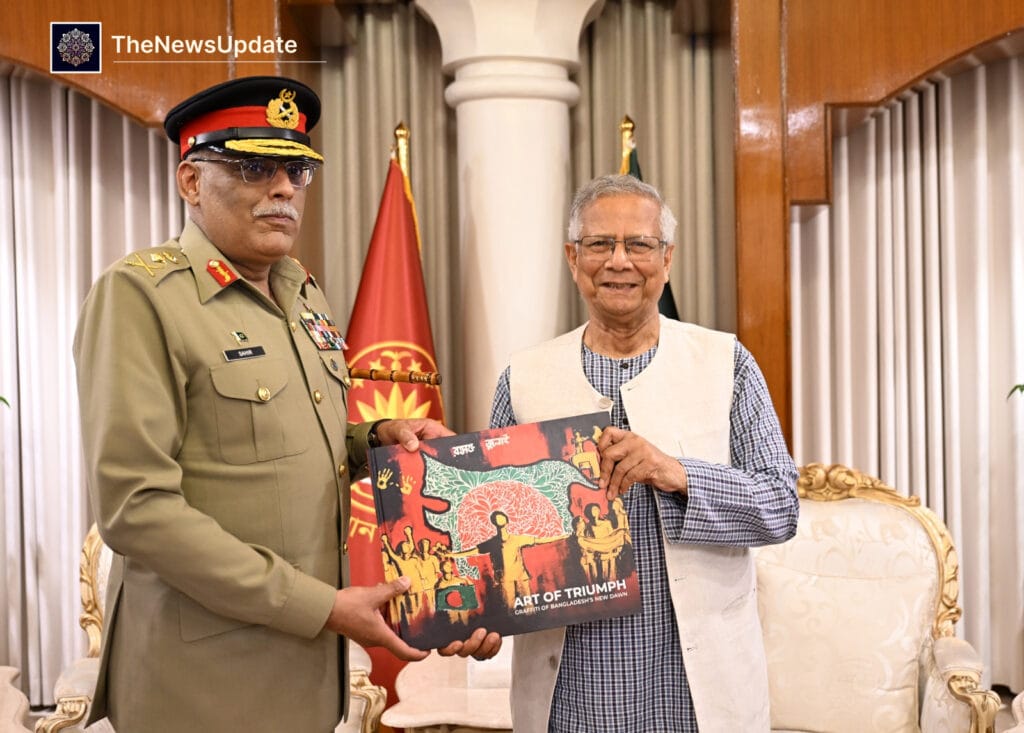
A potential Pakistan Bangladesh defence deal is fast emerging as a major geopolitical talking point in South Asia. In recent months, a series of high-level visits by senior Pakistani military officials to Dhaka has triggered intense speculation about a formal military agreement between the two countries, an arrangement that could significantly alter regional security dynamics and place India on alert.
From the chairperson of Pakistan’s Joint Chiefs of Staff to the Navy chief and even the powerful ISI chief, Lt General Asim Malik, Pakistani defence leadership has made repeated trips to Bangladesh. These visits coincide with a noticeable shift in Dhaka’s foreign policy posture under interim adviser Muhammad Yunus, who is widely seen as steering Bangladesh away from New Delhi and closer to Islamabad.
Pakistan’s Strategic Push in Bangladesh
Diplomatic sources suggest Pakistan is keen to fast-track a defence agreement with Bangladesh before the country heads into elections in the coming months. Islamabad appears eager to lock in a deal under a favourable Yunus-led administration, fearing that a future elected government could slow or even derail the process.
यह भी पढ़े:
 Osman Hadi Killers Fled to India via Meghalaya Border: Dhaka Police Reveal Shocking Escape Route
The Pakistan Bangladesh defence deal being discussed is reportedly modelled on a strategic mutual defence agreement Islamabad signed with Saudi Arabia earlier this year. That agreement drew attention for its language stating that “an aggression against either country shall be considered an aggression against both”, a clause that many analysts viewed as a direct strategic signal aimed at India.
In Pakistan, the Saudi agreement was framed as a deterrence mechanism, especially after Islamabad found itself under pressure during India’s Operation Sindoor in May. Encouraged by that experience, Pakistan now appears keen to replicate a similar framework with Bangladesh.
The Pakistan-Bangladesh Tango After 1971
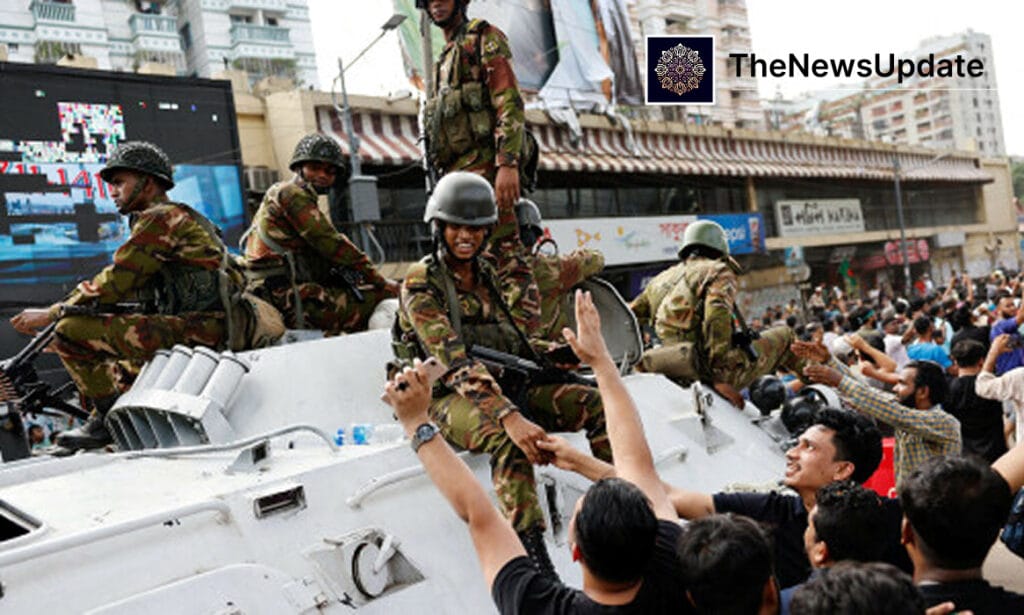
If finalised, this would be the first formal defence arrangement between Pakistan and Bangladesh since the 1971 Liberation War, a conflict that led to the creation of Bangladesh after widespread atrocities committed by the Pakistani military. The historical irony has not been lost on observers, especially given the deep scars the war left on Bangladeshi society.
यह भी पढ़े:
 Bulldozer Raj Karnataka Demolitions: Congress Govt Faces Backlash After 400 Muslims Left Homeless
Despite that history, recent political developments in Bangladesh have opened a window of opportunity for Islamabad. Analysts note that Pakistan has been actively rebuilding military-to-military ties, using defence diplomacy, intelligence cooperation, and strategic signalling to re-establish influence in Dhaka.
Reports suggest that a joint mechanism has already been set up by the two countries to draft the proposed agreement. Once signed, the Pakistan Bangladesh defence deal could allow intelligence sharing, coordinated security strategies, and even joint military exercises.
What Could the Defence Deal Include?
While official details remain scarce, sources indicate that the proposed pact may include several key components:

- Formal intelligence-sharing mechanisms between Pakistani and Bangladeshi agencies
- Joint military drills and training programmes
- Coordination on maritime security and port access
- Defence logistics and strategic planning cooperation
The most sensitive question, however, revolves around nuclear cooperation. There has been no confirmation that nuclear aspects would be part of the agreement. Yet, even the possibility has raised alarm bells in New Delhi, given Pakistan’s track record and its ambiguous statements during its defence pact with Saudi Arabia.
In that agreement, Pakistan hinted that its nuclear capabilities would be available if required, though Saudi Arabia stopped short of explicitly endorsing such claims. Any similar ambiguity in a Pakistan Bangladesh defence deal would be deeply unsettling for India.
Anti-India Sentiment Fuels Momentum
The internal political climate in Bangladesh has also played into Pakistan’s hands. Ongoing unrest in the country has increasingly taken on an anti-India tone, particularly after the murder of radical leader Sharif Osman Hadi. Pakistan has leveraged this sentiment to present itself as a strategic alternative to India.
On Tuesday, a senior leader of Pakistan’s ruling party openly demanded a formal military alliance with Bangladesh, further intensifying speculation. Pakistan Muslim League leader Kamran Saeed Usmani declared that Islamabad would stand “with full force” if India were to attack Bangladesh.
“Those who control ports and seas rule the world,” Usmani said, arguing that a Pakistan-Bangladesh military partnership could dramatically reshape regional power equations. Such statements have only strengthened perceptions that the defence deal is aimed, at least in part, at countering India.
India Watches Closely but Says Little
India has so far refrained from making any public statement on the reported Pakistan Bangladesh defence deal. However, officials have indicated privately that New Delhi is closely monitoring developments, particularly given the potential security implications on India’s eastern front.
यह भी पढ़े:
 Canada Hospital Killed Indian-Origin Man: Wife Alleges Medical Negligence After 8-Hour Wait
Strategic analysts warn that even limited defence cooperation between Pakistan and Bangladesh could complicate India’s security planning. Intelligence sharing, coordinated maritime activity, or access to Bangladeshi ports could provide Pakistan with strategic depth it has long sought.
The concern becomes even sharper if the deal evolves beyond symbolic cooperation into a binding military alliance. In such a scenario, India could face coordinated pressure from both its western and eastern neighbours.
Election Uncertainty in Bangladesh
The upcoming elections in Bangladesh add another layer of uncertainty. With the Awami League barred from contesting, India is watching closely to see which political forces gain ground. New Delhi is believed to favour the Bangladesh National Party (BNP), led by Khaleda Zia, which has traditionally maintained more pragmatic ties with India.

If the BNP were to come to power, there is speculation that the Pakistan Bangladesh defence deal could be stalled or revisited. In contrast, the radical Jamaat-e-Islami, widely viewed as being aligned with Pakistan’s ISI, has been vocal in supporting closer military ties with Islamabad.
This political equation explains Pakistan’s urgency. By securing a formal agreement under the Yunus administration, Islamabad could lock in strategic gains that might survive a future change in government.
Regional Implications and Strategic Risks
A Pakistan Bangladesh defence deal, if concluded, would mark a significant shift in South Asian geopolitics. It would signal Bangladesh’s departure from its traditionally balanced foreign policy and reintroduce Pakistan as a key security player in the Bay of Bengal region.

For India, the implications are serious but not insurmountable. Analysts argue that New Delhi’s response will likely focus on diplomatic engagement, regional partnerships, and reinforcing ties with friendly governments in Dhaka.
At the same time, India may also strengthen its military preparedness along the eastern corridor, ensuring that any strategic realignment does not compromise national security.
Conclusion: A Deal That Could Redraw Regional Lines
The growing buzz around a Pakistan Bangladesh defence deal underscores how rapidly alliances can shift in South Asia. Driven by political opportunity, strategic calculation, and regional rivalries, the proposed pact has already succeeded in putting India on notice.
Whether the deal materialises before Bangladesh’s elections remains to be seen. What is clear, however, is that even the prospect of such an agreement has reintroduced strategic uncertainty into the region.
As Dhaka, Islamabad, and New Delhi weigh their next moves, the coming weeks could prove decisive in shaping the future security landscape of South Asia.
Related Reads
By The Morning News Infromer— Updated December 23, 2025