By The News Update — Updated November 5, 2025
Table of Contents
- Overview: The viral clip and the captive’s plea
- Who is the Odisha man and how he ended up in Sudan
- The viral video: What the rebels asked and why it shocked viewers
- Sudan conflict context — RSF, Darfur and civilian risk
- Official response: Odisha, MEA and diplomatic steps
- Family appeal and on-the-ground details
- What can be done: Rescue options, Red Cross and diplomacy
- Conclusion: Why this matters for Indians abroad
Overview: The viral clip and the captive’s plea
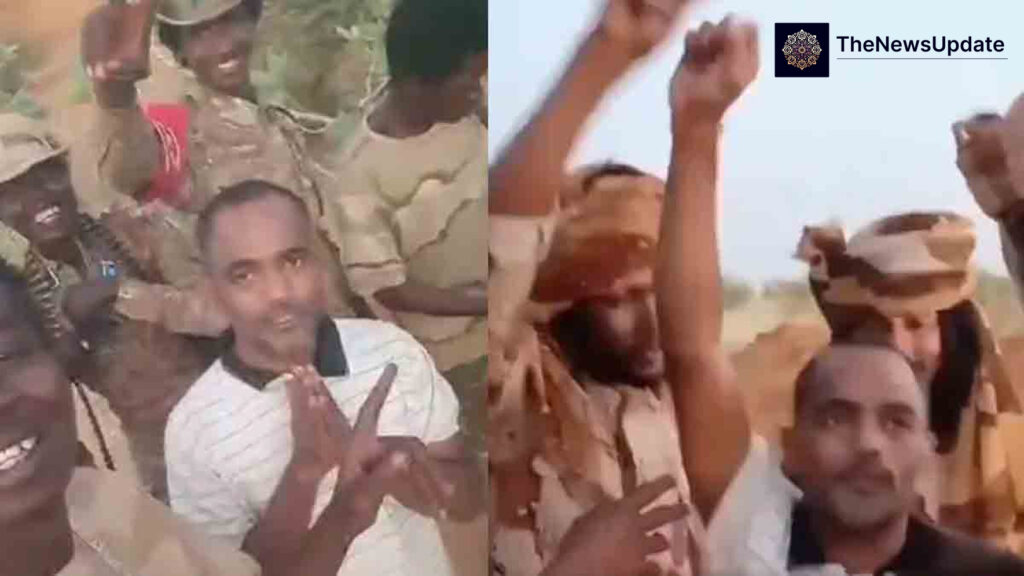
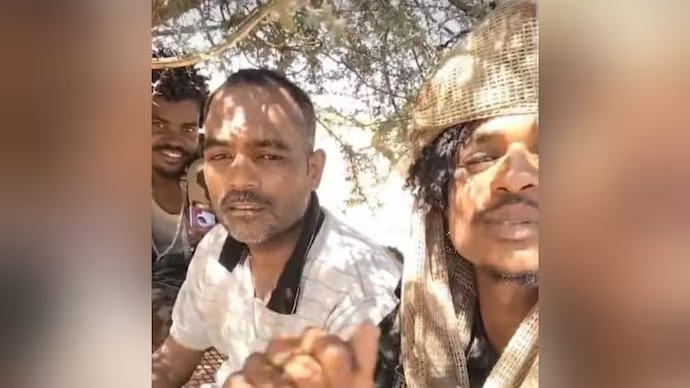
A distressing video circulating on social media shows an Odisha man kidnapped in Sudan and seated on the floor, flanked by armed fighters of the Rapid Support Forces (RSF). In the clip, one of the rebels asks the captive if he “knows Shah Rukh Khan,” while another orders him to say “Dagalo good,” referring to RSF commander Mohamed Hamdan Dagalo (Hemedti). The footage — shared by the family and amplified by news outlets — has focused national attention on the safety of Indian nationals in Sudan’s conflict zones.
यह भी पढ़े:
 Osman Hadi Killers Fled to India via Meghalaya Border: Dhaka Police Reveal Shocking Escape Route
Who is the Odisha man and how he ended up in Sudan
The man identified in the video is 36-year-old Adarsh Behera of Jagatsinghpur district in Odisha. He had been employed at Sukarati Plastic Factory in Al Fashir since 2022. According to family accounts, Adarsh’s phone went silent around October 20; on October 24 his wife received an anguished call from an unknown number confirming he had been abducted while returning from work. The family and state officials believe Adarsh — the Odisha man kidnapped in Sudan — is being held in or near Nyala, the capital of South Darfur, an area known to be under RSF influence.
The viral video: What the rebels asked and why it shocked viewers
The short clip has two elements that made it go viral: the image of an Indian worker pleading for help, and an almost surreal exchange where a rebel asks whether the captive knows Shah Rukh Khan. That single line — “Do you know Shah Rukh Khan?” — quickly spread across platforms because it juxtaposes popular-culture reference with the stark reality of a kidnapping. The same clip shows the captors forcing the Odisha man kidnapped in Sudan to praise Dagalo, a chilling demonstration of coercion and propaganda.
Beyond the shock value, the video is evidence the captive is alive and in direct contact with armed RSF elements. Families, civil society groups and the media have since used the clip to press for diplomatic action and humanitarian access.
यह भी पढ़े:
 Bulldozer Raj Karnataka Demolitions: Congress Govt Faces Backlash After 400 Muslims Left Homeless
Sudan conflict context — RSF, Darfur and civilian risk
The current Sudan conflict, which pitted the RSF against the Sudanese Armed Forces (SAF), has created one of the world’s most severe humanitarian crises since fighting escalated in April 2023. Millions have been displaced across Khartoum and Darfur. RSF strongholds such as parts of Darfur — including areas around Al Fashir and Nyala — have become lawless zones where civilians face abductions, extortion and violence.
For an Odisha man kidnapped in Sudan like Adarsh, the risks are acute: limited access to consular assistance, disruption of local services, and the presence of multiple armed actors. The RSF’s tactics have included checkpoints, sweep operations and opportunistic detentions; foreign nationals working in factories or humanitarian roles are especially vulnerable when public order collapses.
Official response: Odisha, MEA and diplomatic steps
Following the family’s public appeal, the Odisha chief minister Mohan Charan Majhi wrote to the Union Ministry of External Affairs (MEA) seeking urgent help to secure the release of the Odisha man kidnapped in Sudan. The state government said the Director General of Intelligence has flagged the case and that the Resident Commissioner in New Delhi is coordinating with the MEA.

The MEA routinely engages with Indian missions and international partners in such cases. Typical steps include: confirming the captive’s identity and last known location, pressing local authorities (where reachable) to investigate, coordinating with humanitarian organisations like the International Committee of the Red Cross (ICRC), and exploring negotiated release channels. In conflict zones where state control is weak, consular access can be intermittent; still, coordinated diplomatic pressure has in past cases helped secure releases.
Family appeal and on-the-ground details
Adarsh’s wife, Susmita, and his elderly father have pleaded publicly for help. They described the harrowing call they received on October 24 and said his phone was unreachable afterward. The wife said captors told her the embassy or the Red Cross could secure his freedom — a sign that the abductors may be open to negotiation for release, conditional on contact with certain agencies.
The family also highlighted the emotional toll on their two children, aged eight and three. Local police in Jagatsinghpur have reported the incident to the Home Ministry and the MEA, and the state leader of the BJD, Naveen Patnaik, registered his concern and urged swift central action.
What can be done: Rescue options, Red Cross and diplomacy
Rescue and release options in a war zone are complicated and risk-laden. The pragmatic avenues that authorities typically pursue include:
- Humanitarian negotiation: Engaging neutral organisations such as the ICRC to establish contact with captors and secure release through dialogue.
- Consular verification: Ensuring the Indian mission can confirm the captive’s identity and welfare, and relay medical or logistical needs.
- Multilateral pressure: Coordinating with regional and international partners to increase diplomatic pressure on RSF commanders or intermediaries.
- Local intermediaries: Leveraging community leaders, tribal contacts, or business networks in Darfur who may have influence over armed groups.
- Information campaigns: Using media and family appeals carefully to keep attention on the case without endangering negotiation channels.
Each option carries trade-offs. A direct military rescue is perilous and rarely feasible without secure local intelligence and host-nation cooperation. Hence, governments often prioritise diplomacy and humanitarian negotiation first, particularly when the captors appear to respond to dialogue, as the family suggests in Adarsh’s case.
Conclusion: Why this matters for Indians abroad
The story of an Odisha man kidnapped in Sudan is a stark reminder of how regional conflicts can suddenly endanger migrant workers and expatriates. India’s diaspora includes thousands working in fragile states, and such incidents highlight gaps in emergency preparedness, consular reach and early-warning systems for citizens abroad.
यह भी पढ़े:
 Canada Hospital Killed Indian-Origin Man: Wife Alleges Medical Negligence After 8-Hour Wait
For the family of Adarsh Behera, the immediate priority is his safe return. For authorities, the case underlines the need for swift, well-coordinated diplomatic outreach and humanitarian engagement. For the public, the video is a sober call to watch how governments protect nationals in conflict zones — and how global crises can touch lives thousands of kilometres away.
Related Reads
Quick facts:
- Victim: Adarsh Behera, 36, Jagatsinghpur, Odisha — working in Al Fashir since 2022.
- Alleged captors: Rapid Support Forces (RSF), an armed group led by Mohamed Hamdan Dagalo (Hemedti).
- Family appeal: Wife Susmita and father-in-law have sought help from Odisha and the MEA.
- Official action: Odisha CM has written to the MEA; state intelligence and Jagatsinghpur SP have informed central authorities.
- Key dates: Phone contact lost ~Oct 20; family received call Oct 24 indicating abduction.