Table of Contents
- Background: Microsoft’s AI Evolution
- Mustafa Suleyman’s Vision for AI Self-Sufficiency
- The New OpenAI Deal and Its Implications
- Formation of the Superintelligence Team
- Microsoft’s Ethical AI and Future Goals
- Industry Reactions and Expert Analysis
- Conclusion: The Road Ahead for Microsoft AI
Background: Microsoft’s AI Evolution
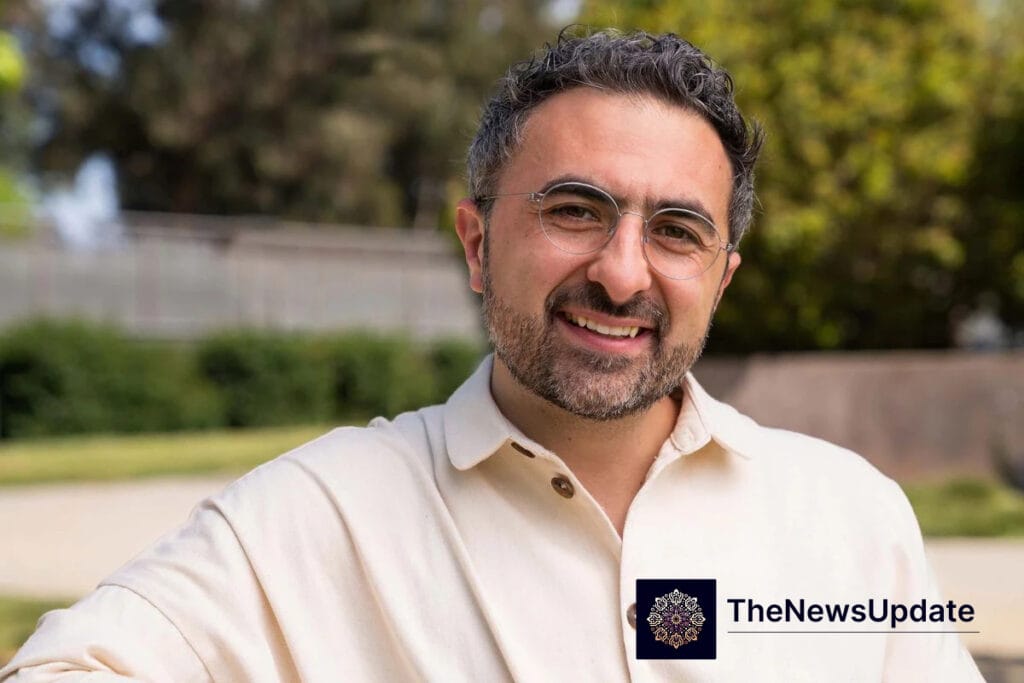
Over the past few years, Microsoft has transformed from a software company into a global leader in artificial intelligence Microsoft Mustafa Suleyman AI Self-Sufficiency. With its partnership with OpenAI and the rapid deployment of tools like Copilot and ChatGPT-integrated Office apps, the tech giant has aggressively pursued the goal of embedding AI into every product and service. Yet, for all its success, one key challenge has remained—dependence on external AI research.
That dependency appears to be changing. Mustafa Suleyman, Microsoft’s AI Chief and co-founder of DeepMind, has declared that the company must become “self-sufficient in AI.” His comments mark a turning point for Microsoft’s strategy, signaling a future where it independently builds, trains, and deploys AI systems from the ground up.

Mustafa Suleyman’s Vision for AI Self-Sufficiency
In an interview with Business Insider, Suleyman outlined the company’s evolving AI strategy. “Microsoft needs to be self-sufficient in AI. And to do that, we have to train frontier models of all scales with our own data and compute at the state-of-the-art level,” he said. The statement is not just a technical goal—it reflects a strategic necessity for Microsoft to control its AI destiny.
Historically, Microsoft has leaned heavily on OpenAI for the development of frontier AI models like GPT-4 and DALL·E. However, the new AI landscape—where governments, businesses, and regulators are demanding transparency and independence—requires the company to build its own foundational models. Suleyman’s leadership signals Microsoft’s shift toward becoming an AI-first, fully autonomous ecosystem.
“We have the data, we have the distribution, and we have the user interface,” Suleyman emphasized. “It’s just a matter of time before these things become really, really magical.” His approach highlights Microsoft’s aim to leverage its extensive infrastructure—from Azure cloud to Office 365—to build intelligent systems end-to-end.

The New OpenAI Deal and Its Implications
One of the most critical enablers of this new direction is Microsoft’s revised deal with OpenAI. Earlier agreements had prevented Microsoft from developing or researching artificial general intelligence (AGI) independently. The new clause, however, removes that barrier, granting Microsoft the right to pursue AGI on its own and partner with other AI labs.
Industry insiders believe this update reshapes the competitive landscape. It gives Microsoft both independence and flexibility—allowing it to build its own AI stack while continuing to benefit from its deep integration with OpenAI’s products. This hybrid approach ensures that Microsoft can innovate faster without breaching partnership boundaries.
In recent months, Microsoft has already started forming strategic partnerships outside of OpenAI. Notably, it collaborated with Anthropic to integrate Claude into Excel and other enterprise tools. These collaborations reflect a diversification strategy—Microsoft wants to ensure it’s not reliant on a single AI vendor for its future innovation pipeline.

Formation of the Superintelligence Team
To spearhead its self-sufficiency mission, Microsoft created a new Superintelligence Team led by Mustafa Suleyman. This elite unit will focus on the long-term development of superintelligent AI systems capable of surpassing human cognitive ability while maintaining ethical alignment and safety.
The Superintelligence team consolidates Microsoft’s most advanced AI researchers and engineers into a single group dedicated to solving challenges of scale, safety, and ethics. According to Suleyman, the goal is not just to build powerful AI models but to do so responsibly. “We want to create humanist AI—systems that respect human values, promote knowledge, and avoid misuse,” he stated in an earlier interview.
This vision is ambitious. Competing directly with OpenAI, Google DeepMind, and Anthropic, Microsoft’s internal R&D efforts will likely push boundaries in compute optimization, multimodal intelligence, and long-term memory models.

Microsoft’s Ethical AI and Future Goals
Mustafa Suleyman has long been an advocate for ethical artificial intelligence. His stance is that AI development should be guided by moral philosophy and practical safeguards. He has publicly stated his opposition to “erotic or exploitative” uses of generative AI, emphasizing that Microsoft’s technology will be developed under strict ethical guardrails.
“We’ve got a huge mission ahead of us,” Suleyman said. “Microsoft has $300 billion in revenues and an enormous responsibility to make sure that all of our products are AI-first, that we deploy agents everywhere, and that we make every customer workflow more intelligent.”
This mission aligns closely with Microsoft’s broader corporate strategy. Under CEO Satya Nadella, the company aims to make AI central to every aspect of its operations—from software development and cloud computing to cybersecurity and enterprise automation. The introduction of Copilot AI across Office, GitHub, and Windows is already a reflection of that vision in action.

Industry Reactions and Expert Analysis
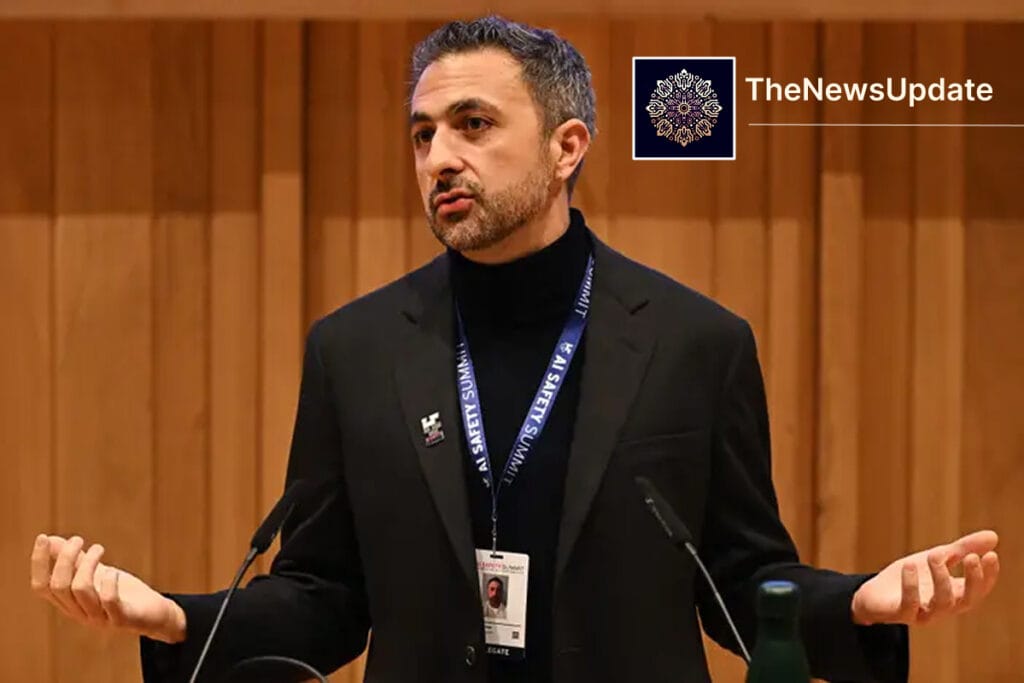
Experts across the AI community view Suleyman’s remarks as both pragmatic and visionary. Analysts at argue that Microsoft’s pursuit of self-sufficiency may redefine competition in the AI space. By leveraging its unmatched cloud resources through Azure and its global developer ecosystem, the company can accelerate research and reduce dependency on third-party innovators.
However, some experts caution that building AI systems entirely in-house may raise new challenges. These include data diversity, bias mitigation, and regulatory compliance across different jurisdictions. To mitigate these risks, Microsoft is expected to double down on transparency initiatives, third-party audits, and open collaboration with research institutions.
According to AI strategist Laura Green from TechRadar, “Microsoft’s self-sufficiency plan makes perfect sense in a post-OpenAI world. With shifting alliances and the growing demand for sovereignty in AI models, owning your infrastructure and data pipeline becomes an existential advantage.”

Meanwhile, competitors like Google and Anthropic are unlikely to remain idle. Both have ramped up research into multimodal systems capable of reasoning across text, images, and video—areas where Microsoft’s internal teams are still scaling up.
Conclusion: The Road Ahead for Microsoft AI
Microsoft’s journey toward AI self-sufficiency marks a new era in the evolution of artificial intelligence. Under Mustafa Suleyman’s leadership, the company is poised to transition from an AI collaborator to an AI creator, shaping its destiny in one of the most transformative technological revolutions of the century.
While challenges remain—ranging from computational demands to ethical safeguards—Microsoft’s unmatched infrastructure, financial strength, and leadership vision give it a significant edge. If executed well, this move could make Microsoft not only a software powerhouse but also a leader in the development of frontier AI and superintelligent systems.

The world will be watching as Suleyman and his team navigate this complex path, balancing innovation with responsibility. As the AI arms race intensifies, one thing is clear: Microsoft is no longer content being a passenger—it intends to drive the future of artificial intelligence.
Related Reads
By The News Update— Updated: 12 November 2025, 11:32 IST