Table of Contents
- Background: Messi’s India GOAT Tour
- What Happened at Salt Lake Stadium
- Why Fans Turned Angry
- Official Response and Arrests
- Messi’s Team and Organisers React
- India’s Football Passion and Crowd Risks
- Lessons for Future Mega Events
- Conclusion: Fallout of the Messi India Event Chaos
Background: Messi’s India GOAT Tour
The Messi India event chaos erupted during what was meant to be a celebratory stop on Lionel Messi’s highly publicised “GOAT Tour” of India. The tour includes promotional appearances in Kolkata, Hyderabad, Mumbai, and Delhi, and was designed to celebrate the global legacy of the eight-time Ballon d’Or winner.
For Indian football fans, Messi’s visit carried enormous emotional weight. Despite India being a cricket-dominated nation, cities like Kolkata have a deep-rooted football culture. For decades, Argentine football legends — from Diego Maradona to Lionel Messi — have enjoyed cult-like status among fans in West Bengal.
यह भी पढ़े:
 Osman Hadi Killers Fled to India via Meghalaya Border: Dhaka Police Reveal Shocking Escape Route
Thousands of supporters travelled long distances, paid premium ticket prices, and queued for hours for a rare chance to see Messi in person. Expectations were sky-high, setting the stage for disappointment when reality failed to match the hype.
What Happened at Salt Lake Stadium
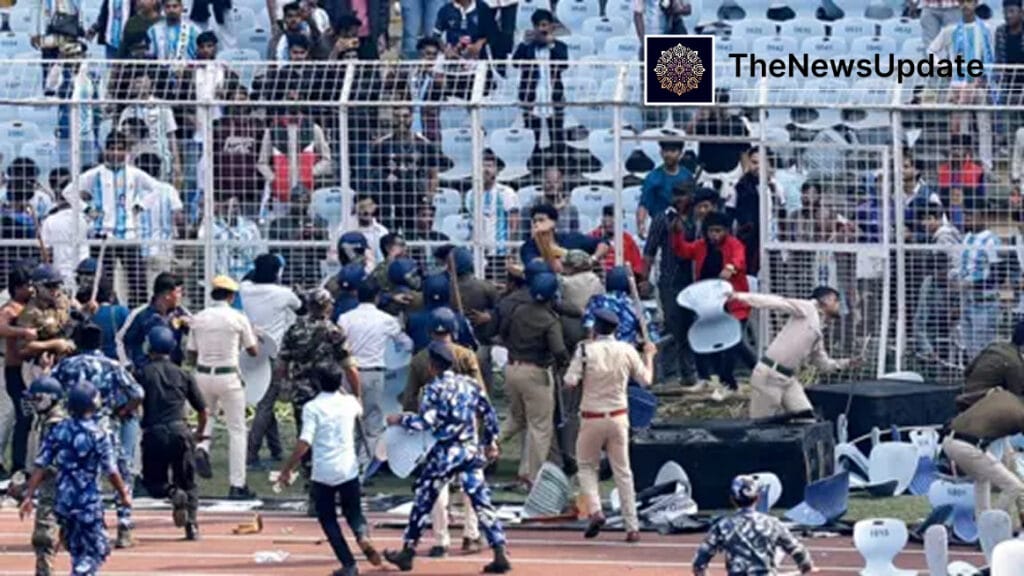
The Messi India event chaos began shortly after the football icon arrived at Kolkata’s Salt Lake Stadium. Messi briefly walked around the pitch, waving to fans, but his visibility was limited as he was surrounded by security personnel, politicians, and celebrities.
Within roughly 20 minutes, Messi was escorted off the field and whisked away by security. As it became clear that his appearance had ended, frustration rippled through the crowd.
यह भी पढ़े:
 Bulldozer Raj Karnataka Demolitions: Congress Govt Faces Backlash After 400 Muslims Left Homeless
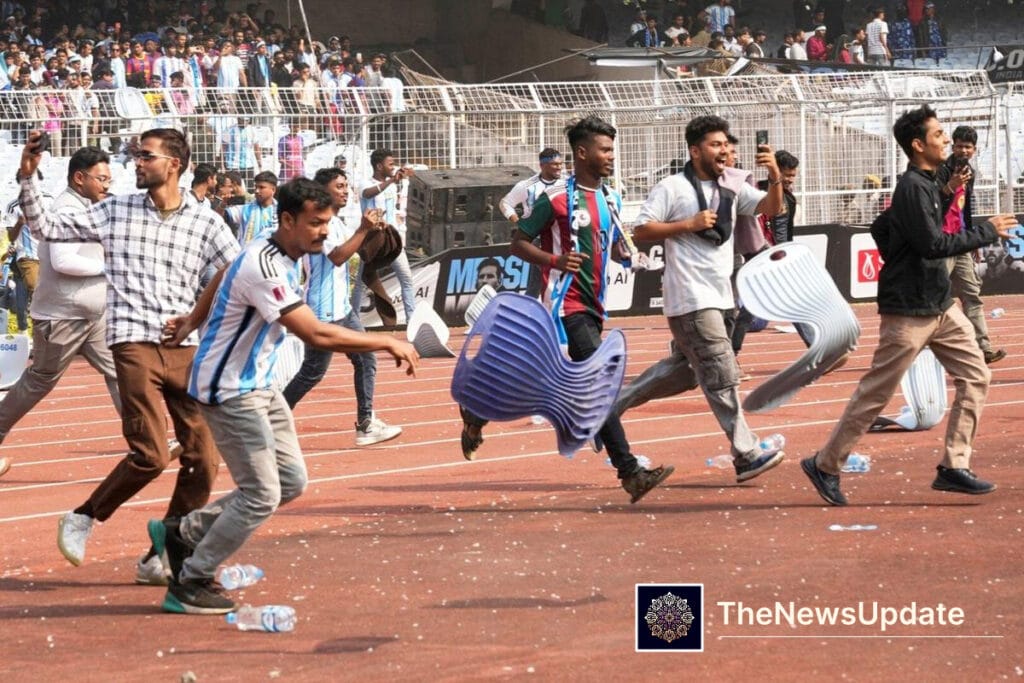
According to local media and eyewitnesses, sections of the audience began ripping out plastic seats, throwing water bottles and chairs toward the pitch, and storming barricades. Banners and tents were vandalised as police attempted to regain control.
The situation quickly escalated into scenes of chaos, prompting authorities to intervene and secure the stadium.
Why Fans Turned Angry
At the heart of the Messi India event chaos was a profound sense of betrayal felt by fans. Many had paid between Rs 5,000 and Rs 12,000 — a significant amount for average households — believing they would get a close-up view of Messi, and possibly witness a short exhibition match.

Instead, fans complained that:
- Messi was barely visible from many stands
- Politicians and VIPs blocked access and sightlines
- The appearance ended far earlier than expected
- No clear communication was provided to the crowd
One fan told Indian news agency ANI that people had paid “a month’s salary” for the tickets. Another said they came to watch Messi, not politicians taking selfies.
The mismatch between expectations and delivery transformed excitement into anger within minutes.
Official Response and Arrests
West Bengal Chief Minister Mamata Banerjee described the Messi India event chaos as “deeply disturbing and shocking.” She publicly apologised to Messi and to sports lovers, acknowledging serious failures in event management.
An official enquiry was announced to:
- Investigate security and organisational lapses
- Fix responsibility for the breakdown
- Recommend measures to prevent future incidents
Police confirmed that the event’s “chief organiser” had been arrested, though further details were not immediately disclosed. Authorities also said they were examining options for refunding ticket-holders.
यह भी पढ़े:
 Canada Hospital Killed Indian-Origin Man: Wife Alleges Medical Negligence After 8-Hour Wait
The All India Football Federation clarified that it had no role in organising the private event.
Messi’s Team and Organisers React
Messi’s representatives stated that the footballer fulfilled the time commitment agreed upon in advance. Regarding the event’s mismanagement, they referred questions to the apology issued by the West Bengal government.
Messi had already faced heightened security concerns during the tour. Earlier, he appeared virtually for the unveiling of a massive 70-foot statue in Kolkata, citing safety issues.
During the stadium visit, Messi was accompanied by Inter Miami teammate Luis Suárez and Argentina international Rodrigo de Paul. Bollywood superstar Shah Rukh Khan also reportedly met Messi earlier in the day.
While Messi himself remained silent publicly, the incident cast a shadow over what was meant to be a celebratory tour.
India’s Football Passion and Crowd Risks
The Messi India event chaos underscores the intensity of football fandom in pockets of India, particularly in Kolkata. The city regularly witnesses massive turnouts for local derbies involving clubs like Mohun Bagan and East Bengal.
In the early hours before the event, thousands lined the roads near Messi’s hotel, hoping to catch a glimpse of the star. For many fans, Messi symbolises aspiration, humility, and global success.
A 24-year-old fan who travelled nearly 1,900 kilometres from Bengaluru described Messi as a source of personal inspiration, saying the footballer’s journey gave him hope that talent can overcome physical limitations.
Such emotional investment, when combined with poor logistics, can quickly turn volatile.
Lessons for Future Mega Events
The Messi India event chaos offers important lessons for organisers of high-profile international events in India.
Key takeaways include:
- Clear communication about what fans can realistically expect
- Strict separation between VIP access and public viewing
- Robust crowd-control planning for emotionally charged events
- Transparent refund policies when expectations are unmet
With India increasingly hosting global icons across sports and entertainment, professional event management is no longer optional. Failure to deliver not only risks public safety but also damages the country’s reputation as a host.

Conclusion: Fallout of the Messi India Event Chaos
The Messi India event chaos at Kolkata’s Salt Lake Stadium transformed excitement into anger within minutes, leaving fans disappointed and authorities scrambling for damage control.
While Messi continues his tour across other Indian cities, the Kolkata incident stands as a cautionary tale about the dangers of hype without execution. For fans, it was a heartbreak. For organisers and authorities, it was a wake-up call.
If future events are to succeed, they must respect not just the celebrity on stage, but the emotions, sacrifices, and expectations of the crowd watching from the stands.
Related Reads
By The Morning News Informer — Updated December 2025