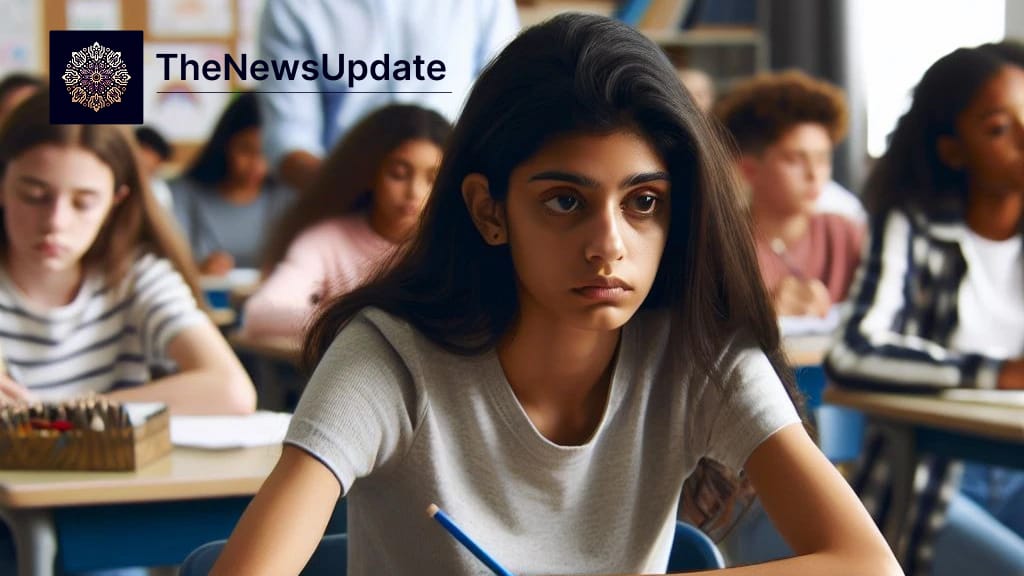
It is no secret that Mental Health in Indian Schools has reached a critical point. Every week, new headlines expose heartbreaking realities: students taking their own lives after bullying, emotional harassment by teachers, or relentless pressure to perform academically. These stories not only raise questions about the country’s educational priorities but also expose the growing cracks in India’s school mental health systems.
Recent tragedies such as the Delhi student suicide, the Jaipur bullying case, and the Noida school’s handling of a distress call reveal a chilling pattern: despite policies, committees, and counsellors on paper, the ground reality remains deeply flawed. If India claims to be preparing students for the future, the emotional safety of those students must be non-negotiable.
India’s Silent Crisis: Why Students Fear Seeking Help
According to educators and mental-health mentors working inside schools, the biggest reason students avoid counsellors is fear—fear of judgment, fear of being labelled, and fear that their personal struggles will be exposed to teachers or parents. Teenagers repeatedly report that counselling systems in schools do not feel safe or confidential.
यह भी पढ़े:
 Osman Hadi Killers Fled to India via Meghalaya Border: Dhaka Police Reveal Shocking Escape Route
Debika Mitra, mentor and co-founder of Escapades for the Soul, explains that students often believe “Whatever we say will reach teachers or parents.” This destroys trust completely. The cultural stigma around mental health, combined with fear of disciplinary action, keeps thousands of students silent even when they experience bullying, emotional trauma, harassment, or suicidal thoughts.
This emotional suppression becomes even more dangerous in senior classes, where academic pressure peaks. Class 10–12 students face expectations from parents, schools, peers, and society—all while navigating teenage vulnerability. Without support, many feel cornered and helpless.
Where the System Collapses: Counsellors Without Power or Training
One of the biggest gaps in Mental Health in Indian Schools is that counsellors are often underqualified, overworked, and expected to fulfil roles that require clinical expertise they do not possess. Many schools hire counsellors with only an MA in Psychology, although adolescent counselling requires:
यह भी पढ़े:
 Bulldozer Raj Karnataka Demolitions: Congress Govt Faces Backlash After 400 Muslims Left Homeless
- An MPhil from an RCI-recognised institute
- A valid, renewable counselling license
- Field training in trauma, abuse, and crisis intervention
Schools prefer cheaper hires over qualified therapists. As a result, emotionally fragile students often receive inadequate support.
Worse, counsellors are frequently loaded with administrative tasks—admissions, paperwork, discipline management, event coordination—leaving little time for actual counselling. In several schools, one counsellor manages over 1,000 students, far above the global ratio of 1:250.
This mismatch has severe consequences. Counsellors cannot develop long-term strategies, monitor high-risk students, or build trust through consistent interaction. Instead, counselling becomes a token checkbox item for regulatory compliance.

When Teachers Are Emotionally Exhausted, Students Suffer
Teachers are usually the first to notice behavioural changes—withdrawal, aggression, irritability, declining grades. But most Indian teachers feel unprepared to identify early mental-health distress. Workshops are rare, brief, and often treated as a formality.
A Noida-based teacher confesses: “We are overworked. We want to help, but we don’t know the right protocols. Without training, we fear doing something wrong.”
Teachers already juggle syllabus pressure, administrative duties, and classroom management. Expecting them to handle emotional crises without proper training is unrealistic. Many do not have the resilience or mental space to support students while they themselves face stress, burnout, and long working hours.

The Infrastructure Gap: No Privacy, No Safe Space
Many Indian schools lack even the basic infrastructure for mental-health services. Some schools operate without:
- Dedicated private counselling rooms
- Crisis-intervention teams
- Emergency protocols for suicidal ideation
- Budgets for mental-health programs
In some institutions, counsellors share rooms with teachers. In others, counselling hours are limited because the same counsellor also teaches. This destroys confidentiality—the backbone of effective mental-health support.
The Missing Link: Parents Need Training Too
While the education system bears responsibility, families also play a big role in children’s emotional instability. With shrinking joint families, work-heavy lifestyles, and increasing screen exposure, many children feel emotionally isolated.
यह भी पढ़े:
 Canada Hospital Killed Indian-Origin Man: Wife Alleges Medical Negligence After 8-Hour Wait
Schools rarely conduct serious parental workshops, yet they are essential. Parents must learn:
- How to communicate with teenagers
- Digital safety and online bullying awareness
- How to respond to emotional distress
- Understanding anxiety, depression, and stress in adolescents
If parents treat mental-health concerns as “excuses” or “drama,” children withdraw further. Schools and families must work together, not in isolation.
Can Counsellors Be Independent if Schools Pay Them?
This is where the system becomes ethically complicated. Many counsellors report directly to principals, meaning their autonomy is severely restricted. They may be pressured to downplay certain issues to protect the school’s brand image.


Experts believe a better system would involve:
- Independent mental-health boards overseeing counsellors
- Confidential reporting mechanisms
- Non-negotiable privacy protocols
- External audits and annual evaluations
Until then, safeguarding a school’s reputation may continue to take priority over safeguarding students’ lives.
How Do We Fix the Crisis? Practical, Actionable Solutions
India does not lack policies—but it lacks implementation. Schools must move from performative measures to real structural change. Here are essential reforms experts recommend:

1. Enforce Qualified, Licensed Counsellors in Schools
Every school must hire RCI-licensed counsellors with clinical training in child psychology. It should be mandatory, not optional.
2. Set a National Student–Counsellor Ratio
India must adopt the global standard of 1 counsellor per 250 students. Anything beyond that is ineffective.
3. Establish Crisis-Intervention Teams
Schools need dedicated crisis units to handle:

- Suicidal ideation
- Bullying
- Abuse disclosure
- Trauma support
4. Mandatory Teacher Training
Teachers must be trained annually to identify red flags and handle emotional breakdowns appropriately.
5. Parent Engagement Programs
Workshops, counselling, digital-safety education, and emotional-communication sessions must be compulsory for parents.
6. Independent Mental-Health Bodies
Schools must not investigate their own failures. Independent bodies should evaluate compliance, safety, and counselling outcomes every year.

7. Budget Allocation for Mental Health
Mental health is not a luxury—it is a necessity. Schools must earmark funds for counselling, workshops, and infrastructure.
Why the Stakes Are Higher Than Ever
India has one of the world’s highest rates of adolescent anxiety and emotional distress. With rising competition, digital pressure, cyberbullying, and reduced peer interaction, students face more psychological challenges than any previous generation.
If the system continues to prioritise marks over mental health, India risks losing an entire generation to stress, trauma, and hopelessness.

Conclusion: Protecting Students Must Be Non-Negotiable
Mental Health in Indian Schools cannot be fixed with posters, one-day workshops, or annual events. It requires accountability, training, infrastructure, and empathy. Schools must shift from academic factories to safe, supportive environments where students feel heard and valued.
India can fix its mental-health crisis—but only if it treats student wellbeing as foundational, not optional. The time for cosmetic reforms is over. The lives of millions of children depend on what India does next.