Table of Contents
- Background: Kerala’s Journey Toward Inclusive Growth
- Main Event: Pinarayi Vijayan Declares Kerala Free from Extreme Poverty
- Reactions & Analysis: Opposition Response and Public Opinion
- Conclusion: What Kerala’s Achievement Means for India
Background: Kerala’s Journey Toward Inclusive Growth
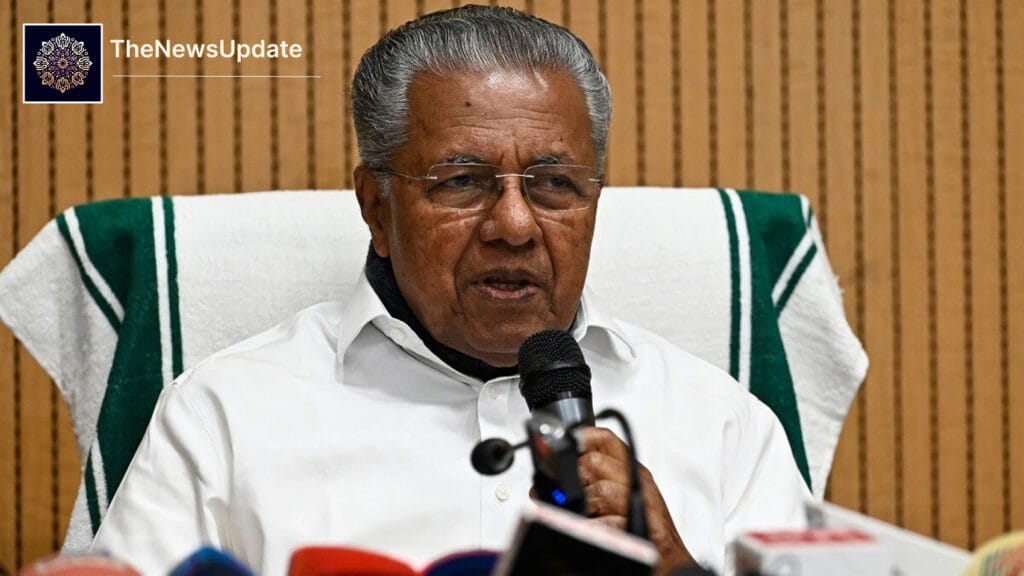
On November 1, 2025, Chief Minister Pinarayi Vijayan declared that Kerala eradicates extreme poverty, making it the first Indian state to achieve this remarkable goal. The announcement came on the state’s formation day — Kerala Piravi — symbolizing not just a celebration of the state’s birth, but of its progressive model of governance and social welfare.
Kerala, renowned for its high literacy rate, healthcare infrastructure, and social equity policies, has been consistently ranked among India’s most developed states in terms of human development. This latest achievement adds another feather to its cap. Over the decades, the state has blended socialism-inspired welfare programs with decentralized governance to ensure that no citizen is left behind.
यह भी पढ़े:
 Osman Hadi Killers Fled to India via Meghalaya Border: Dhaka Police Reveal Shocking Escape Route
The Kerala eradicates extreme poverty Eradication Programme (EPEP) was initiated in 2021, shortly after Vijayan’s second term began. The program sought to identify and uplift the most vulnerable sections of society through direct interventions such as housing, nutrition, healthcare, and documentation support.

Main Event: Pinarayi Vijayan Declares Kerala Free from Extreme Poverty
In a special session of the Kerala eradicates extreme poverty Legislative Assembly held on Kerala Piravi Day, CM Vijayan announced that the state has successfully eliminated extreme poverty. “Today’s Kerala Piravi marks a moment in history — we have made Kerala the first Indian state without extreme poverty,” he said, addressing lawmakers in Thiruvananthapuram.
According to government data, the state invested over ₹1,000 crore in its poverty eradication efforts. The initiatives reached 64,006 vulnerable families across various districts, creating micro-level solutions tailored to each family’s needs. Over 20,648 families received daily food assistance, 85,721 individuals received medical care, and more than 5,400 new homes were either constructed or nearing completion.
यह भी पढ़े:
 Bulldozer Raj Karnataka Demolitions: Congress Govt Faces Backlash After 400 Muslims Left Homeless
The Chief Minister emphasized that the project was not a temporary welfare scheme but a comprehensive development plan. “We began this journey with the conviction that poverty is not a permanent condition. Every family we lifted out of deprivation represents the strength of our model — one that combines empathy with execution,” Vijayan added.
Reactions & Analysis: Opposition Response and Public Opinion
The announcement, however, was not free from controversy. The opposition United Democratic Front (UDF) criticized the claim, calling it “pure fraud” and staged a walkout from the Assembly session. Leader of Opposition VD Satheesan argued that the declaration was premature and not backed by comprehensive third-party verification.
Responding sharply, Vijayan countered that the UDF’s skepticism reflected its “political narrow-mindedness.” Local Self-Government Minister MB Rajesh defended the government’s process, stating that the Extreme Poverty Eradication Programme (EPEP) was conducted transparently, involving both LDF and UDF-led local bodies in data collection and monitoring.

Experts and economists have lauded the state’s participatory approach, which focused on household-level micro-planning. Unlike top-down welfare programs, Kerala’s strategy empowered local governments to identify and assist families based on ground realities Kerala eradicates extreme poverty. Social analysts noted that Kerala’s model of participatory governance, women’s empowerment through Kudumbashree, and focus on health and education have created a foundation where poverty eradication is not just statistical but structural.
Public sentiment on social media largely echoed pride and optimism. Many citizens celebrated the achievement as a testament to Kerala’s commitment to human development, while others urged continuous monitoring to ensure sustainability.
Conclusion: What Kerala’s Achievement Means for India
Kerala’s success in eradicating extreme poverty marks a pivotal chapter in India’s developmental journey. It highlights how political will, data-driven governance, and community involvement can collectively address systemic inequality. The accomplishment also places moral pressure on other Indian states to replicate Kerala’s model — one that balances welfare with accountability.

However, sustaining this achievement will require continuous vigilance. Experts warn that climate change, migration, and inflation could threaten long-term poverty outcomes if not mitigated through policy updates. Kerala’s next challenge, therefore, lies not just in celebrating this milestone, but in ensuring that no one slips back into deprivation.
As the rest of India takes note, Kerala’s success story reinforces the belief that inclusive growth is not a distant dream — it is achievable through empathy, innovation, and steadfast governance.
Related Reads
By The News Update— Updated November 1, 2025