Table of Contents
- Background: The Legacy of Jawaharlal Nehru Stadium
- The Sports City Project: Vision and Objectives
- Global Inspirations: Learning from Qatar and Australia
- Infrastructure Impact and Urban Redevelopment Plans
- Reactions, Expert Opinions, and Future Outlook
- Conclusion: Building India’s Olympic Future
Background: The Legacy of Jawaharlal Nehru Stadium
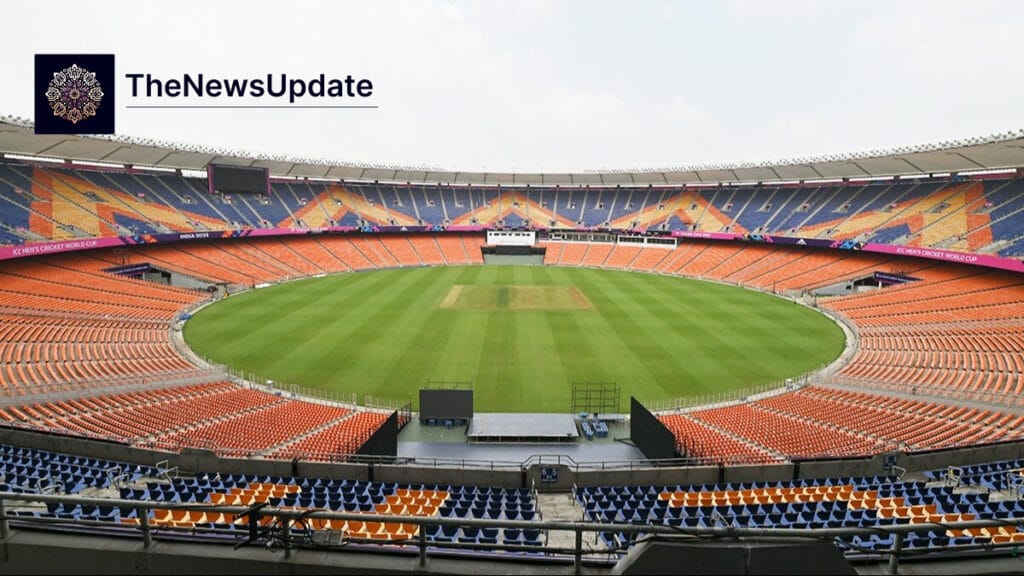
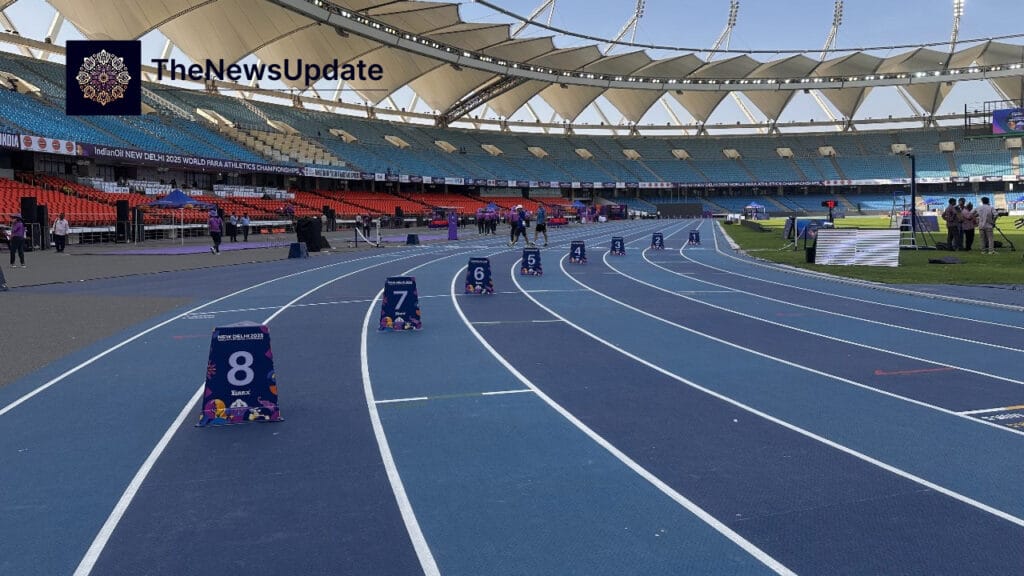
Built for the 1982 Asian Games, Delhi’s Jawaharlal Nehru Stadium to be Demolished has long stood as a symbol of India’s sporting pride and resilience. Later renovated for the 2010 Commonwealth Games, the 60,000-capacity venue has hosted international athletics events, football matches, and cultural performances, including Independence Day ceremonies and concerts featuring global artists.
Over its four-decade history, the stadium became more than just a sports venue — it was a gathering space for moments of national unity and celebration. Its vast design and central location made it one of the most recognizable landmarks in the capital. Yet, as global sports infrastructure evolves, Indian authorities have recognized the need to upgrade facilities to meet international standards for large-scale events.
यह भी पढ़े:
 Osman Hadi Killers Fled to India via Meghalaya Border: Dhaka Police Reveal Shocking Escape Route
Earlier this year, the stadium successfully hosted the World Para Athletics Championships with a newly installed mondo track costing approximately ₹30 crore. But despite continuous upgrades, the existing structure reportedly no longer aligns with modern sustainability and performance benchmarks.
The Sports City Project: Vision and Objectives
According to Sports Ministry sources, the current Jawaharlal Nehru Stadium complex will be dismantled to pave the way for a new, integrated Sports City covering 102 acres. The plan aims to create a world-class sporting ecosystem with facilities for training, competition, rehabilitation, and sports medicine — positioning Delhi as a global sports hub.
The redevelopment is also seen as a key step in India’s ambition to host the 2036 Olympic Games. By transforming one of its most iconic venues into a cutting-edge sports complex, India hopes to demonstrate its readiness for large-scale international events. The new Sports City will reportedly feature:
यह भी पढ़े:
 Bulldozer Raj Karnataka Demolitions: Congress Govt Faces Backlash After 400 Muslims Left Homeless
- Elite training academies and high-performance centers for athletes
- Multi-disciplinary indoor and outdoor arenas
- Advanced sports science and physiotherapy facilities
- Energy-efficient and sustainable architecture
- Public recreational zones and integrated transport access
Officials emphasized that the project will not only serve athletes but also benefit local residents by providing open green spaces, walking tracks, and sports amenities accessible to the public. However, a definitive construction timeline has yet to be announced, pending completion of feasibility studies and environmental assessments.
Global Inspirations: Learning from Qatar and Australia
The Sports Authority of India (SAI) and Ministry of Youth Affairs and Sports have reportedly been studying global models, particularly from Qatar and Australia, to develop the new Delhi Sports City blueprint.
Qatar’s Aspire Zone (Doha Sports City) spans over 617 acres and includes state-of-the-art football, aquatics, and indoor sports facilities. It also houses an orthopaedic and sports medicine hospital, an academy for youth athletes, and infrastructure capable of hosting global tournaments such as the FIFA World Cup and Asian Games.

Similarly, Australia’s Docklands Stadium in Melbourne is a model of multipurpose design — accommodating cricket, rugby, Australian rules football, and concerts. These international benchmarks highlight how sports infrastructure can be both versatile and commercially viable, something India aims to replicate on a localized scale.
Closer to home, Ahmedabad’s Sardar Vallabhbhai Patel Sports Complex — which includes the Narendra Modi Stadium — already demonstrates India’s growing capacity for mega sports infrastructure. Spread over 250 acres and costing ₹4,600 crore, it includes facilities for cricket, aquatics, tennis, and athletics. Delhi’s upcoming Sports City is expected to complement this ecosystem, decentralizing world-class training and event facilities across major Indian cities.
Infrastructure Impact and Urban Redevelopment Plans
The redevelopment of the Jawaharlal Nehru Stadium site into a modern Sports City will significantly reshape Delhi’s urban landscape. The project aligns with the National Sports Development Code of India and the government’s broader goal to enhance sports accessibility while integrating modern urban planning principles.

Planners are exploring mixed-use designs that combine elite athletic spaces with public areas, ensuring that the stadium grounds remain open and inclusive. This approach mirrors successful models in cities like Sydney and Doha, where sports infrastructure doubles as civic space. The proposal also emphasizes environmental sustainability, including rainwater harvesting, solar energy, and waste recycling systems.
Transportation infrastructure will likely be upgraded around the complex to ensure seamless connectivity via metro, electric buses, and bike lanes. The government aims to make the new Sports City a benchmark for smart, sustainable development — blending sports excellence with ecological responsibility.
Reactions, Expert Opinions, and Future Outlook
The announcement of the stadium’s demolition has sparked mixed reactions from athletes, historians, and Delhi residents. While many welcome the modernization effort, some express nostalgia and concern about preserving the legacy of the historic venue.
यह भी पढ़े:
 Canada Hospital Killed Indian-Origin Man: Wife Alleges Medical Negligence After 8-Hour Wait
Former athletes who trained at JLN have called for a memorial or museum within the new Sports City to honor India’s sporting pioneers. Others highlight the importance of transparency in public spending and environmental compliance throughout the redevelopment process.
Sports analysts view this decision as a strong indicator of India’s Olympic ambitions. By investing in globally competitive facilities, the country positions itself alongside emerging sports powers ready to host mega events. According to sports economist Ravi Mehta, “This project symbolizes India’s intent to compete not just in the field but also in infrastructure excellence. If executed well, it could redefine how India is perceived in the global sports community.”
Public sentiment, particularly among younger athletes, remains optimistic. Many believe the Sports City could become a hub for innovation, talent development, and international collaborations in sports technology and medicine.

Conclusion: Building India’s Olympic Future
The plan to demolish the Jawaharlal Nehru Stadium for a new Sports City marks a pivotal moment in India’s sports evolution. It embodies the nation’s determination to match international benchmarks and its growing confidence in bidding for the 2036 Olympic Games.
While timelines remain tentative, the intent is clear — India is investing in the future of sports, from infrastructure to athlete welfare. The success of this project could pave the way for similar developments nationwide, integrating sports into the fabric of urban life.
For many, the transformation of this Delhi landmark is bittersweet — bidding farewell to a structure rich in memories while embracing a vision of progress. If executed thoughtfully, the Sports City could serve as both a tribute to India’s sporting legacy and a launchpad for its Olympic aspirations.

Related Reads
By The News Update — Updated November 10, 2025