By Sweta Goswami — Updated November 03, 2025
Background: The 100 GW Nuclear Target and the Workforce Challenge
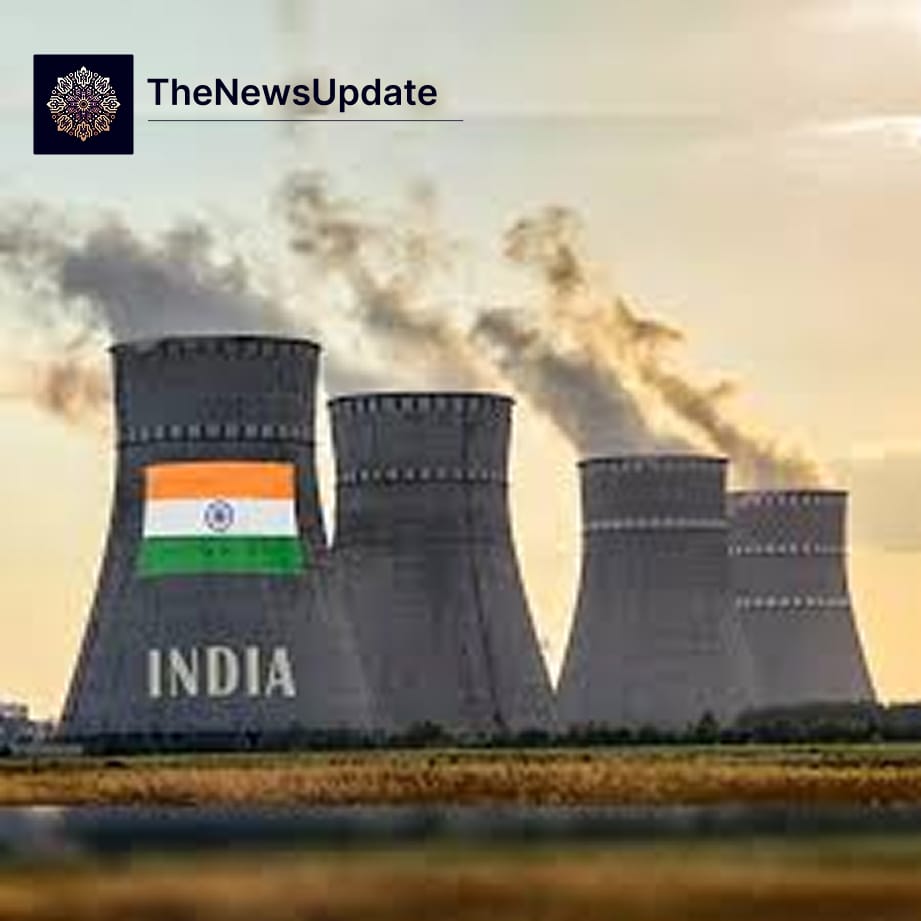
India has set an ambitious target to add 100 gigawatt (GW) of nuclear power capacity by 2047. That scale-up—more than a tenfold jump from the current ~8.8 GW—creates not only engineering and policy challenges but a pressing manpower requirement across the entire nuclear value chain .India’s nuclear ambitions jobs boom.
Officials who attended multiple government meetings, including reviews convened by the Prime Minister’s Office (PMO), have flagged a shortage of specialised personnel—nuclear engineers, reactor physicists, radiation safety officers, plant operators, and a range of skilled technical staff—as one of the most significant barriers to delivering this expansion on schedule.
यह भी पढ़े:
 Osman Hadi Killers Fled to India via Meghalaya Border: Dhaka Police Reveal Shocking Escape Route
Job Estimates: How Many People Will Be Needed?
A government panel’s assessment sets the scale of the requirement: roughly 1,86,500 skilled personnel across design, construction and operations. The breakdown in the panel’s estimate includes:
- ~5,500 experts for design and engineering of nuclear plants
- ~1,20,000 trained personnel for construction and civil works
- ~61,000 staff for operation, maintenance and plant safety
Officials suggest that the overall job creation from the programme could be in the range of 1–1.5 lakh direct roles, with numerous indirect and ancillary employment opportunities generated in supply chains, manufacturing, services, and regional economies that support plant construction and operations.
Why Nuclear Workforce Development Is Different
Nuclear projects follow rigorous quality and safety standards—often described as “gold standard” practices—meaning many roles require additional, project-specific qualifications and assessments beyond standard professional certifications. For example, welders, inspectors and quality-control staff must often pass bespoke tests and surveillance checks before being cleared to work on a nuclear jobsite.
यह भी पढ़े:
 Bulldozer Raj Karnataka Demolitions: Congress Govt Faces Backlash After 400 Muslims Left Homeless
This elevated bar for hiring explains why capacity-building in the nuclear sector is more complex than in other infrastructure areas and why the government is prioritising formal training pipelines rather than ad-hoc recruitment drives.
Education & Training: New Courses, Seats and Regional Hubs
To close the skills gap, the government is planning a multi-pronged approach led by an inter-ministerial plan coordinated with the Department of Atomic Energy (DAE), the Ministry of Education and other stakeholders. Key measures under consideration include:
- Introducing new undergraduate and postgraduate programmes in nuclear technology, reactor design, radiation safety and allied disciplines at central and state universities, IITs and NITs.
- Expanding intake and modernising curricula at specialised institutes such as the BARC Training School and NPCIL training centres.
- Creating regional centres of excellence and dedicated training hubs to decentralise skill development and serve as practical training grounds for technicians and engineers.
- Fostering industry-academia partnerships and apprenticeship models so that private and public players can jointly fund and mentor cohorts of trainees.
Officials say these steps will include both classroom instruction and extensive hands-on training—simulator time, on-the-job supervised shifts, and certification programmes that align with international nuclear safety norms.

NPCIL, NTPC and Industry’s Role in Capacity Building
The Nuclear Power Corporation of India Limited (NPCIL) has been asked to substantially scale its internal training infrastructure. NPCIL’s expanded mandate would not only meet its own recruitment needs but also train staff for other public and private entities expected to enter the nuclear domain as policy reforms open participation.
NPCIL is expected to:
- Increase intake at existing training centres and establish new regional training hubs.
- Design specialised curricula for reactor operation, maintenance and radiation safety in collaboration with BARC and academic partners.
- Provide certification pathways and bridge programmes for technicians transitioning from related trades.
NTPC, which is relatively new to nuclear energy, is also slated to build a dedicated pool of nuclear-trained engineers and operators—likely via partnerships with NPCIL and BARC. NTPC may set up its own training division, sponsor employees for advanced certification, and co-develop practical training modules to support future plant development.

Geographic and Demographic Opportunities
Expanding training beyond metros is a key priority. Regional training centres aim to tap into engineering talent across Tier-2 and Tier-3 cities, creating pathways for local employment and reducing pressure on major urban centres. This regionalisation of training should also help create diverse talent pipelines and address gender and socioeconomic gaps over time.
Policy and Implementation: What to Watch
The PMO-led reviews indicate a coordinated policy push, which could include funding for course creation, scholarships for specialised programmes, accelerated accreditation for new academic offerings, and incentives for industry participation in training schemes. Monitoring and quality assurance will be central—training must meet both national regulatory standards and international best practices for nuclear safety.
What’s Next: Timeline and Early Actions
Short-term actions likely to follow include expanding intake at existing BARC and NPCIL programmes, announcing seed courses at select IITs/NITs, and approving funding for regional training hubs. Mid-term steps would involve rolling out new degree programmes, formalising apprenticeship networks, and scaling recruitment drives as projects move from planning to construction.
यह भी पढ़े:
 Canada Hospital Killed Indian-Origin Man: Wife Alleges Medical Negligence After 8-Hour Wait
Officials emphasise that workforce development is not a one-off exercise; it requires a continuous pipeline of recruits, retraining for technology upgrades, and long-term collaboration between government, industry and academia.