Background on India-US Trade Relations
India US trade deal have long maintained a complex trade relationship, characterized by both opportunities and challenges. The US remains India’s largest trading partner, with bilateral trade valued at USD 131.84 billion in 2024-25, accounting for roughly 18% of India’s total goods exports. Despite this strong economic link, trade tensions have occasionally arisen, most notably during the previous US administration under Donald Trump, which imposed steep tariffs on Indian goods, including a 25% additional import duty on Russian crude oil.
The ongoing negotiations for a bilateral trade agreement aim to strengthen ties, address these tariff-related issues, and establish a framework for sustainable growth. India is seeking a pact that ensures fairness, equity, and balance, particularly in sensitive sectors such as agriculture, fisheries, and dairy. The proposed agreement also envisions doubling bilateral trade to USD 500 billion by 2030 from the current USD 191 billion, a significant leap that would bolster both economies.
Current Negotiations and Key Statements
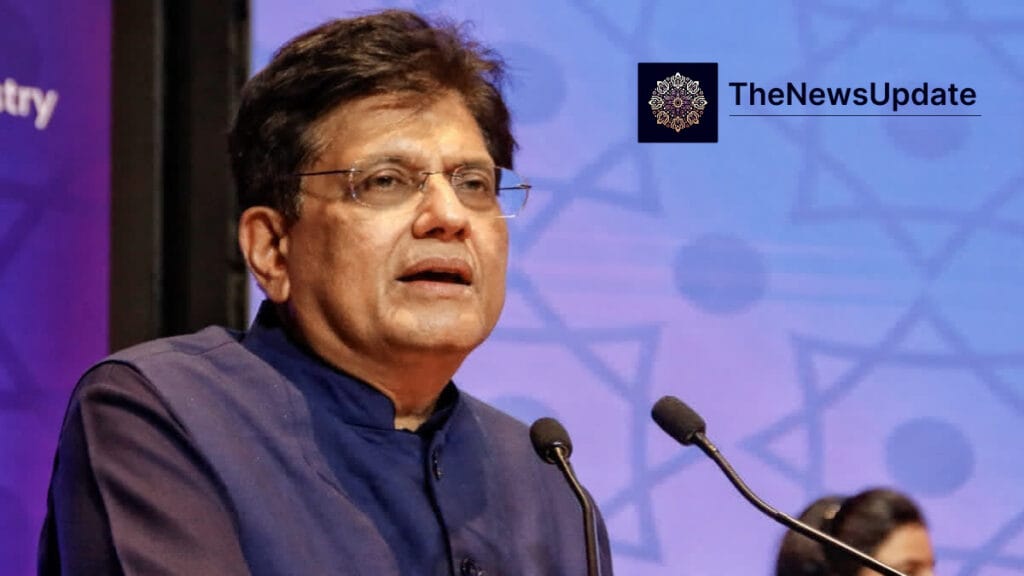
Commerce and Industry Minister Piyush Goyal reiterated India’s commitment to a trade deal that protects domestic interests while fostering international cooperation. Speaking at Udyog Samagam 2025, a major industry conference, he emphasized that India would not compromise the interests of farmers, fishermen, workers, labor, or the dairy sector.
यह भी पढ़े:
 Osman Hadi Killers Fled to India via Meghalaya Border: Dhaka Police Reveal Shocking Escape Route
“We are working for a good trade deal in the interest of India. At the same time, India is not going to compromise the interests of our farmers, fishermen, workers, labour, and our dairy… We are working on a fair equitable and balanced trade deal,” Goyal said.
Negotiations have already seen five rounds of detailed discussions between Indian and US officials, with a team led by Commerce Secretary Rajesh Agrawal recently visiting Washington. While both sides are optimistic about finalizing the first tranche of the agreement by fall 2025, Goyal cautioned that the timeline could vary, noting that it could be concluded tomorrow, next month, or next year. He stressed that the government is preparing for all possibilities to safeguard India’s strategic interests.
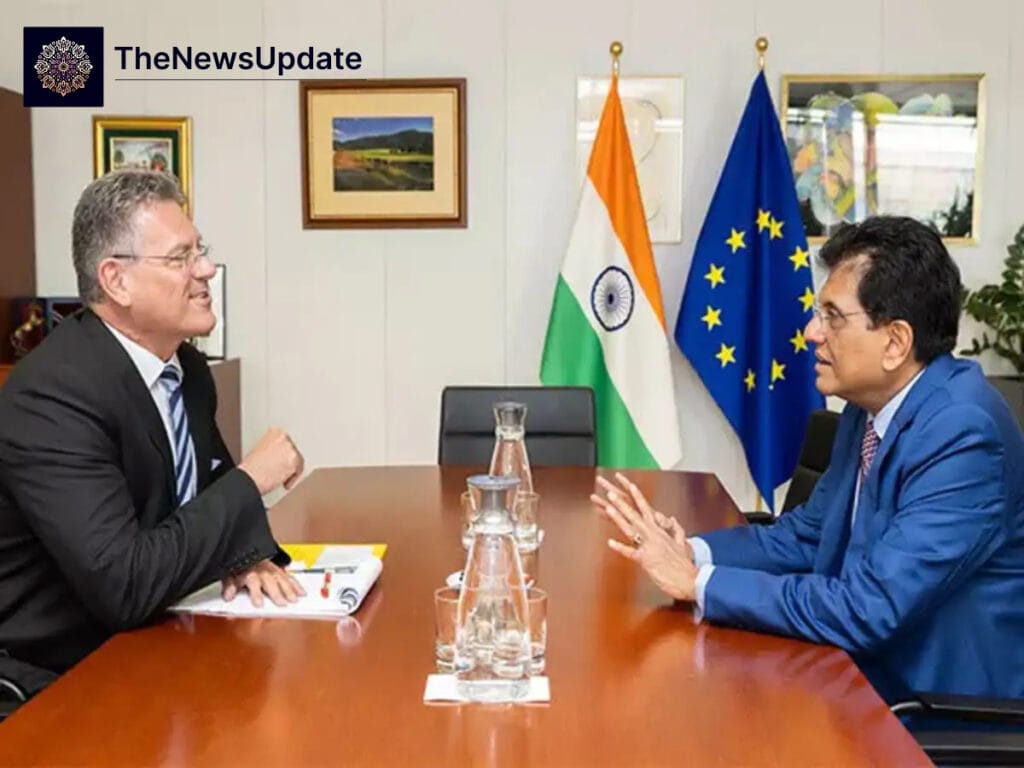
An official familiar with the talks added that India’s approach has been thorough and WTO-compliant, making the negotiations among the most detailed and cautious in the country’s trade history. “They (US) have to get back to us. India’s negotiations have been the most comprehensive, most detailed, WTO-compliant compared to any other country. May be it took time, but we negotiated very cautiously, keeping in view the interests of our sensitive sectors,” the official stated.
यह भी पढ़े:
 Bulldozer Raj Karnataka Demolitions: Congress Govt Faces Backlash After 400 Muslims Left Homeless
Impact on Indian Sectors and Markets
The ongoing trade negotiations have significant implications for multiple Indian sectors. The US tariffs, including a 50% levy on certain Indian goods, have impacted India’s merchandise exports. For instance, exports to the US declined 11.93% to USD 5.46 billion in September 2025, while imports increased 11.78% to USD 3.98 billion during the same period.
In response, India is actively seeking new markets to mitigate these challenges. The fisheries sector, in particular, has faced difficulties due to steep US tariffs, prompting efforts to expand exports to alternative destinations like Russia. The government’s proactive approach is designed to protect the livelihoods of workers and farmers in sensitive sectors while maintaining healthy trade relations with global partners.
Experts suggest that a balanced trade deal would provide long-term benefits for Indian industries by:

- Reducing tariffs and import barriers in key sectors
- Encouraging foreign investment and joint ventures
- Securing access to critical US markets for agricultural and industrial exports
- Promoting innovation, technology transfer, and economic collaboration
The US has indicated optimism as well. Former US President Donald Trump commented that the US is “pretty close” to reaching a fair trade deal with India and hinted at lowering the tariffs imposed on Indian goods in the future. This aligns with India’s broader strategy of negotiating for comprehensive, mutually beneficial agreements.
Future Outlook and Trade Goals
Looking ahead, India aims to finalize a trade agreement that not only addresses tariff disputes but also strengthens economic collaboration and global market access. A successful pact could lead to:
- Doubling bilateral trade to USD 500 billion by 2030
- Enhanced market access for Indian goods, particularly agricultural and dairy products
- Improved competitiveness of Indian industries on a global scale
- Strengthened India-US economic and strategic partnership
While the exact timeline for the agreement remains uncertain, India’s emphasis on fairness, equity, and balance demonstrates a strategic commitment to protect domestic interests while engaging in international trade. As negotiations continue, stakeholders across industries and government sectors are monitoring developments closely, understanding that the outcome could have far-reaching implications for India’s economy and global trade positioning.

Related Reads
By The News Update— Updated 11 Nov 2025