India has taken note of US President Donald Trump’s recent remarks suggesting that Pakistan nuclear activities, along with Russia and China, may have secretly conducted nuclear weapons tests. In a sharp response, New Delhi stated that such illegal and clandestine activities are entirely “in keeping with Pakistan’s history,” which has long been marked by proliferation, smuggling, and covert nuclear partnerships.
India’s official response: “Clandestine activities fit Pakistan’s record” Pakistan nuclear activities
Ministry of External Affairs (MEA) spokesperson Randhir Jaiswal addressed the issue during a press briefing on Friday, noting that the Indian government has consistently alerted the international community to Islamabad’s record in nuclear proliferation.
“Clandestine and illegal nuclear activities are in keeping with Pakistan’s history — centred around decades of smuggling, export control violations, secret partnerships, and the AQ Khan network. India has always drawn attention to these aspects of Pakistan’s record,” Jaiswal said, referencing Trump’s recent comments on Pakistan’s alleged nuclear testing.

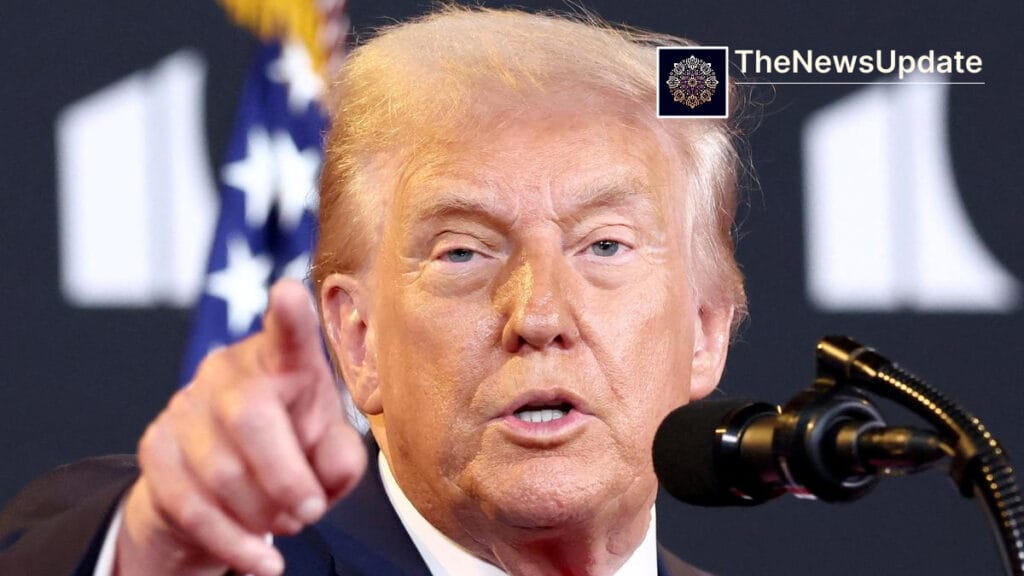
Jaiswal’s remarks come in the wake of Trump’s televised interview on CBS’ 60 Minutes on November 2, where the former president asserted that Russia, China, and Pakistan were all conducting nuclear tests. His claims, lacking direct evidence, immediately stirred speculation and debate among global analysts and security experts.
Trump’s controversial claim and its global impact
In the interview, Trump declared, “Russia’s testing, and China’s testing, but they don’t talk about it… We are gonna test, because they test, and others test. And certainly North Korea’s been testing. Pakistan’s been testing.”
The comment sent shockwaves across diplomatic circles, particularly given Pakistan’s fragile economic and political state. Analysts noted that Trump’s statement could reignite tensions in South Asia, a region that remains one of the world’s most sensitive nuclear flashpoints.
यह भी पढ़े:
 Bulldozer Raj Karnataka Demolitions: Congress Govt Faces Backlash After 400 Muslims Left Homeless
Speculation of secret tests amid regional earthquakes
Trump’s claim coincided with a series of earthquakes between April 30 and May 12, 2025, registering magnitudes of 4.0 to 4.7 in the Afghanistan-Pakistan region. Online commentators and defense analysts drew parallels between these tremors and seismic activity recorded during Pakistan’s 1998 Chagai-I and Chagai-II nuclear tests.
While these observations remain speculative, the timing fueled conjecture that Islamabad might have conducted small-scale or subcritical tests. Experts, however, stressed that without satellite imagery, seismic correlation, or verification from monitoring agencies, the claims remain unsubstantiated.
Pakistan’s denial and diplomatic context
Pakistan quickly denied Trump’s allegations. A senior security official told CBS News that Islamabad “will not be the first to resume nuclear tests” and reaffirmed its adherence to a self-imposed moratorium since 1998. The official added, “Pakistan was not the first to carry out nuclear tests and will not be the first to resume them.”

The denial comes at a politically delicate time, as Islamabad attempts to rebuild its relationship with Washington and strengthen ties with Trump’s administration. Analysts believe Pakistan’s strategic outreach to the United States aims to secure economic relief and military cooperation amid growing instability at home.
India highlights long-standing proliferation concerns
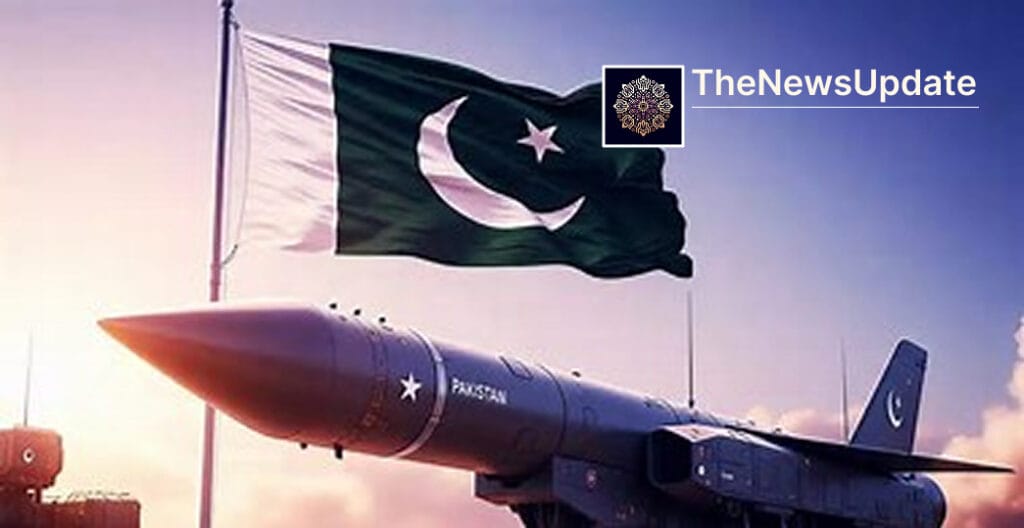
India’s MEA reiterated that Pakistan’s record in nuclear proliferation is well documented, citing the AQ Khan network that illegally transferred sensitive nuclear technologies to countries including Iran, Libya, and North Korea during the late 20th century. Jaiswal underscored that New Delhi has repeatedly urged the global community to ensure stronger non-proliferation mechanisms.
“The international community cannot ignore Pakistan’s established track record of illicit nuclear behavior,” Jaiswal said, adding that any new reports of testing must be viewed through that historical lens.
Historical context: From Chagai to global scrutiny
Pakistan’s last known nuclear detonations took place on May 28 and 30, 1998, days after India’s Pokhran-II tests in Rajasthan. The twin events cemented South Asia’s status as a de facto nuclear zone, prompting international sanctions and triggering decades of deterrence-based diplomacy between the two neighbors.
Since then, Pakistan has maintained that its nuclear program is purely defensive. However, recurring concerns over safety, technology transfer, and the involvement of non-state actors have kept its facilities under international watch.
Geopolitical implications and expert views
Experts say Trump’s unverified remarks could strain already fragile arms control dialogues, particularly as both the United States and Russia signal renewed interest in modernizing their arsenals. China’s continued nuclear expansion and North Korea’s ongoing testing programs further add to the volatility of global non-proliferation efforts.
यह भी पढ़े:
 Canada Hospital Killed Indian-Origin Man: Wife Alleges Medical Negligence After 8-Hour Wait
South Asia, in particular, remains highly sensitive to such narratives. Any suggestion of renewed testing by Pakistan could provoke a diplomatic standoff with India, complicating bilateral talks on regional stability, counterterrorism, and energy security.
Conclusion: India urges vigilance, not panic
While the Indian government avoided direct confrontation with Washington or Islamabad over Trump’s comments, its statement reflects a measured but firm reminder of Pakistan’s nuclear past. New Delhi’s stance underscores its continued push for global vigilance against illegal nuclear activities, particularly in volatile regions.
With tensions simmering over global arms races, India’s diplomatic response appears aimed at ensuring that the world does not lose sight of Pakistan’s long history of covert nuclear maneuvers — and the potential risks they pose to regional and global security.
By The Morning News Informer — Updated November 7, 2025
Related: World News