Background: Rising Violence Against Hindus in Bangladesh
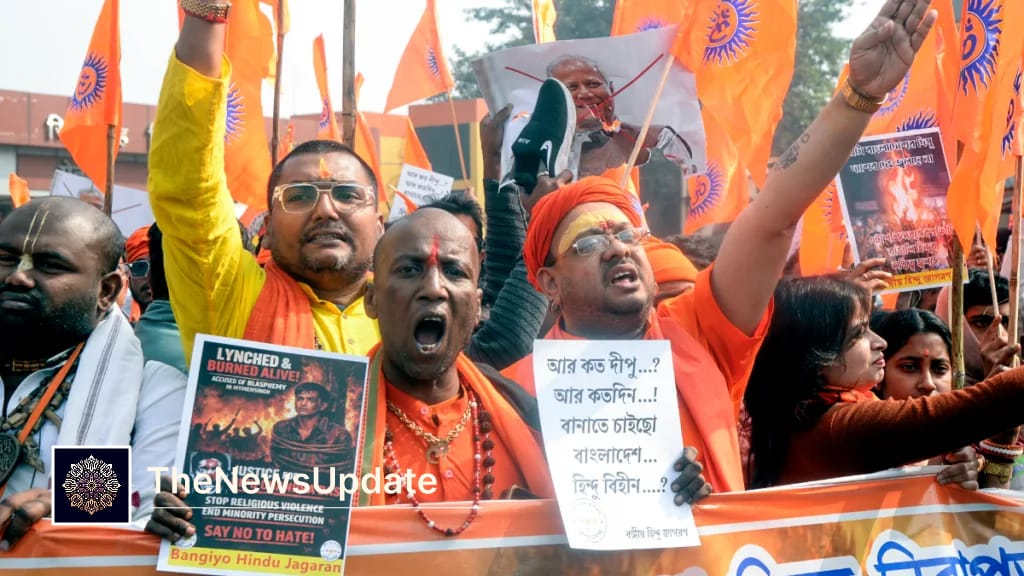
The issue of minority safety in Bangladesh has once again come under intense scrutiny after the recent lynching of Hindu men, triggering sharp diplomatic reactions from India.
India condemns Hindu lynching in Bangladesh at a time when the neighbouring country is facing political instability, public unrest, and growing allegations of communal violence. Over the years, India has repeatedly raised concerns about attacks on minorities, particularly Hindus, who form the largest religious minority in Bangladesh.
According to India’s Ministry of External Affairs (MEA), there have been nearly 2,900 incidents of violence against minorities during the tenure of Bangladesh’s interim government. These figures have become a major point of diplomatic friction between the two nations.
यह भी पढ़े:
 Osman Hadi Killers Fled to India via Meghalaya Border: Dhaka Police Reveal Shocking Escape Route
The latest incidents have added urgency to India’s long-standing demands for accountability and minority protection.
Details of the Lynching Incidents
The MEA’s condemnation followed two separate lynching incidents involving Hindu men earlier this month.
In the first case, a Hindu man was beaten to death by a mob in Bangladesh’s Rajbari district late Wednesday night. Police identified the victim as 30-year-old Amrit Mondal, also known as Samrat.
यह भी पढ़े:
 Bulldozer Raj Karnataka Demolitions: Congress Govt Faces Backlash After 400 Muslims Left Homeless
According to local authorities, Samrat was allegedly involved in extortion activities and had arrived in the area to collect money. Villagers claimed that after they raised an alarm by shouting “robbers,” locals gathered and assaulted him.
Police stated that Samrat had multiple criminal cases registered against him, including a murder charge, and was reportedly the leader of a local group known as “Samrat Bahini.” He was found critically injured and later declared dead at a hospital.
The second incident occurred in Bangladesh’s Mymensingh district, where 27-year-old garment factory worker Dipu Chandra Das was lynched over unverified allegations of blasphemy.

Police said Das was beaten by a mob, tied to a tree, and his body was set on fire before being recovered for post-mortem examination. The brutality of the act shocked observers across the region.
India Condemns Hindu Lynching in Bangladesh
India condemns Hindu lynching in Bangladesh in the strongest terms, with the Ministry of External Affairs expressing deep concern over what it described as “unremitting hostility” against minorities.
MEA spokesperson Randhir Jaiswal stated that New Delhi was disturbed by the killings and stressed that those responsible must be held accountable.
यह भी पढ़े:
 Canada Hospital Killed Indian-Origin Man: Wife Alleges Medical Negligence After 8-Hour Wait
“The unremitting hostility against minorities in Bangladesh is a matter of great concern. We condemn the recent killing of a Hindu youth in Bangladesh and expect that the perpetrators of the crime will be brought to justice,” Jaiswal said.
The MEA also rejected what it called a “false narrative” being pushed by Bangladesh regarding attacks on minorities. Officials said India has consistently raised these concerns at diplomatic levels and will continue to do so.
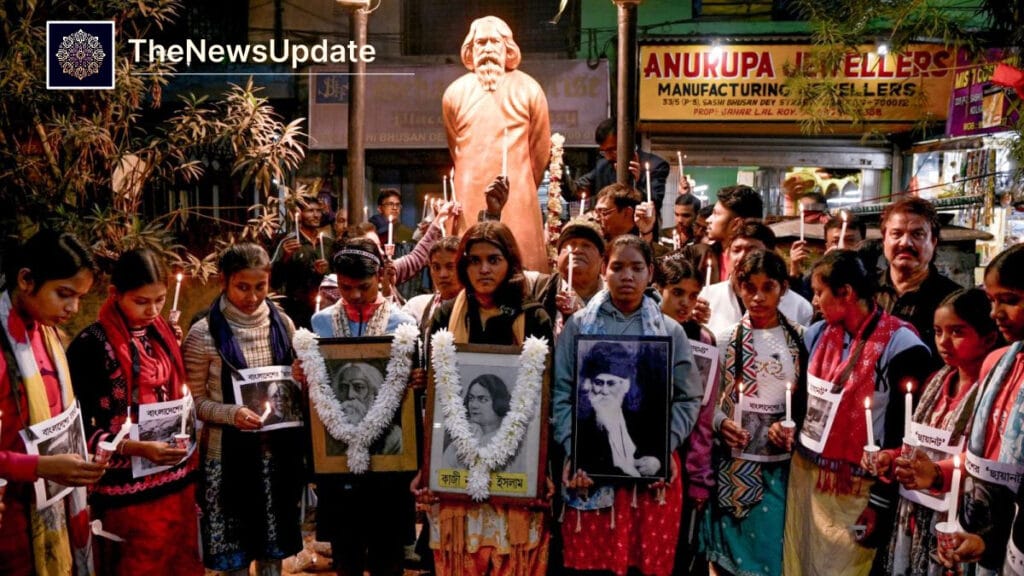
New Delhi’s statement comes amid protests in several parts of India, where demonstrators demanded stronger international pressure on Bangladesh to ensure minority safety.
Bangladesh Government’s Response
The lynching incidents have also drawn responses from Bangladesh’s interim administration.
Following the Mymensingh killing, the interim government led by Muhammad Yunus condemned the violence, stating that there was no place for communal hatred or mob justice in what it described as a “New Bangladesh.”
The government promised strict action against those responsible and urged citizens to maintain peace and uphold the rule of law.
However, critics argue that repeated assurances have not translated into meaningful deterrence, pointing to the frequency of such incidents.
The Indian government has maintained that expressions of regret are not enough and that visible accountability is essential.
Political Unrest and Regional Concerns
The violence against minorities has occurred against a backdrop of widespread unrest in Bangladesh.
Protests, vandalism, and attacks on political and diplomatic sites have intensified following the death of political activist Sharif Osman Hadi. The unrest has exposed deep political fault lines in the country.
India is also closely watching developments related to the return of senior Bangladesh Nationalist Party leader Tarique Rahman after nearly two decades in exile. His return ahead of the February elections is seen as a significant political moment.
MEA spokesperson Randhir Jaiswal reiterated that India supports free, fair, and inclusive elections in Bangladesh and stressed the importance of stability and security.

New Delhi has also expressed concern over the re-entry of groups such as Jamaat-e-Islami into mainstream politics and the rise of anti-India narratives under the interim administration.
What Happens Next?
India condemns Hindu lynching in Bangladesh not only as a diplomatic statement but as a warning that minority safety remains a core concern in bilateral relations.
In the coming weeks, attention will focus on:
- Legal action taken against perpetrators in Bangladesh
- International human rights scrutiny
- Political developments ahead of Bangladesh’s elections
For India, the message is clear: symbolic condemnations must be followed by justice. As regional tensions rise, the treatment of minorities in Bangladesh may increasingly shape diplomatic engagement between the two neighbours.
Related Reads
By The Morning News Informer— Updated December 26, 2025