Table of Contents
- Background: Why Germany Brings Back Military Service
- The New Voluntary Service Model Explained
- Public Response, Protests & Political Reactions
- Military Expansion Plans & NATO Commitments
- Future Outlook: Could Compulsory Service Return?
- Conclusion: A Turning Point in German Defence
- Related Reads
Background: Why Germany Brings Back Military Service
Germany brings back military service at a moment of profound transformation in European security. Since the end of the Cold War, Berlin significantly downsized its armed forces. Compulsory military service officially ended in 2011 under the government of Angela Merkel, reflecting a belief that Europe had entered a long, stable peace. For years, Germany relied on smaller volunteer forces and NATO cooperation to maintain its defence posture.
However, Russia’s full-scale invasion of Ukraine in 2022 reshaped defence strategies across Europe. German Chancellor Friedrich Merz, who has adopted a more assertive defence stance than his predecessors, argued that the Bundeswehr must evolve into “Europe’s strongest conventional army.” The current geopolitical climate, marked by rising tensions in Eastern Europe and renewed pressure from the United States for NATO allies to increase defence readiness, created momentum for change.

The vote in the Bundestag—323 in favour and 272 against—marks one of the most significant defence shifts in Germany in decades. The government believes that reintroducing a voluntary-but-structured military service programme will replenish troop numbers, strengthen national preparedness, and align Germany with updated NATO force targets.
The New Voluntary Service Model Explained
At the heart of the reform is a modernised, flexible service model. The programme applies to all 18-year-olds starting January 2026, making Germany one of several European nations reconsidering youth military engagement. Under this new system, every 18-year-old male will receive a mandatory questionnaire asking if they are interested in joining the armed forces, while women may respond voluntarily.
The questionnaire aims to gauge willingness, aptitude, and general interest. Responses will help the Bundeswehr identify potential recruits while maintaining a voluntary approach. Germany brings back military service only partly for now—the government insists that service will remain voluntary “as long as possible.” However, the law contains provisions that allow compulsory elements in the future if security conditions worsen.
Key Features of the New System
- Mandatory questionnaire for 18-year-old males; optional for females.
- Voluntary enlistment into military training programmes.
- From July 2027, universal compulsory medical examinations for men.
- Medical fitness analysis to pre-identify capable defenders in case of conflict.
- Attractive salary of approximately €2,600 per month for volunteers.
Defence Minister Boris Pistorius emphasised that these medical examinations are not merely administrative. He argued they are crucial to ensuring Germany does not waste precious time determining “who is operationally capable” in the event of an attack or national emergency. If a crisis emerges, the military can draw on medical and questionnaire data to quickly mobilise recruits.
France recently introduced a similar voluntary model with a 10-month training programme for 18–19-year-olds. With this shift, Germany joins a growing European trend where governments are attempting to balance voluntary service with readiness for potential future conflict.
Public Response, Protests & Political Reactions
The decision to bring back voluntary military service has sparked heated debate across Germany. Many young Germans have voiced opposition, raising ethical, personal, and social concerns. Student groups announced coordinated protests in nearly 90 cities, signalling widespread youth dissatisfaction.

What Protesters Are Saying
A social media statement from protest organisers captured the emotional tone: “We don’t want to spend half a year locked up in barracks, being trained in drill and obedience and learning to kill.” The students argue that militarisation is not a solution for the future, especially when their generation faces concerns about climate change, digitalisation, and social welfare.
In Hamburg alone, nearly 1,500 protesters were expected to march. Teachers across the country warned parents against allowing students to skip school for demonstrations. Meanwhile, outside the Bundestag itself, a smaller but symbolic group held signs reading, “Nein zur Wehrpflicht” (No to military service).
Political Divide
The decision exposed sharp divisions within the Bundestag. While the ruling coalition—formed by Chancellor Merz’s conservatives and the Social Democrats—backed the measure, the political left and segments of the youth wings voiced strong opposition. Conservatives argue the plan improves national readiness; critics worry it may become compulsory sooner than expected.

Interestingly, the far-left party chose to abstain, indirectly helping the government pass the bill by lowering the vote threshold. This abstention also allows the ruling coalition to avoid internal rebellion from younger conservative MPs who see long-term financial and ethical concerns.
Military Expansion Plans & NANATO Defence Spending
TO Commitments
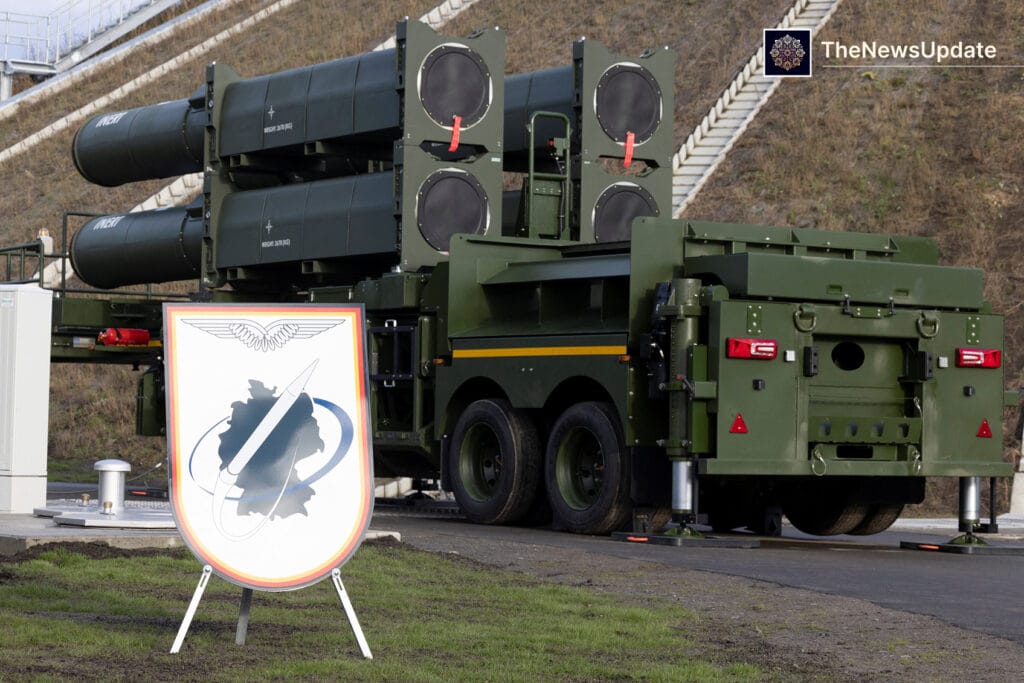
Germany brings back military service not simply for political symbolism but as part of a broader restructuring of the Bundeswehr. The German military currently comprises about 182,000 active troops, a number the government believes is insufficient for modern security challenges. Defence Minister Pistorius aims to increase this by at least 20,000 within the next year.
Long-Term Goals
- 260,000 active soldiers by the early 2030s
- Approximately 200,000 reservists available for mobilisation
- Major investments in equipment, logistics, and training facilities
- Meeting NATO force-strength targets set in recent summit agreements
During the Cold War, Germany had nearly half a million soldiers—one of the biggest armies in Europe. After reunification, professionalisation and demilitarisation dramatically reduced troop numbers. Today, Germany faces criticism from NATO and especially from the United States for not moving quickly enough to rebuild capacity.

U.S. leadership, including the current Trump administration, has frequently pressured Berlin to meet defence spending commitments. Restoring voluntary military service is seen as one step in a much broader rearmament campaign encouraged by its allies.
Future Outlook: Could Compulsory Service Return?
One of the central questions following the Bundestag’s decision is whether Germany may eventually reinstate compulsory military service. The government insists the system will remain voluntary for now. But the law explicitly allows the Bundestag to consider mandatory service if:
- geopolitical tensions escalate,
- not enough volunteers enlist,
- or national mobilisation becomes necessary.
The medical examinations starting in 2027 indicate that policymakers want infrastructure ready for rapid scaling. If a major conflict broke out, Germany could use the collected data to quickly mobilise tens of thousands of young people.


For now, Germany brings back military service in a limited voluntary form. But experts believe that if European security continues to deteriorate, compulsory elements may slowly return.
Conclusion: A Turning Point in German Defence
Germany’s decision marks one of the most consequential defence reforms since the end of the Cold War. By reintroducing a voluntary military service programme for 18-year-olds, Germany is signalling a strategic shift: from post-war restraint to proactive defence readiness. The political, social, and generational implications will unfold over time, but the message is clear—Berlin intends to play a bigger role in Europe’s security architecture.
Whether the plan evolves into compulsory service or remains voluntary depends largely on global stability and the willingness of young Germans to join. For now, the new policy represents both a practical military strategy and a powerful symbolic shift in German defence identity.

Related Reads
For continued updates on India’s fintech and digital finance developments, visit our Tech News section and The News Update.
By The Morning News Informer — Updated December 2025