The future of blended wing airliners is no longer just the stuff of futuristic sci-fi artworks or theoretical engineering debates. A new wave of aerospace startups is pushing forward aircraft designs that merge fuselage and wings into a single aerodynamic structure — a radical idea that promised to reshape commercial aviation as early as the 2030s. With mounting pressure on the aviation industry to reduce emissions, the blended-wing model is suddenly a credible concept attracting investors, airlines, and the U.S. military.
In March 2025, the Seattle-based startup Outbound Aerospace launched “Steve,” a V-shaped unmanned demonstrator that flew for just 16 seconds on its maiden flight — yet symbolised an engineering milestone. Steve represents the first step toward a massive 200-250 seat blended-wing airliner named the Olympic, expected to reshape mid-market commercial travel.
This article explores how companies like Outbound Aerospace, JetZero, and NASA are pushing toward the future of blended wing airliners, the challenges that stand in the way, and why this concept may finally be ready to take commercial flight Future of Blended Wing Airliners.

What Makes Blended Wing Airliners So Revolutionary?
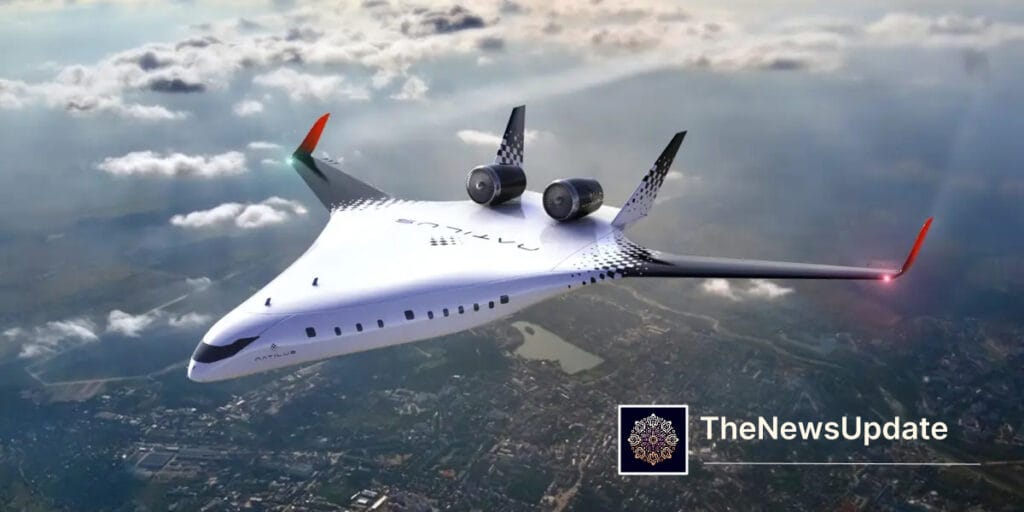
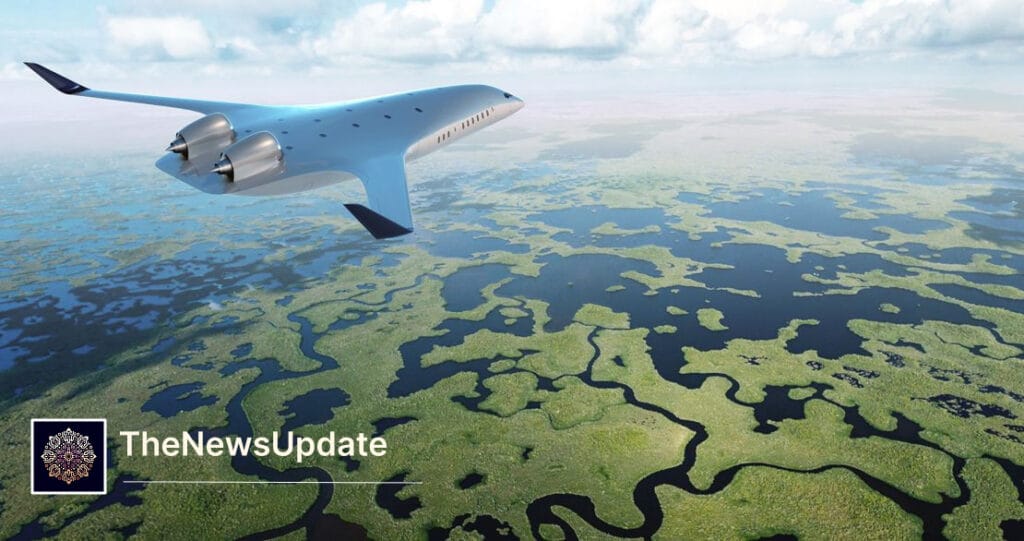
The blended-wing design eliminates the traditional “tube and wing” architecture of today’s Boeing and Airbus jets. Instead, it fuses the fuselage and wings into a single, sweeping aerodynamic frame with several major advantages Future of Blended Wing Airliners:
- Up to 50% lower fuel burn (according to NASA estimates)
- Significantly reduced emissions
- Large, spacious cabins — up to 40% more room
- Lower noise, thanks to improved aerodynamics and possibly rear-mounted engines
- Potential new air routes enabled by efficiency gains
Traditional airliners are constrained by long, narrow tubes that need to remain structurally strong under pressurisation. Blended wing aircraft, however, distribute lift across the entire airframe. This smooth integration creates far less drag and opens possibilities for radically different cabin layouts.
Though window seats would be limited due to the shape, cabins could feature atrium-style designs, spacious aisles, multi-class compartments, and extra-large boarding doors — eliminating long queues that frustrate passengers today.

Outbound Aerospace: The Startup Turning Sci-Fi Concepts into Reality
Outbound Aerospace believes the industry’s transformation begins with smaller demonstrators like Steve, proving both design feasibility and fast-build, low-cost manufacturing methods. Co-founder and CTO Jake Armenta, a former Boeing engineer, highlights the speed of the team’s achievements:
“We went from a clean sheet design to a demonstrator in about 12 months… nine months from opening our factory doors to first flight.”
Their novel tooling approach, relying heavily on advanced 3-D printing, allowed them to manufacture the carbon-fibre demonstrator significantly cheaper than traditional aerospace processes.

After its successful tests, Steve is now being developed into a cargo drone — attracting interest from the U.S. Department of Defense and commercial customers due to its large internal cargo bay. This early revenue model helps Outbound avoid the 10-year zero-income lull that cripples many aerospace startups.
JetZero: The Biggest Name in the Blended Wing Race
While Outbound is building momentum quietly, JetZero is rapidly becoming the most high-profile contender. The Long Beach, California-based company has attracted:
- $235 million from the U.S. Air Force
- Investment from United Airlines and Alaska Airlines
- A potential pathway to 200 aircraft orders from United
- Partnerships with BAE, Northrup Grumman, and Pratt & Whitney
Their goal is to fly a full-size demonstrator, the Z4, by 2027. JetZero has already completed its Pathfinder I demonstrator flights and passed a critical design review.
यह भी पढ़े:
 Samsung Bixby Perplexity AI Integration: 7 Key Signs Samsung Is Reinventing Its Voice Assistant
The company recently announced its factory in Greensboro, North Carolina — next door to the facility where Boom Supersonic plans to build its Overture jets. Together, these emerging players signal a dramatic shift in aviation innovation traditionally dominated by Boeing and Airbus.
Can Startups Truly Challenge Boeing and Airbus?
Aviation analyst Bill Sweetman describes the pursuit of blended-wing commercial jets as the “holy grail of aviation.” He credits modern advances such as:
- Computer-aided design
- 3-D aerodynamic modeling
- Advanced carbon-fiber structures
- More efficient small engines
for enabling companies to reimagine what an airliner could be.

However, Sweetman warns that certification and public acceptance remain enormous hurdles:
“The money these airlines are risking is change down the back of the sofa… Their orders depend on these start-ups delivering something they actually want.”
Even if the technology works flawlessly, bringing a new aircraft manufacturer into the commercial market — with the heavy burden of global safety certification — can cost billions and take over a decade.

Yet Outbound sees an advantage here. According to business development director Aaron Boysen, JetZero’s visibility actually benefits the entire sector:
“The publicity gets blended wings into airline conversations. They’ll face the steep certification costs before us.”
The NASA Legacy: X-48 and 30 Years of Research
The excitement around the future of blended wing airliners didn’t emerge suddenly. NASA’s pioneering research over the last three decades laid the scientific foundations.

In 1988, NASA called for revolutionary aircraft designs. This led engineers like Robert Liebeck to explore a futuristic blended wing aircraft concept. Their work resulted in the iconic NASA/Boeing X-48, a tiny remote-controlled demonstrator built to mimic the aerodynamics of a full-size blended wing jet.
The X-48 underwent more than 120 flights, examining:
- stall recovery
- engine-out conditions
- fuel savings
- noise reduction
Although the X-48 promised a revolution, Boeing’s commercial program never adopted the design, and the project remained an experimental milestone.

Outbound’s demonstrator Steve intentionally mimics the X-48’s dimensions — proving that thousands of hours of NASA’s learning are still relevant today.
Why Blended Wing Airliners Have Struggled for 100 Years
The first blended wing plane, the Westland Dreadnought, flew — and crashed — in 1924. The idea has been revived dozens of times since, but several persistent challenges have blocked commercial adoption:
- Complex airflow patterns around the blended body
- Difficulty creating a pressurised passenger cabin without flat surfaces failing under pressure
- Public acceptance of a radically different cabin experience
- Extremely high certification costs
- Mass-production challenges with non-traditional shapes
Military bombers, such as the Rockwell B1-B Lancer and Northrop B-21 Raider, have successfully used blended-wing principles — but they don’t need large pressurised passenger cabins. That single requirement remains the biggest problem for commercialisation.

The Road Ahead: Can the Olympic or Z4 Become the First Blended Wing Airliner?
Outbound Aerospace envisions a road map that begins small and scales steadily:
- Gateway cargo drone (based on Steve)
- Larger demonstrator with twice the wingspan
- Ultra-long range business jet
- The Olympic — 200–250 seat airliner
- A larger airliner in the 2040s
JetZero’s timeline is even more aggressive, aiming for commercial-sized test flights within a few years. If successful, the aviation landscape dominated by Boeing and Airbus for half a century could see its biggest disruption.
According to Boysen:

“There is a vast talent pool of aerospace engineers hungry for something new… That’s why we’re here.”
The next decade will determine whether blended wing airliners become the new standard — or remain another ambitious chapter in aviation’s long history.
Conclusion: The Future of Blended Wing Airliners Is Finally Within Reach
The future of blended wing airliners is moving from concept art to real prototypes at a pace that was unthinkable even a decade ago. With environmental pressures rising, fuel prices fluctuating, and airlines seeking transformative efficiency gains, the timing is perfect for a radical redesign of commercial aircraft.

Outbound Aerospace, JetZero, and NASA’s long legacy of experimentation have brought blended-wing technology closer to reality than ever. If engineering challenges can be solved and certification achieved, the 2030s may usher in an entirely new era of aviation — quieter, cleaner, and more efficient.
The question now is not whether blended wing airliners can fly — but whether the world is ready to embrace them.
For continued updates on India’s fintech and digital finance developments, visit our Tech News section and The News Update.