The high-stakes race to lead the US Federal Reserve is entering its decisive phase frontrunners for the top Fed job. With Federal Reserve Chair Jerome Powell’s term set to end in May, President Donald Trump is expected to announce his nominee for the top Fed job in the coming weeks. The decision will have far-reaching implications for financial markets, inflation control, and the independence of America’s central bank.
The next Fed chair will step into office at a challenging moment. The central bank is grappling with political pressure, internal divisions over interest rate policy, and concerns about credibility as Trump openly pushes for lower borrowing costs. Whoever is chosen will also need to secure Senate confirmation, ensuring the spotlight remains firmly on the nominee.
Why the Fed Chair Appointment Matters
The Federal Reserve chair plays a crucial role in setting the direction of US monetary policy. Decisions on interest rates, bond holdings, and inflation targets ripple through global markets, affecting everything from mortgage rates to stock prices and currency values.

This appointment is particularly sensitive because Trump has repeatedly criticised the Fed in the past and has made no secret of his desire for lower interest rates. His public pressure on the central bank has raised questions about whether the next chair will be able to act independently or align closely with the administration’s economic agenda.
Political Pressure and Credibility Concerns
Unlike most previous transitions, the search for Powell’s successor is unfolding amid unusually vocal political involvement. Trump has openly stated his preferences regarding interest rates, fuelling concerns among economists and investors that the Fed’s independence could be tested.
Market participants are closely watching not only who is nominated, but also how Wall Street reacts. Confidence in the Fed’s autonomy is seen as essential for maintaining investor trust and stabilising inflation expectations.

Kevin Hassett: The Trump Loyalist
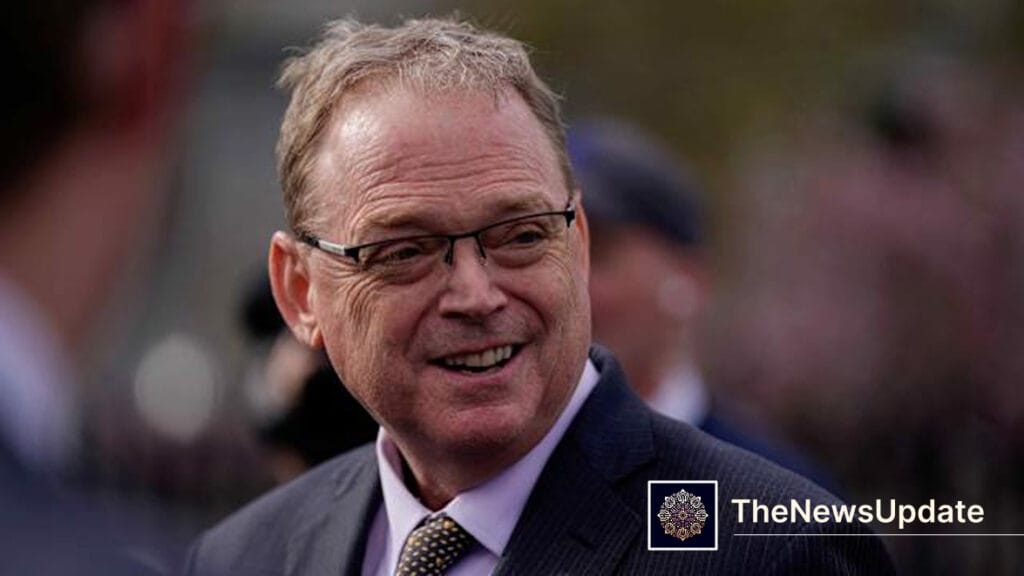
Kevin Hassett has long been viewed as a leading contender for the top Fed job. A conservative economist with deep ties to Trump, Hassett served as chair of the White House Council of Economic Advisers during Trump’s first term and currently heads the National Economic Council.
At 63, Hassett is a familiar face in Republican economic circles and a consistent defender of Trump’s policies. Wall Street traders continue to view him as the most likely choice, even though his odds have fluctuated in prediction markets since early December.
Hassett has often downplayed economic data suggesting weakness in the US economy and has echoed Trump’s claims of bias within federal statistical agencies. These positions have raised concerns among analysts about how independent he would be as Fed chair.
यह भी पढ़े:
 Top Sarkari Naukri Schemes in Bihar: 10 Employment & Skilling Initiatives Launched by Nitish Kumar
Concerns About Independence
Economists worry that Hassett’s close alignment with the White House could undermine confidence in the Fed’s ability to make tough decisions on inflation. In a research note, Deutsche Bank economists suggested Hassett could face resistance from other Fed policymakers if he pushes aggressively for rate cuts.
They argued that some officials may be sceptical of policy arguments that rely heavily on the administration’s economic plans bringing inflation back to target.
Even within the Trump administration, there have been reported doubts about whether Hassett has the technical and leadership skills required to run the central bank.

Hassett’s Response
Hassett has addressed these concerns publicly. In a recent CNBC interview, he stressed that the Fed’s independence is “really, really important” and argued that interest rates still have room to fall.
“The way you’ve got to drive interest-rate movements is with consensus based on the facts and the data,” he said, attempting to reassure critics that he would respect the institution’s traditions.
Kevin Warsh: The Fed Critic
Another major contender is Kevin Warsh, a former Fed governor who served from 2006 to 2011. At 55, Warsh has re-emerged as a serious candidate and briefly overtook Hassett in prediction markets earlier this month.

Trump himself acknowledged Warsh’s standing, telling the Wall Street Journal, “I think the two Kevins are great.”
Warsh is currently a fellow at the conservative Hoover Institution and serves on the board of UPS. He was also considered for the Fed chair role during Trump’s first term.
A History of Criticism
Warsh has been an outspoken critic of the Federal Reserve, attacking its reliance on economic data and its expanded balance sheet. Since re-entering the spotlight this year, he has intensified his rhetoric, calling for what he describes as “regime change” at the Fed.

During his earlier tenure, Warsh was seen as relatively hawkish, favouring higher interest rates to control inflation. However, his stance has evolved, and he is now perceived as supportive of lower rates in the near term.
Balance Sheet Strategy
Warsh has argued that shrinking the Fed’s balance sheet could help lower short-term interest rates, though some economists have questioned the logic behind this approach.
Trump has embraced Warsh’s views, telling the Journal, “He thinks you have to lower interest rates. And so does everybody else that I’ve talked to.”

Warsh’s close personal connections to Trump’s inner circle also stand out. His father-in-law, Ronald Lauder, is a billionaire businessman and longtime Trump donor, adding another political dimension to his candidacy.
Christopher Waller: The Fed Insider
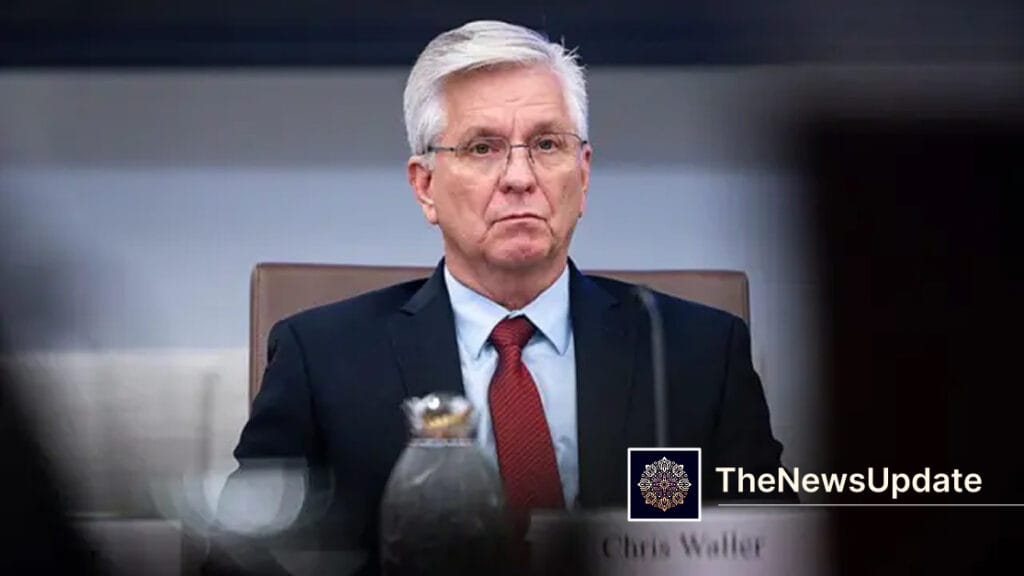
Christopher Waller, a current member of the Federal Reserve’s Board of Governors, has recently gained momentum in the race. His chances improved after he reportedly met Trump for an interview, drawing positive comments from the president.
Trump described Waller as “great” and noted that “he’s a man who’s been there a long time,” signalling respect for his experience.

Waller, 66, was nominated to the Fed board by Trump in 2020 and has recently emphasised that there may still be room for interest rate cuts.
Market-Friendly Choice
Unlike Hassett and Warsh, Waller lacks deep personal ties to Trump’s political network. This relative distance has appealed to Wall Street, where investors are wary of excessive White House influence over monetary policy.
Skyler Weinand, chief investment officer at Regan Capital, described Waller as “the more sensible choice,” suggesting his appointment could help preserve market confidence.

Another strategic advantage of selecting Waller is that it could open up additional vacancies on the Fed board next year, giving Trump more opportunities to shape the institution.
Other Names in the Mix
While the two Kevins and Waller are seen as the leading contenders, other names have also been floated. These include BlackRock executive Rick Rieder and Treasury Secretary Scott Bessent, though neither is considered a frontrunner at this stage.
The final decision will depend not only on Trump’s preferences but also on Senate confirmation prospects and market reaction.
How Wall Street Is Watching the Race
Financial markets are closely tracking every development in the Fed chair race. Investors are analysing each candidate’s views on inflation, interest rates, and balance sheet policy.
The ultimate verdict on Trump’s choice may come not from Washington, but from Wall Street itself. A nominee perceived as credible and independent could stabilise markets, while a controversial pick could trigger volatility.
Conclusion: A Defining Choice for US Monetary Policy
The decision over who will replace Jerome Powell as Federal Reserve chair will shape US economic policy at a critical juncture. Kevin Hassett, Kevin Warsh and Christopher Waller each represent distinct approaches to monetary leadership, balancing political realities with economic priorities.
As Trump prepares to make his announcement, the stakes could not be higher. The next Fed chair will face inflation risks, political scrutiny, and global market pressures — all while attempting to preserve the independence and credibility of the world’s most powerful central bank.