Table of Contents
- The Birth of a Cinematic Revolution
- Balraj Sahni’s Transformation into Shambhu Mahato
- A Mirror to Post-Independence India
- The Legacy of Do Bigha Zameen
- Conclusion: Art as a Form of Truth
The Birth of a Cinematic Revolution
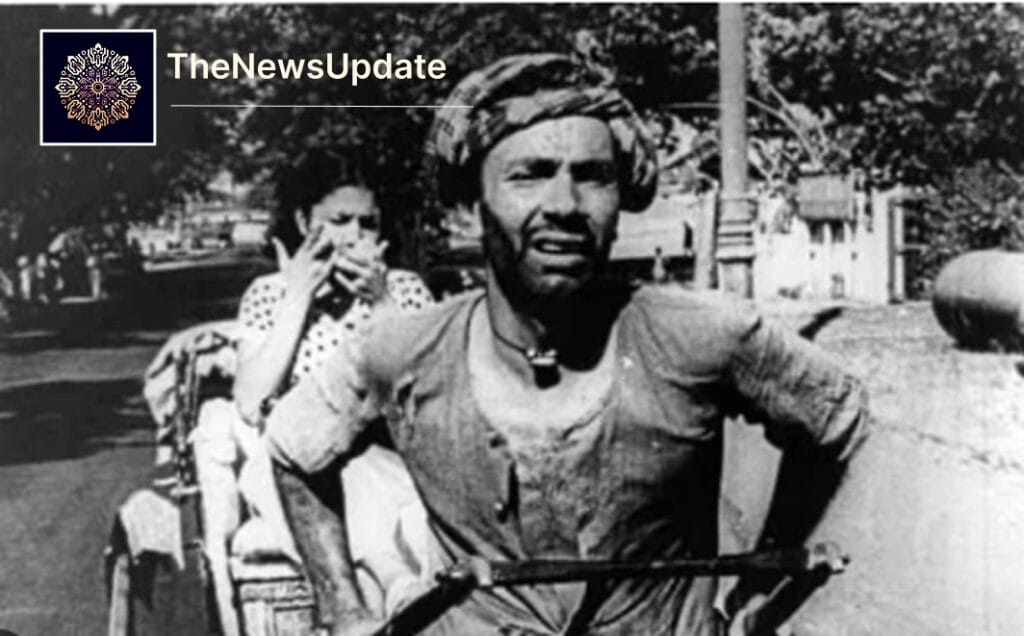
When Bimal roy Do Bigha Zameen Balraj Sahni released in 1953, Indian cinema was still finding its voice in the wake of independence. The industry was brimming with romantic musicals, fantasy dramas, and patriotic extravaganzas. Against that landscape, Roy’s neorealist masterpiece landed like a thunderclap — raw, honest, and deeply unsettling. The film not only redefined what storytelling could be, but it also transformed Balraj Sahni into the conscience of India’s common man.
The story was simple but devastating. A farmer, Shambhu Mahato, is forced to leave his land — two bighas of soil — after falling into the clutches of debt and exploitation. His struggle to reclaim it mirrors the larger story of India’s poor, fighting for dignity amid systemic inequality. The brilliance of Roy’s direction lay in how he infused empathy without melodrama, emotion without excess. For the first time, audiences saw not glamour, but grit.
यह भी पढ़े:
 Osman Hadi Killers Fled to India via Meghalaya Border: Dhaka Police Reveal Shocking Escape Route
Balraj Sahni’s Transformation into Shambhu Mahato
Before Do Bigha Zameen, Balraj Sahni was a well-read intellectual, fluent in English, and part of an elite class that rarely touched the soil. When he first walked into Bimal Roy’s office in a crisp suit, Roy doubted whether this educated man could portray a desperate farmer. Sahni, however, wasn’t deterred. He insisted that his experience with IPTA — the Indian People’s Theatre Association — had prepared him for the role. What followed was one of the most remarkable transformations in cinema history.
To prepare for the role, Sahni disappeared into the streets of Jogeshwari and Calcutta, observing laborers, their mannerisms, and their exhaustion. He wrote later in his autobiography: “I would go there and watch them minutely — their way of working, the way they walked, squatted on the ground to eat, their accent, their dress, everything!”
His immersion went beyond research. On set, Sahni did his own makeup, tied his own turban, and even pulled rickshaws barefoot until his feet bled. This wasn’t method acting; it was human empathy turned into art. Every bead of sweat and every crack in his voice carried the authenticity of lived pain. As one rickshaw puller reportedly told him, “Yeh to meri kahani hai babu” — “This is my story, sir.”
यह भी पढ़े:
 Bulldozer Raj Karnataka Demolitions: Congress Govt Faces Backlash After 400 Muslims Left Homeless
A Mirror to Post-Independence India
Roy’s Do Bigha Zameen Balraj Sahni wasn’t just a film; it was a social commentary on the failures of freedom. India had thrown off the colonial yoke, but the shackles of inequality remained. Landlords continued to exploit, the poor continued to migrate, and the gap between rural despair and urban ambition widened.
The film’s cinematography — shot in black and white — amplified the harsh contrasts of this duality. Scenes of cracked earth and rain-soaked streets carried symbolic weight. Shambhu’s journey from a proud landowner to a nameless laborer encapsulated the tragedy of a nation struggling to reconcile its ideals with reality. The focus keyword “Do Bigha Zameen Balraj Sahni journey” perfectly captures this transformation — not just of a man, but of a society.
Audiences of the 1950s, accustomed to escapist cinema, were unprepared for the starkness of Roy’s vision. Many found it too real, too painful. Yet, in its unflinching honesty, the film built the foundation for Indian neorealism — influencing filmmakers like Satyajit Ray, Ritwik Ghatak, and Shyam Benegal for decades to come.

The Legacy of Do Bigha Zameen
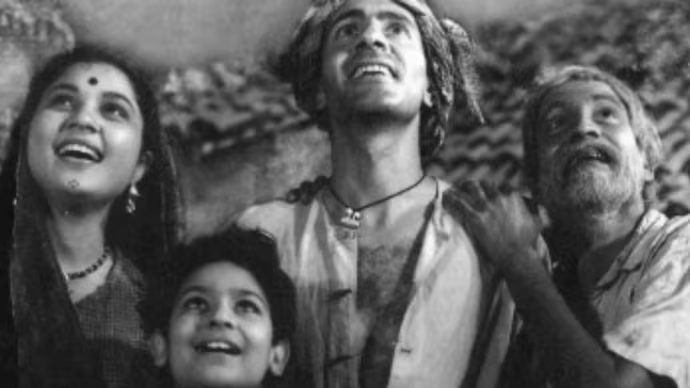
Though it struggled commercially upon release, Do Bigha Zameen earned critical acclaim across the world. It won the International Prize at the Cannes Film Festival in 1954 and marked India’s entry into the global cinematic map. The movie’s universal themes of poverty, migration, and resilience transcended borders, making it a timeless story of humanity.
For Do Bigha Zameen Balraj Sahni, the role of Shambhu Mahato became more than just a performance — it was a spiritual awakening. It shaped every role he took afterward, from the quiet father in Kabuliwala to the grieving patriarch in Garam Hawa. Each character carried echoes of Shambhu’s endurance and silent strength.
Even today, the film resonates in modern India. With growing urbanization and displacement, Shambhu’s story feels painfully current. Farmers continue to fight for fair wages, and migrant workers still seek dignity in hostile cities. Do Bigha Zameen remains a mirror — one that reflects both how far we’ve come and how far we still have to go.

Conclusion: Art as a Form of Truth
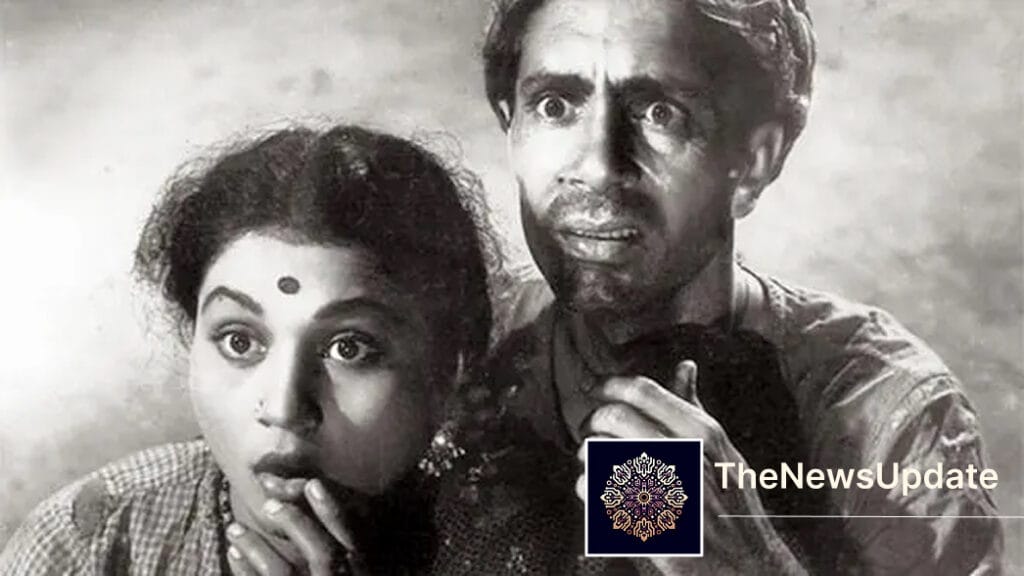
In the annals of Indian cinema, few films possess the purity and political clarity of Do Bigha Zameen. It was not just about a man’s fight for his land; it was about reclaiming one’s humanity in an unjust world. The Do Bigha Zameen Balraj Sahni journey endures because it represents the union of intellect and empathy — an actor who gave up privilege to understand pain, and a director who used art to question power.
Balraj Sahni once wrote, “I shall always look upon my role in Do Bigha Zameen with a sense of pride. Indeed, I shall cherish the memory of that role till I breathe my last.” That humility, that commitment to truth, is what keeps the film alive more than seventy years later. In every frame, you can feel a man breaking, a nation awakening, and cinema finding its conscience.
Related Reads
By The News Update — Updated November 1, 2025