The aviation industry faced one of its most dramatic technology crises in years when cosmic rays caused a series of Cosmic rays bit flip that affected critical flight control computers. The incident triggered widespread flight disruptions, urgent aircraft recalls, and a renewed global debate about the vulnerability of modern aviation systems. As airlines across the world grounded more than 6,000 Airbus aircraft for mandatory updates, experts began sounding the alarm about the increasing risks that cosmic radiation poses to microchip-dependent systems.
This article breaks down what happened, how cosmic rays caused a dangerous in-flight malfunction, and why the Airbus A320 family became the center of global attention. We also explore what the future might look like for aviation safety as electronic systems grow ever more complex.
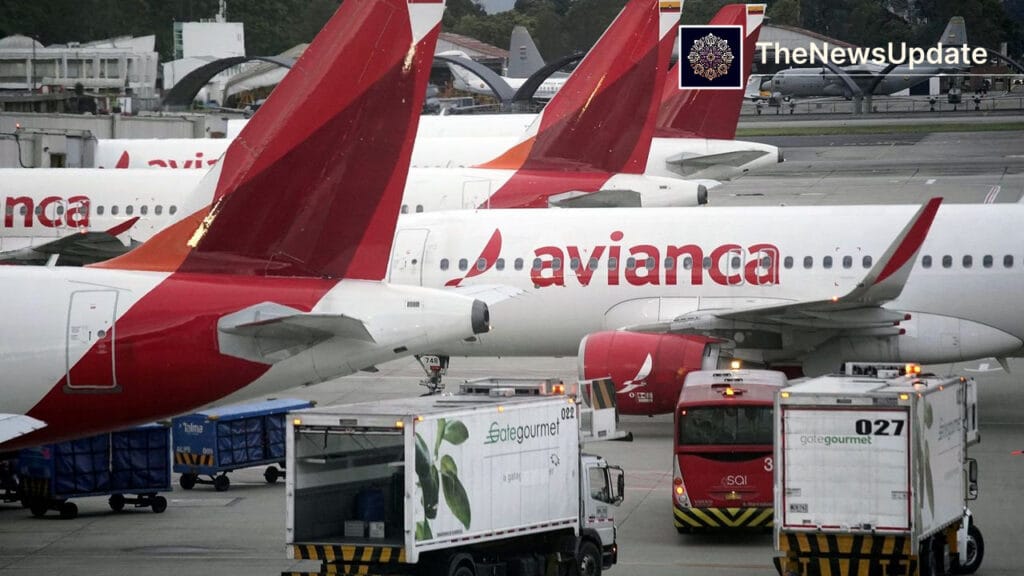
What Sparked the Airbus Crisis? Inside the JetBlue Incident Cosmic rays bit flip
On 30 October 2025, a JetBlue Airbus A320 flying from Cancun to Newark experienced a sudden, uncommanded drop in altitude. Three passengers suffered head injuries, and at least fifteen were hospitalized after the aircraft diverted to Florida. At first, the cause was unclear. But after extensive investigation, Airbus concluded that the event was linked to a single-event upset — better known as a bit flip — induced by cosmic radiation.
One of the aircraft’s ELAC systems, which control key wing and tail surfaces, malfunctioned after high-energy particles from space struck the microchips responsible for managing flight control signals. While the system eventually stabilized, the event raised immediate safety concerns for thousands of aircraft using similar hardware.
What Is a Bit Flip and Why Does It Happen?
A bit flip is a rare but dangerous error that occurs when a charged particle, often a neutron generated by cosmic rays, strikes a computer chip and causes a “0” to flip to a “1” — or vice versa. This tiny alteration can lead to major disruptions if it occurs in critical systems.
According to experts in digital forensics and space physics, cosmic rays originate from powerful events such as solar storms, supernova explosions, and even black holes. These particles travel across space and penetrate Earth’s atmosphere, creating neutron showers that can interfere with electronics.

Aircraft cruising at high altitudes face a significantly higher neutron flux compared to systems on the ground. With jetliners depending heavily on computerized fly-by-wire systems, the potential impact of such an upset is far greater.
Why the A320 Family Is Particularly Exposed
A320 aircraft rely on several redundant flight control computers, including ELAC and SEC units. While redundancy usually protects aircraft from system errors, cosmic-ray-induced bit flips can corrupt data in multiple systems simultaneously if the chips are sufficiently vulnerable.
The investigation revealed:

- The corrupted parameter occurred in the ELAC computer.
- The error could cause unexpected aircraft movements during flight.
- Thousands of jets worldwide contained the same vulnerable hardware.
Although the JetBlue incident was the only major reported case, the possibility of replication was enough to trigger a global recall.
One of the Largest Aviation Groundings in History
Within weeks, aviation regulators — including the European Union Aviation Safety Agency (EASA) and the United States Federal Aviation Administration (FAA) — issued emergency directives requiring airlines to ground affected aircraft immediately.
The scale of the grounding was unprecedented:
यह भी पढ़े:
 Samsung Bixby Perplexity AI Integration: 7 Key Signs Samsung Is Reinventing Its Voice Assistant
- Over 6,000 aircraft affected globally
- 900 aircraft required new hardware installation
- Thousands required on-the-spot software updates
The timing exacerbated the impact, as the grounding occurred during one of the busiest travel weekends following Thanksgiving in the U.S. Airline operations worldwide experienced cancellations, delays, and massive logistical challenges.
How Cosmic Rays Trigger Dangerous System Failures
Cosmic radiation constantly interacts with Earth’s atmosphere. When high-energy particles strike atmospheric molecules, they generate cascades of secondary particles — mainly neutrons — capable of penetrating aircraft fuselages and disrupting semiconductor electronics.

Space weather physicists note that even though solar activity contributes to this phenomenon, galactic cosmic rays are the primary source of neutron flux that affects aircraft electronics. These particles are powerful enough to leave satellite, aircraft, and even ground-based systems vulnerable.

The Mystery of “Intense Solar Radiation”
Airbus initially attributed the JetBlue incident to intense solar radiation on October 30. However, space weather experts quickly pointed out that nothing unusual occurred on that date. No major solar flares or storms were recorded that would significantly elevate radiation levels.
Some experts speculate the company referenced solar radiation as a simplified explanation for the public. Others suggest that minor, undocumented anomalies may have contributed. Regardless, the lack of correlation between the event and typical solar activity left scientists puzzled.
The Fix: How Airbus Responded
Airbus quickly developed a software update designed to rapidly refresh corrupted parameters in flight control computers. The rapid-refresh technique ensures that any erroneous data caused by bit flips is overwritten before it can affect aircraft behavior.
यह भी पढ़े:
 New York Times Reporter, Authors Sue Google, OpenAI, Meta Over AI-Based Copyright Infringement
For roughly 900 aircraft, new radiation-hardened hardware was deemed necessary. These components provide better shielding and improved tolerance to neutron strikes.
Why Microchips Are Becoming More Vulnerable
One of the central concerns raised by the Airbus grounding is the vulnerability of modern microelectronics. As chips become smaller, more powerful, and more tightly packed, the energy required to disrupt a bit decreases.
This makes them more susceptible to:
- Cosmic-ray-induced bit flips
- Electromagnetic interference
- Voltage fluctuations
Industries such as aviation, healthcare, automotive, and telecommunications heavily depend on these advanced chips — raising the stakes dramatically.
Can Standards Prevent Future Incidents?
Experts such as Professor Keith Ryden and his colleagues have been pushing for stricter, mandatory standards for radiation-hardening aircraft electronics. However, current industry guidelines remain non-compulsory.
Given the increasing frequency of solar activity and growing dependence on electronics, many believe future regulations must require:
यह भी पढ़े:
 Indie Band Claims AI Stole Their Billie Eilish Cover, Raising Fresh Fears Over Music Copyright
- Radiation-tolerant microchips
- Redundant flight control protections
- Real-time neutron flux monitoring
Without such measures, similar incidents could reoccur — perhaps with more severe consequences.
Airlines Recover, but Concerns Remain
By December 1, 2025, most affected aircraft had been updated and cleared to resume operations. Flights gradually returned to normal, though some disruptions continued in the following days.
Despite the quick recovery, the JetBlue incident served as a stark reminder: even with advanced systems, aviation technology remains vulnerable to forces beyond human control — forces originating millions of miles away in space.

Conclusion: A Wake-Up Call for the Digital Age
The Airbus grounding incident highlights a growing challenge for our microchip-powered world. Whether in aircraft, hospitals, power grids, or smartphones, cosmic rays pose a real and increasing threat to the electronics we rely on every day.
As technology becomes more advanced and more integrated, ensuring resilience against cosmic radiation will be essential. The JetBlue incident may well be remembered as the moment when industries realized that safety in the digital age requires looking not only downward — but upward, to the stars.
Read more breaking aviation and technology insights on our site: