In a world where both waste reduction and sustainable construction have become urgent environmental priorities, researchers at RMIT University in Australia have made a remarkable discovery coffee waste concrete: used coffee grounds can make concrete significantly stronger and far more eco-friendly than traditional mixtures. This innovation could revolutionize the construction industry while providing a practical solution for the millions of tonnes of coffee waste produced globally every year.
Every day, humans consume over 2.25 billion cups of coffee, generating vast amounts of organic waste that often ends up in landfills. When this waste decomposes, it releases methane — a greenhouse gas far more potent than CO₂. Meanwhile, concrete production contributes to nearly 8% of global carbon emissions, primarily due to cement manufacturing. By merging these two environmental challenges, researchers may have found a solution that simultaneously tackles both problems.
The Breakthrough: Turning Coffee Waste Into Stronger Concrete
Led by sustainability and engineering experts, the RMIT research team experimented with a novel method of transforming coffee waste into a construction-strength additive. Their results were nothing short of astonishing: processed coffee grounds improved concrete strength by up to 30% compared to conventional concrete mixtures.

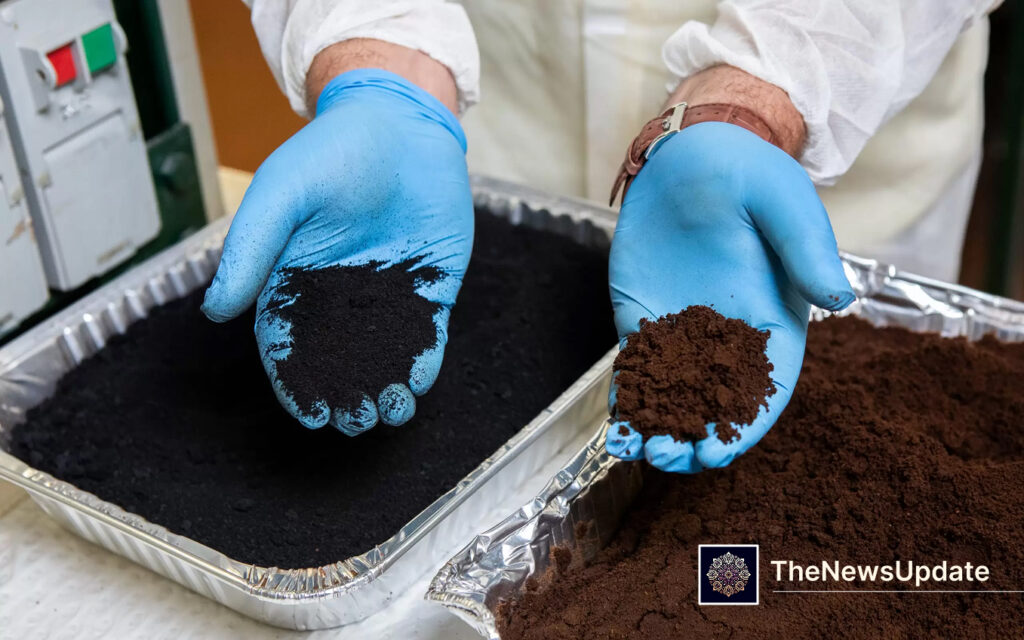
The key lies in the way coffee waste is processed. Instead of adding raw organic grounds directly into concrete — which would weaken the mix — RMIT scientists used a process called pyrolysis. This involves heating the coffee waste to high temperatures in the absence of oxygen, resulting in a stable, carbon-rich biochar material.
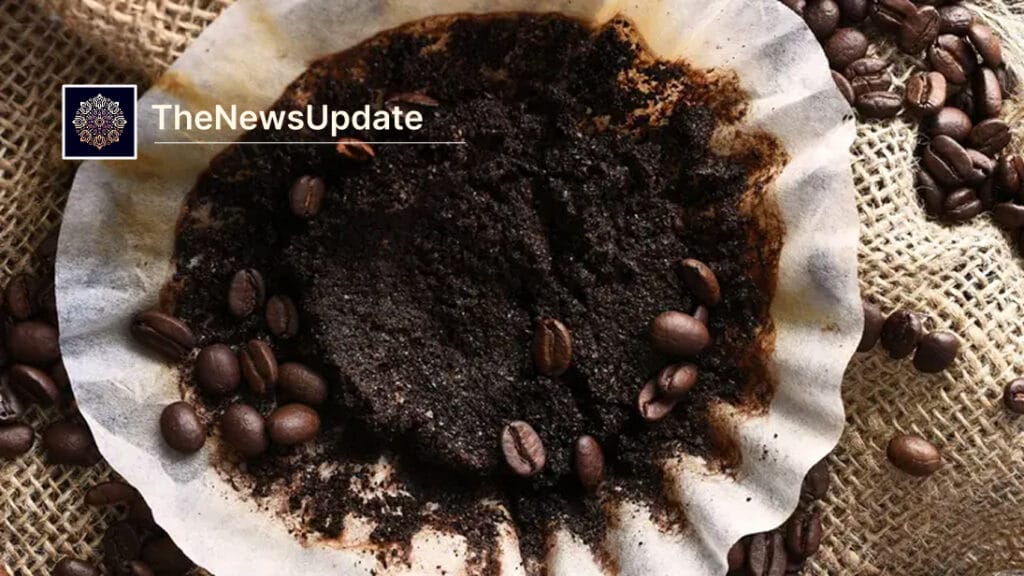
The biochar produced from coffee waste integrates smoothly into concrete mixtures, enhancing density, lowering permeability, and reducing the amount of cement required. This creates a greener and stronger material with potential for large-scale adoption in future construction projects.
How Coffee Biochar Enhances Concrete Properties
The research team identified several reasons why coffee-derived biochar improves concrete performance:

- Microstructure Refinement: The tiny pores in coffee biochar help fill microscopic gaps in concrete mixtures, reducing internal weaknesses.
- Increased Bonding Strength: Biochar particles adhere well to cement composites, improving the internal cohesion of the concrete.
- Reduced Water Absorption: The hydrophobic nature of pyrolyzed coffee waste slows moisture infiltration, improving durability.
- Enhanced Thermal Stability: Concrete becomes more temperature-resistant, reducing the risks of cracking from heat expansion.
- Lower Cement Usage: By replacing a portion of cement, the carbon footprint of concrete production decreases significantly.
This combination of enhanced strength and reduced environmental impact positions coffee-waste concrete as a game-changing innovation for sustainable infrastructure development.
The Global Coffee Waste Problem
The world consumes coffee at staggering levels. Coffee culture has expanded beyond cafés into homes, offices, vending machines, and retail chains. Unfortunately, the waste generated from this consumption poses a significant environmental challenge.
According to waste management studies, the world produces more than 10 million tonnes of spent coffee grounds annually. Most of this waste goes straight to landfill, where it emits methane during decomposition — a greenhouse gas roughly 25 times more harmful than carbon dioxide.

Innovative recycling uses for coffee grounds already exist, such as composting, biomass pellets, and cosmetic applications. However, these solutions account for a fraction of the global volume. The construction industry, which consumes billions of tonnes of material each year, may finally offer the scale needed to put coffee waste to good use.
Concrete’s Heavy Environmental Footprint
Concrete is one of the most widely used materials on the planet, second only to water in terms of global consumption. It plays a fundamental role in infrastructure development — from buildings and roads to bridges, ports, and tunnels. Yet, despite its utility, concrete production faces heavy criticism due to its massive environmental impact.
The biggest contributor to concrete’s carbon footprint is cement, the binding agent used to hold the mixture together. Cement production involves heating limestone to extremely high temperatures, resulting in immense CO₂ emissions. In fact, the cement industry alone generates close to 3 billion tonnes of CO₂ annually.
यह भी पढ़े:
 Samsung Bixby Perplexity AI Integration: 7 Key Signs Samsung Is Reinventing Its Voice Assistant
By substituting a portion of cement with recycled biochar made from coffee waste, the RMIT study demonstrates how the construction sector can drastically reduce emissions without compromising structural integrity.
Testing Coffee-Waste Concrete: What the Researchers Found
The RMIT scientists conducted intensive laboratory experiments to evaluate the mechanical performance of coffee-enhanced concrete. They tested several pyrolysis temperatures, particle sizes, and concrete ratios to determine the most effective configuration.
The study found the following:

- Pyrolysis at around 350°C produced optimal biochar for strength enhancement.
- Replacing up to 15% of sand with coffee biochar yielded the best structural results.
- Higher pyrolysis temperatures produced more brittle materials, reducing effectiveness.
- Concrete samples with coffee biochar showed improved load-bearing capacity.
The researchers also evaluated long-term durability factors, such as shrinkage, cracking potential, and water resistance. In nearly all categories, coffee biochar concrete performed equal to or better than traditional concrete alternatives.
Scaling the Innovation: What Comes Next?
Although the research is promising, scaling up production presents challenges. The process requires controlled pyrolysis facilities, consistent supply chains for waste coffee, and construction companies willing to adopt newer, greener materials.
However, the potential benefits far outweigh the obstacles:
यह भी पढ़े:
 New York Times Reporter, Authors Sue Google, OpenAI, Meta Over AI-Based Copyright Infringement
- Lower construction emissions through cement reduction
- Significant landfill diversion for coffee shops, cafés, and restaurants
- New commercial uses for recycled organic waste
- Improved structural performance of concrete
The RMIT team is already working with local councils, waste management groups, and construction firms to introduce real-world pilot programs. If successful, this could lead to widespread adoption of coffee waste concrete in roads, pavements, housing developments, and commercial structures.
A Step Toward a Circular Economy
This discovery represents more than just a new material — it embodies the principles of a circular economy. Instead of allowing coffee waste to enter landfills, the material is transformed into something valuable, reducing the need for newly extracted resources.
Ecologists emphasize that transitioning to a circular model is essential for long-term climate resilience. Turning organic waste into building materials is a practical, scalable step in that direction.

The Wider Potential of Organic Waste in Construction
Coffee grounds are not the only organic material being explored for sustainable construction. Similar research has experimented with:
- Rice husk ash
- Coconut fibers
- Bamboo fibers
- Sawdust
- Walnut shells
- Biochar from general organic waste
The success of coffee biochar concrete suggests that the future of construction may be built on recycled materials that were once considered waste.
Conclusion: A Greener Future Built From Your Morning Coffee
The RMIT discovery showcases how scientific innovation can turn everyday waste into powerful tools for sustainability. By integrating coffee grounds into concrete production, we can make one of the world’s most essential construction materials stronger, greener, and more circular.
यह भी पढ़े:
 Indie Band Claims AI Stole Their Billie Eilish Cover, Raising Fresh Fears Over Music Copyright
If adopted globally, this breakthrough could: reduce landfill waste, cut methane emissions, lower cement-related CO₂ emissions, and enable cleaner, more resilient construction practices.
It is a reminder that solutions to environmental challenges often come from unexpected places — even from the leftover grounds in your morning cup of coffee.
As research continues, the world may soon see cities built partly from recycled coffee, marking a new era in sustainable engineering.

For more updates The News Update .