Table of Contents
- Historic Coordination Between China and NASA
- The Growing Risk of Crowded Orbits
- China’s Advanced Space Situational Awareness
- Global Calls for Space Traffic Management
- The Role of Commercial Satellite Operators
- Lessons in International Cooperation
- Future Outlook for Orbital Safety
Historic China NASA Satellite Collision Coordination
In a historic first, China’s National Space Administration (CNSA) proactively contacted NASA to prevent a potential satellite collision, signaling a significant milestone in international space safety. According to NASA official Alvin Drew, the CNSA warned of a “conjunction” involving one of NASA’s satellites and offered to maneuver its own craft while NASA maintained its position. Previously, NASA would warn Chinese satellites to remain stationary while it adjusted its own orbit. This role reversal illustrates China’s increasing sophistication in space situational awareness and reflects growing trust in cooperative space operations.
The significance of this coordination cannot be understated. With thousands of satellites now populating low Earth orbit (LEO), even minor miscalculations can trigger catastrophic chain reactions, generating debris that threatens not only government missions but also commercial and scientific operations.

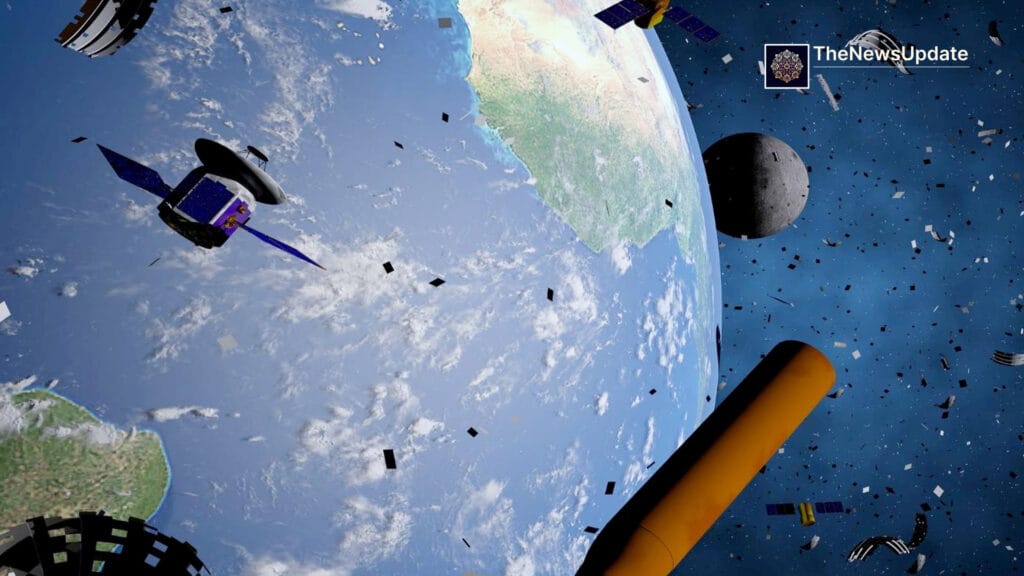
China NASA satellite collision coordinationThe Growing Risk of Crowded Orbits
Low Earth orbit has become increasingly crowded in recent years. The surge in satellite deployments from private companies and national space agencies has heightened the risk of collisions. Major contributors include:
- SpaceX’s Starlink constellation, aiming to provide global internet coverage
- China’s proposed Guowang and Thousand Sails satellite networks
- India’s and Europe’s growing satellite programs for communication, navigation, and Earth observation
Each additional satellite increases the probability of close encounters and collision events. Experts warn that debris from even small incidents can remain in orbit for years, posing long-term hazards. According to space safety analysts, preventing collisions requires not only precise tracking but also real-time communication between all operators, public and private.
The recent CNSA-NASA coordination demonstrates how advanced situational awareness can mitigate these risks. China’s willingness to alert NASA first marks a new era where proactive measures take precedence over reactive ones, ensuring safer operations for all spacefaring nations.

China NASA satellite collision coordination proves essential as even minor miscalculations could generate debris threatening scientific and commercial satellites. Experts recommend real-time data sharing, precise maneuvering, and international collaboration to prevent accidents.
China’s Advanced Space Situational Awareness
China has invested heavily in space situational awareness, the ability to track satellites, debris, and other orbital objects accurately. This capability is critical as the LEO environment becomes more congested. CNSA’s alert to NASA shows that China’s monitoring systems are now on par with other major space powers, including the United States and the European Space Agency (ESA).
Some key components of China’s situational awareness include:

- Ground-based radar and optical tracking stations
- Advanced computational models for predicting orbital trajectories
- International data-sharing protocols for potential collision alerts
By taking the initiative to communicate with NASA, CNSA has demonstrated not just technical capability but also a commitment to fostering international space safety norms.
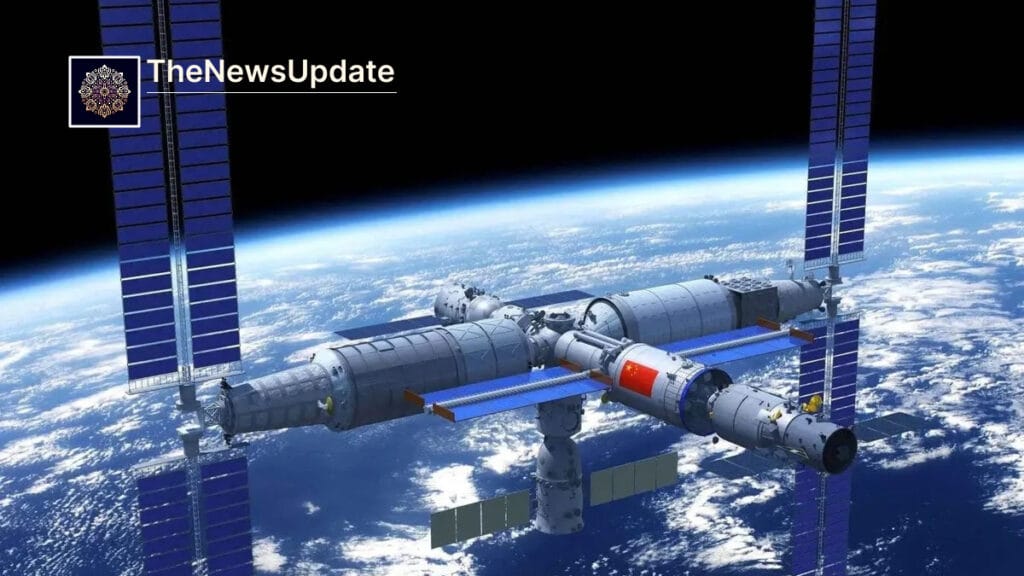
Global Calls for Space Traffic Management
The incident underscores the urgent need for international cooperation in space traffic management. With the rapid growth of satellite launches, space is increasingly crowded, and the probability of near misses or collisions rises significantly. Experts suggest several measures to ensure orbital safety:
- Establishing an international debris-tracking and collision-warning center
- Creating standardized protocols for satellite maneuvering in crowded orbits
- Sharing orbital data among nations, including private commercial operators
- Investing in debris removal technologies to reduce long-term hazards
Chinese President Xi Jinping has previously advocated for a global debris-tracking system to ensure safer space operations. CNSA’s proactive alert to NASA aligns with this vision, proving that political boundaries need not hinder cooperative safety measures in space.
यह भी पढ़े:
 Samsung Bixby Perplexity AI Integration: 7 Key Signs Samsung Is Reinventing Its Voice Assistant
China NASA satellite collision coordination will likely become standard practice to ensure safe operations in crowded low Earth orbit.
The Role of Commercial Satellite Operators
Commercial companies have become major players in orbital traffic. SpaceX, OneWeb, Amazon’s Project Kuiper, and other commercial ventures are deploying thousands of satellites into LEO, adding complexity to traffic management. Effective coordination between government agencies like NASA and CNSA is essential, but private operators must also follow international best practices China NASA satellite collision coordination.
Some key recommendations for commercial operators include:

- Real-time reporting of satellite positions to a centralized global database
- Automated collision-avoidance systems on satellites
- Collaborative maneuvering agreements between operators during conjunction events
- Designing satellites for easier de-orbiting or disposal at end-of-life
Without such coordination, the risk of cascading collisions—known as the Kessler Syndrome—could make portions of LEO unusable for decades.
Lessons in International Cooperation
The CNSA-NASA collaboration sets a positive precedent for global space governance. Despite geopolitical tensions and formal restrictions under the US “Wolf Amendment,” the agencies managed to communicate effectively for the sake of mutual safety. Lessons from this event include:
- Safety can be prioritized over politics when stakes are high
- Proactive communication reduces the risk of emergency maneuvers
- Technical transparency builds trust between nations
- Shared goals in space can pave the way for broader cooperation in science and technology
Experts hope that this example encourages more countries to adopt cooperative measures, ensuring the sustainability of crowded orbital environments for both scientific and commercial use.
यह भी पढ़े:
 New York Times Reporter, Authors Sue Google, OpenAI, Meta Over AI-Based Copyright Infringement
Future Outlook for Orbital Safety
The collaboration between NASA and CNSA is likely to become a blueprint for future space traffic management. As satellite launches continue at unprecedented rates, global coordination will be essential to prevent accidents and reduce space debris. Potential developments include:
- Global regulatory frameworks for collision avoidance
- Mandatory reporting of satellite positions and maneuvers
- Investment in autonomous, AI-driven orbital safety systems
- Expansion of international debris removal programs
By working together, agencies like NASA and CNSA, along with commercial operators, can ensure that LEO remains safe and accessible for future generations. The proactive approach demonstrated in this recent incident illustrates how collaboration can transcend political divides for the greater good of space safety.
Related Reads
By The Morning New Update — Updated 09 Nov 2025