Table of Contents
- Background: Why China Is Conducting Military Drills Around Taiwan
- Justice Mission 2025: Scale and Scope of the Drills
- Taiwan’s Response and Regional Impact
- International Reactions and Strategic Analysis
- Conclusion: What Comes Next for the Taiwan Strait
Background: Why China Is Conducting Military Drills Around Taiwan
The latest China military drills around Taiwan mark another escalation in a long-running and deeply sensitive geopolitical standoff. Beijing considers Taiwan a breakaway province and has repeatedly vowed to achieve “reunification,” by force if necessary. Taiwan, however, operates as a self-governed democracy with its own military, currency, and political system.
Tensions have surged in recent years as Taiwan has strengthened its defence posture and deepened ties with the United States and its allies. The immediate trigger for the current drills appears to be Washington’s recent approval of an $11 billion arms package for Taipei, one of the largest single defence sales in recent history.

China has a long history of using military drills around Taiwan as both a deterrent and a political message. Since 2022, such exercises have become more frequent and more complex, often coinciding with political developments that Beijing views as threatening.
Justice Mission 2025: Scale and Scope of the Drills
Codenamed Justice Mission 2025, the China military drills around Taiwan involve a wide deployment of forces from the army, navy, air force, and rocket force. The exercises include live-fire drills and coordinated manoeuvres across sea and air space surrounding the island.
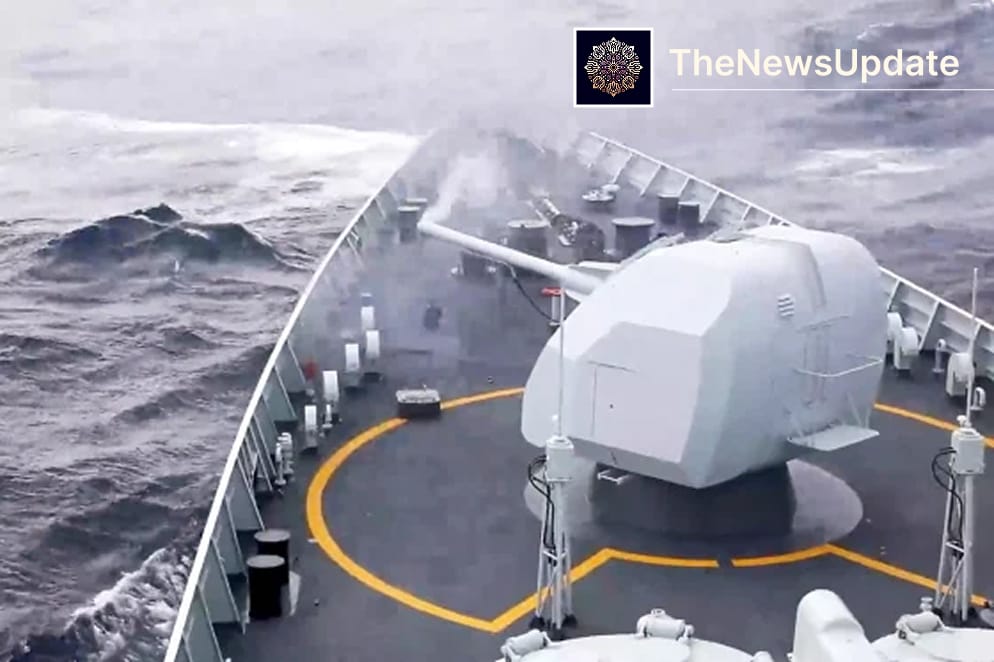
Chinese state media released footage showing warships firing towards open waters and aircraft conducting patrols. The drills are designed to simulate the seizure and blockade of key strategic areas, a scenario closely watched by regional military analysts.
In a statement on Weibo, China’s Eastern Theater Command described the drills as a “shield of justice,” warning that any attempts to push Taiwanese independence would be met with force. The most intensive phase of the exercise is scheduled to run from morning to evening, indicating a highly planned operation.
Taiwan’s Response and Regional Impact
Taiwan has placed its military on high alert in response to the China military drills around Taiwan. According to the defence ministry, dozens of Chinese aircraft and nearly 30 naval and coastguard vessels were detected operating near the island.
Taipei confirmed it had deployed missile systems and surveillance forces to monitor the situation closely. Civil aviation authorities diverted domestic and international flights away from designated danger zones, affecting more than 100,000 passengers.

President Lai Ching-te criticised the drills as a challenge to international norms but reaffirmed that Taiwan remains committed to maintaining the status quo. He stressed that peace depends on credible defence capabilities rather than provocation.
Public sentiment in Taiwan continues to favour stability. Surveys consistently show that most citizens prefer neither unification with China nor a formal declaration of independence.
International Reactions and Strategic Analysis
Beijing’s foreign ministry described the China military drills around Taiwan as a “severe punishment” for separatist forces and warned external actors against interfering in what it calls China’s internal affairs.
The United States has reiterated its support for peace and stability in the Taiwan Strait, while analysts note that the timing of the drills sends a clear message following the recent US arms sale to Taiwan.
Japan has also been drawn into the dispute after senior officials suggested that Japanese forces could respond if Taiwan were attacked. This has further strained already tense relations between Beijing and Tokyo.
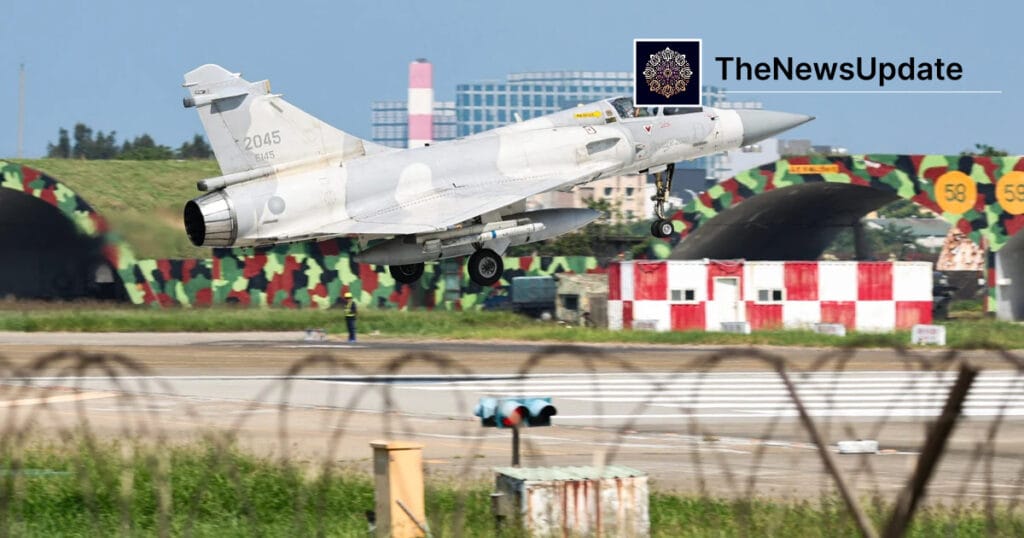
- Demonstrates China’s joint-force operational readiness
- Signals deterrence toward Taiwan and its allies
- Normalises increased military pressure around the island
The growing scale of such exercises increases the risk of miscalculation despite the absence of immediate conflict intentions.

Conclusion: What Comes Next for the Taiwan Strait
The latest China military drills around Taiwan underline how fragile stability in the region has become. While China continues to insist on peaceful reunification, the scale and intensity of these exercises demonstrate a readiness to escalate if red lines are crossed.
Taiwan faces the delicate task of strengthening its defences while avoiding actions that could trigger further escalation. Regional powers are watching closely, aware that any conflict in the Taiwan Strait would have global economic and security implications.
As military activity becomes more frequent, the margin for error narrows. The coming months will be critical in determining whether deterrence holds or tensions continue to rise.

Related Reads
- Rising Tensions in the Indo-Pacific: What It Means for Global Security
- China-Taiwan Relations Explained: History and Current Risks
By The News Update— Updated December 29, 2025