BYD vehicles on display in Brazil, reflecting China’s expanding global EV footprint.
China Electric Vehicles have transformed the global automobile market in the last decade. With China producing more than 70 percent of the world’s electric cars, the country stands as the undisputed leader in EV innovation, battery technology, and green mobility expansion. Yet while Chinese EVs such as those from BYD and GWM are visible across Asia, Africa, the Middle East, Europe and South America, they remain almost completely absent from the roads of the United States and Canada. Why?
This comprehensive analysis explores the political, economic, and strategic factors that have led to China’s EV global dominance, why North America has resisted entry, and what this means for the future of sustainable transport.

China’s EV Production: How It Became a Global Powerhouse China Electric Vehicles
China’s rise to EV dominance did not happen overnight. It is the result of long-term industrial planning, massive public investment, and strategic support for both manufacturers and consumers.
According to the International Energy Agency, China manufactured 12.4 million electric cars in 2024, representing more than 70 percent of global EV output. Around 1.25 million of these vehicles were exported, with the rest sold domestically to China’s increasingly sustainability-conscious population.
Government Subsidies and Strategic Investments
For years, Beijing has offered manufacturers extensive subsidies to build production capacity, improve technology, and reduce battery costs. These policies have lowered electric vehicle prices and made EV ownership more accessible to millions of Chinese consumers.

Joel Jaeger of the World Resources Institute notes that China’s support for its EV sector was both an economic and environmental strategy. China has reduced urban pollution while positioning itself as a global technology leader, especially in battery manufacturing. This combination has allowed companies like BYD, GWM, and SAIC to compete internationally with high-quality vehicles at lower prices than competitors.
BYD and the Expansion into the Global South
BYD — now the world’s largest EV manufacturer — continues expanding aggressively beyond China. Plants have been opened in Brazil, Japan, India, and Hungary, with more expansion planned.
Brazil’s Camacari mega-factory, opened in partnership with President Luiz Inacio Lula da Silva, is among the largest BYD facilities outside China. Its timing, just ahead of COP30, signals China’s intent to lead the global transition to green mobility.

BYD’s presence at COP30 as a major event sponsor underscores how deeply embedded Chinese EV leadership has become in global climate politics. While China brought a delegation of 789 officials to the summit, the United States did not send any federal representatives — a stark contrast that drew criticism from climate advocates.
Why Chinese EVs Are Rare in the US and Canada
Despite the widespread availability of Chinese EVs globally, they are nearly impossible to buy in the US or Canada. The reason is simple: tariffs and trade barriers.
100% Tariffs That Make Chinese EVs Unaffordable
In 2024, the US imposed a 100% tariff on all Chinese electric vehicles under the Biden administration. One month later, Canada followed with identical tariffs. These policies effectively doubled the price of any Chinese electric car entering North America.

An EV priced at $30,000 in China would cost more than $60,000 in the US or Canada — no longer competitive with domestic models.
This places the entire North American market as an outlier: while Chinese EVs are welcomed in Europe, Asia, Latin America and Africa, they are blocked almost entirely by the US-Canada trade bloc.
Why Would Biden — a Climate-Focused Leader — Support These Tariffs?
The tariffs were not purely environmental or economic — they were geopolitical.

The Biden administration introduced the tariffs as part of its strategy to protect domestic manufacturing and reduce dependency on China. Biden’s Inflation Reduction Act (IRA) also incentivized automakers to avoid Chinese components entirely, offering tax credits only to vehicles built without Chinese-material batteries.
Ironically, while Biden championed EV expansion, Trump’s administration has been far more hostile to climate action. Trump famously called climate change a “hoax” and is attempting to reverse EV mandates through the Big Beautiful Bill.
Canada’s Dilemma: Caught Between Green Goals and US Trade Pressure
Canada has set targets to transition to 100% EV sales by 2035—but its heavily integrated supply chain with the US limits its policy flexibility. Canadian automotive production is deeply tied to American manufacturers, and political uncertainty in Washington impacts Ottawa’s ability to chart an independent EV strategy.

Addisu Lashitew of McMaster University notes that Canada’s tariffs are inconsistent with its climate commitments but difficult to reverse due to US trade negotiations.
North America Still Uses Chinese Technology — Just Not Cars
While consumers cannot buy Chinese EVs in the US or Canada, North American automakers depend heavily on Chinese battery imports.
The US is the second-largest importer of lithium-ion batteries in the world, behind Germany — and most of those batteries come from China.

Even American-made EVs, including models from Tesla, Ford, and GM, rely on Chinese-manufactured components. This disconnect highlights how costly and complex it would be for North America to build a fully independent EV supply chain.
Where Chinese EVs Are Thriving Instead
Outside the US and Canada, Chinese EVs are selling at record levels.
Europe Buys Millions Despite Tariffs
Even with some protective tariffs, European consumers still purchase large volumes of Chinese EVs due to their affordability and advanced technology. BYD, MG (owned by SAIC), and other brands are gaining rapid popularity in France, Germany, the UK, and the Netherlands.

Global South Leads EV Transformation
Chinese manufacturers have strategically targeted emerging markets:
- Brazil
- Mexico
- South Africa
- Indonesia
- Thailand
- India
In many of these countries, Chinese EVs are seen as the most affordable pathway to decarbonization.
Electric Buses and Two-Wheelers: China Leads Again
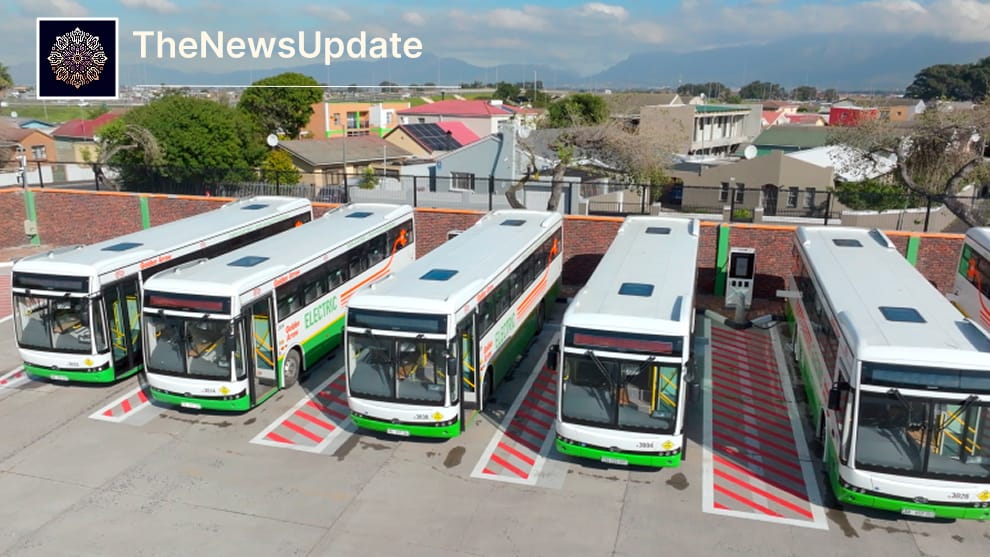
China controls not just the EV car sector but also dominates global electric bus, scooter, and motorcycle production. From Cape Town’s electric bus fleet to Vietnam’s upcoming ban on petrol motorbikes in Hanoi’s city centre, EV adoption is accelerating worldwide — often powered by Chinese-made technology.

Why EVs Remain Expensive in North America
While China has made EV ownership affordable through subsidies and mass production, the US and Europe have struggled with high manufacturing costs.
In China, half of all EVs cost less than $30,000, while in the US, many EVs average over $55,000. This price gap has slowed North American EV adoption: in 2024, only 10 percent of cars sold in the US were electric, compared to more than 50 percent in China.
The Future: Will Chinese EVs Ever Reach the US and Canada?
Whether Chinese EVs will eventually enter the US and Canadian markets depends on several factors:

1. Tariff Reduction or Trade Negotiations
If the US reduces or eliminates tariffs, Chinese EVs could become competitive overnight.
2. Domestic Political Shifts
US climate policy varies drastically between administrations. A pro-EV government could reconsider the tariffs.
3. North American Production by Chinese Companies
If BYD or another manufacturer builds a factory in Mexico or the US, tariffs could be bypassed under trade agreements.

4. Consumer Pressure for Affordable EVs
As Americans demand cheaper electric cars, the political cost of blocking Chinese EVs may increase.
Conclusion: A Divided Electric Future
China’s dominance in the global EV sector is unquestionable. With unmatched battery production, competitive pricing, and rapid technological innovation, China has reshaped the automobile industry. Yet in the United States and Canada, political barriers and economic protectionism have kept Chinese EVs off the roads, even as the world races ahead with affordable green transportation.
North America’s future EV landscape will depend on trade policy, domestic innovation, and geopolitical strategy. For now, the divide remains stark: China leads the global EV revolution, while the US and Canada stand apart — technologically interconnected, but economically distanced.

For more global economy insights, visit our World News section.
Related coverage: Latest News Updates