Table of Contents
- Background: Rahul Gandhi’s Vote Chori Claim
- Ground Investigation: What India Today Found
- The Five Faces of the Brazilian Photo
- Why Photo Mismatches Happen in Voter Rolls
- Electoral Database Weaknesses Explained
- Conclusion: Beyond the Political Spin
Background: Rahul Gandhi’s Vote Chori Claim
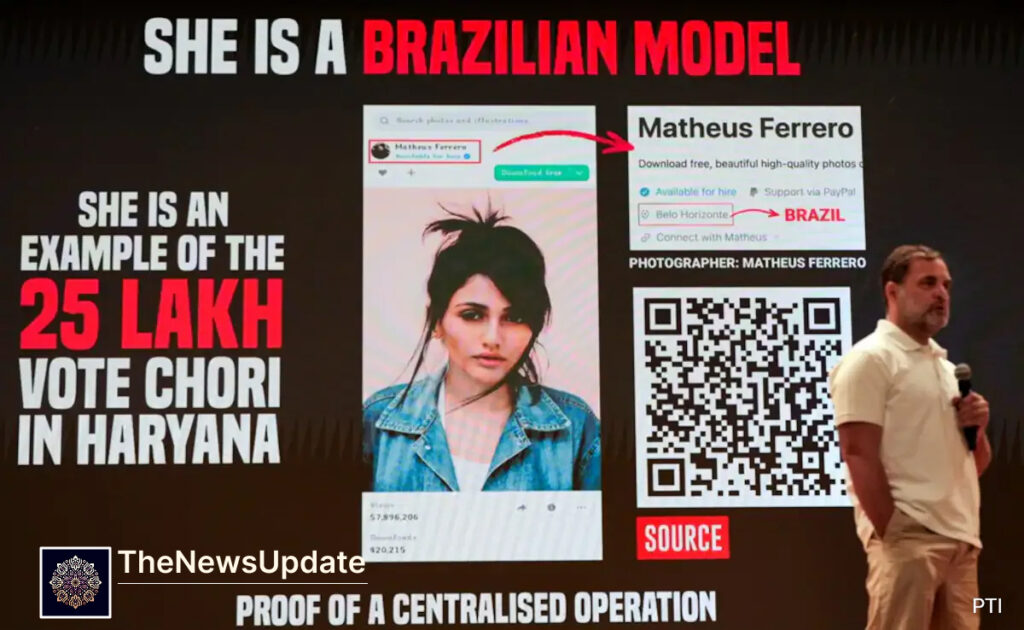
Brazilian model voter ID Haryana In a dramatic allegation that shook the political landscape of Haryana, Congress leader Rahul Gandhi accused the ruling party of orchestrating a large-scale voter fraud. His claim that a “Brazilian model’s photo appeared 22 times on voter ID cards” in Rai constituency turned into one of the most discussed controversies of the 2024 Haryana Assembly elections.
Rahul Gandhi’s “vote chori” statement suggested centralised manipulation — alleging that fake and duplicate votes had cost Congress its expected victory. The Election Commission swiftly dismissed the charge, but public curiosity about the mysterious “Brazilian model voter ID Haryana” surged, demanding a deeper investigation into India’s electoral system.
यह भी पढ़े:
 Osman Hadi Killers Fled to India via Meghalaya Border: Dhaka Police Reveal Shocking Escape Route
Ground Investigation: What India Today Found
Over two days, India Today’s team visited Machroli and nearby villages in Rai constituency, cross-verifying at least six cases where the so-called “Brazilian model’s” image appeared on voter cards. What they found was not a sophisticated conspiracy, but a chaotic mix of clerical blunders, outdated data, and weak digital systems that left the voter list vulnerable to errors.
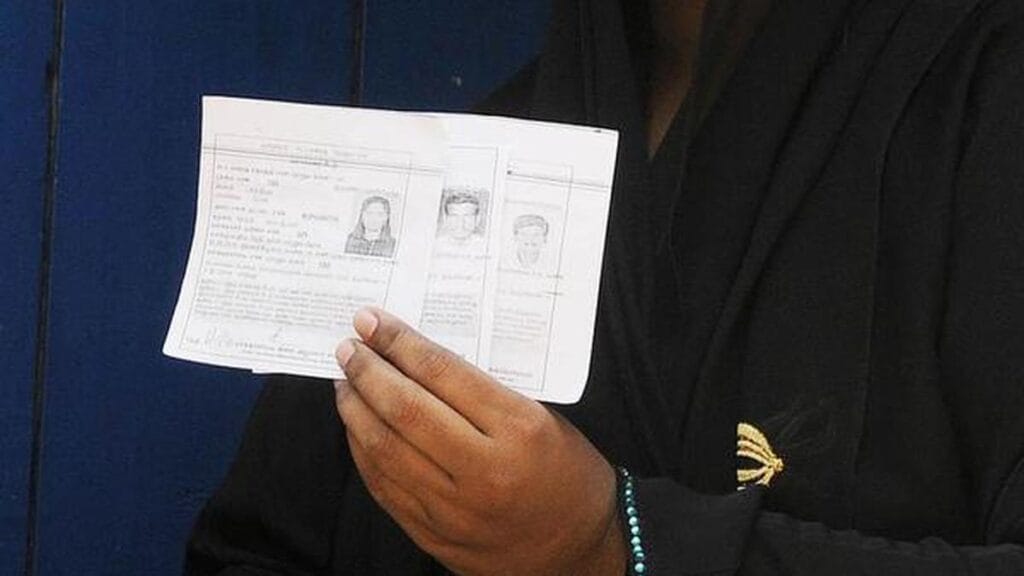
In several cases, voters confirmed that their photos had been misprinted but insisted they had personally cast their ballots using Aadhaar cards and voter slips. Their testimonies contradicted Rahul Gandhi’s narrative of deliberate vote manipulation, suggesting systemic lapses rather than organised fraud.
The Five Faces of the Brazilian Photo
1️⃣ Pinky – The Photo Misprint
Pinky from Machroli said her voter card first arrived with another woman’s photo. Despite repeated requests for correction, the issue was never fixed. “I voted in 2024 using my voter slip and Aadhaar. There’s no vote chori here,” she clarified. Her family blamed the Booth Level Officer (BLO) for clerical errors.
यह भी पढ़े:
 Bulldozer Raj Karnataka Demolitions: Congress Govt Faces Backlash After 400 Muslims Left Homeless
2️⃣ Munish – Operator Error Confirmed
Munish’s relatives admitted that her voter photo was mismatched once before but corrected later. Her brother-in-law stated, “These are operator-level errors, not voter fraud. She cast her own vote.”
3️⃣ Guniya – The Deceased Voter Still on the List
Perhaps the most concerning discovery came from Guniya’s case. Though she passed away in March 2022, her name — with the Brazilian model’s face — remained active in the 2024 electoral roll. Her family even produced her death certificate, raising serious questions about the lack of data verification and voter roll hygiene.
4️⃣ Bimla – The Duplicate Entry Mystery
Bimla’s case revealed duplicate voter entries under the same name and house number but different EPIC IDs. One featured the model’s image. Her son Pradeep called it “fraudulent” and demanded an official probe into how such duplication could exist within the same household record.

5️⃣ Saroj – The Bride Who Never Left the List
Saroj, who moved to Bhiwani years ago after marriage, continued to appear on Rai’s voter roll, now featuring the “Brazilian” face. Her family expressed outrage, saying, “She hasn’t lived here in years, yet her name is still listed — with a wrong photo!”
Taken together, these five stories reveal an alarming reality — India’s voter list management suffers from structural flaws, not necessarily political conspiracy.

Why Photo Mismatches Happen in Voter Rolls
Photo mismatches in India’s electoral rolls are not new. Most occur due to human and technical errors during voter list digitisation or data migration. When operators handle thousands of entries at a time, image mapping mistakes often slip through unnoticed.

- 🔹 Data entry errors during manual uploads.
- 🔹 Poor verification between EPIC numbers and photos.
- 🔹 Delays in removing deceased or relocated voters.
- 🔹 Migration after marriage without proper updates.
- 🔹 Lack of real-time syncing between local and central systems.
Election officials from Sonipat acknowledged that these lapses may have stemmed from “operator-level mistakes” and promised internal verification. However, critics argue that such technical excuses no longer hold water in an era of digital governance.
Electoral Database Weaknesses Explained
The “Brazilian model voter ID Haryana” saga exposes deeper cracks in India’s electoral infrastructure. With over 900 million registered voters, maintaining accuracy is an enormous challenge. Yet the absence of a fully integrated, AI-backed voter verification system means that errors — even bizarre ones — persist.
Experts highlight three key weaknesses:
यह भी पढ़े:
 Canada Hospital Killed Indian-Origin Man: Wife Alleges Medical Negligence After 8-Hour Wait
- Fragmented Databases: State-level systems often fail to sync with the Election Commission’s central servers, leading to ghost records and duplicates.
- Limited Transparency: Correction requests from citizens can take months, discouraging timely updates.
- Low Accountability: Data operators rarely face consequences for recurring mismatches.
While Rahul Gandhi’s “vote chori” narrative may exaggerate coordination, it does underline a truth: data errors can be weaponised politically. Misinformation thrives when institutions lack trust and transparency.
Conclusion: Beyond the Political Spin
The “Brazilian woman” voter ID controversy is less about foreign faces and more about systemic failure. It’s a warning that India’s electoral system, though vast and admired globally, remains vulnerable to clerical missteps that can spiral into political scandals.
For democracy to stay credible, India must modernise its electoral data infrastructure — with biometric validation, cloud-based verification, and transparent audits that prevent both mistakes and manipulation.
Until then, every “Brazilian model” photo that surfaces on a voter ID will serve as a reminder — not of fraud, but of the fragile line between human error and political controversy.
Related Reads
By The News Update — Updated November 6, 2025