Table of Contents
- Background of the Bondi Beach Shooting
- Intelligence Failures Before the Attack
- Police Response and Eyewitness Accounts
- Rising Antisemitism in Australia
- Political Fallout and Global Reactions
- What Needs to Change
Background of the Bondi Beach Shooting
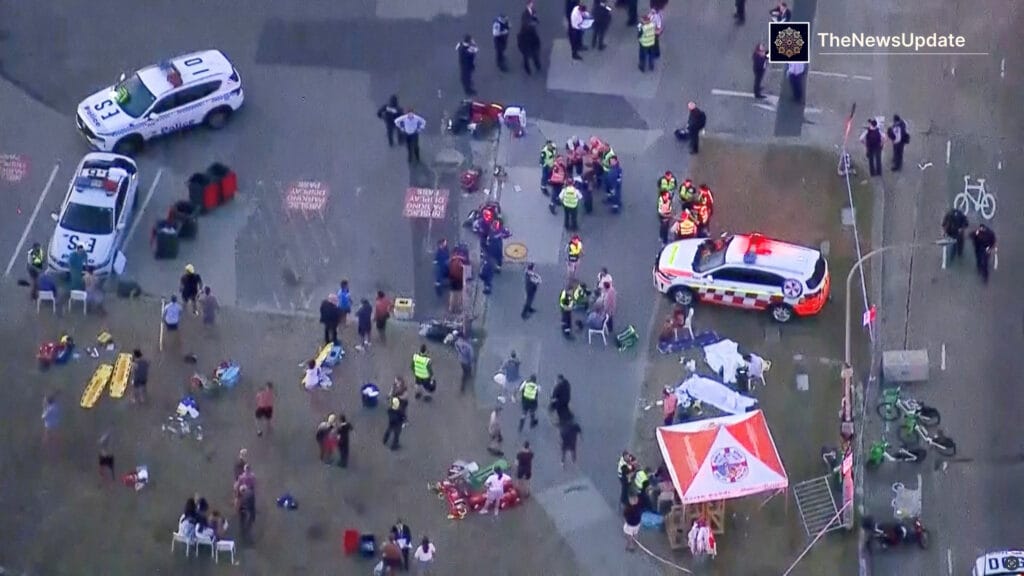
The Bondi Beach shooting has become one of the darkest chapters in Australia’s recent history. On December 14, as families gathered along Sydney’s iconic coastline to celebrate the Jewish festival of Hanukkah, a father-son duo opened fire from a bridge overlooking the crowd. The attack left 15 people dead, including a child, and injured more than 40 others.
What should have been an evening of celebration quickly turned into chaos and horror. Witnesses described sustained gunfire lasting nearly 20 minutes, with attackers reportedly reloading multiple times. The Bondi Beach shooting Australia failures narrative emerged almost immediately, as questions surfaced about why the rampage was not stopped sooner.
Authorities later declared the incident a terrorist attack motivated by antisemitism. As investigations unfolded, it became clear that the massacre was not just an isolated act of violence, but the result of compounded institutional oversights.
Intelligence Failures Before the Attack
One of the most troubling aspects of the Bondi Beach shooting Australia failures lies in what happened years before the attack. Twenty-four-year-old Naveed Akram, who survived and is currently under police guard in hospital, had been investigated by the Australian Security Intelligence Organisation (ASIO) as far back as 2019.
According to Australian Prime Minister Anthony Albanese, Akram came under scrutiny due to his association with individuals linked to the Islamic State. ASIO reportedly monitored him for six months, citing connections to a Sydney-based IS cell. Despite these red flags, intelligence officials concluded there was “no indication of any ongoing threat” and ended surveillance.

That decision has since drawn fierce criticism. Senior police officials later confirmed that two Islamic State flags were found in the attackers’ vehicle — one even displayed on the bonnet. For many observers, this discovery underscored how severely Akram’s radicalisation had been underestimated.
His father, Sajid Akram, held a valid firearms licence for over a decade and legally owned six guns. Authorities insist the licence complied with regulations, but critics argue the licensing system failed to account for ideological extremism and family-linked risks.
Police Response and Eyewitness Accounts
Perhaps the most shocking revelations surrounding the Bondi Beach shooting Australia failures come from eyewitness testimony about the police response. Multiple witnesses allege that officers froze for nearly 20 minutes as shots rang out.

Shmulik Scuri, an eyewitness quoted by the New Zealand Herald, described the scene bluntly: “Twenty minutes later, there were four policemen. Nobody returned fire. Nothing. Like they froze.”
Another witness, Grace Matthews, who hid inside a nearby church, told Australia’s ABC that police appeared “very underprepared.” She said a bystander or possibly a plainclothes officer had to wrestle a shotgun away from one of the shooters.
Adding to the confusion, a police station located less than a block away reportedly failed to respond in time. For families of victims, these accounts have intensified anger and demands for accountability.

New South Wales Police Commissioner Mal Lanyon has defended his force, praising officers’ bravery. However, the prolonged duration of the attack suggests serious gaps in rapid-response protocols for terror incidents.
Rising Antisemitism in Australia
The Bondi Beach shooting did not occur in isolation. Since the outbreak of the Israel-Gaza war in October 2023, Australia has witnessed a sharp rise in antisemitic incidents, particularly in Sydney and Melbourne, home to the country’s largest Jewish populations.
According to reports cited by CNN in January 2025, Jewish communities in these cities faced the highest threat levels from antisemitic violence. Australia’s Jewish population of around 117,000 has recorded over 166 attacks since mid-December 2024 alone.

These incidents include arson attacks on synagogues, vandalism, graffiti, threats, and violent assaults. High-profile cases include the torching of the Adass Israel Synagogue in Melbourne and the destruction of a kosher café near Bondi Beach.
Critics argue that authorities underestimated the seriousness of domestic radicalisation and antisemitic threats. The Bondi Beach shooting Australia failures narrative reflects this broader pattern of complacency.
Political Fallout and Global Reactions
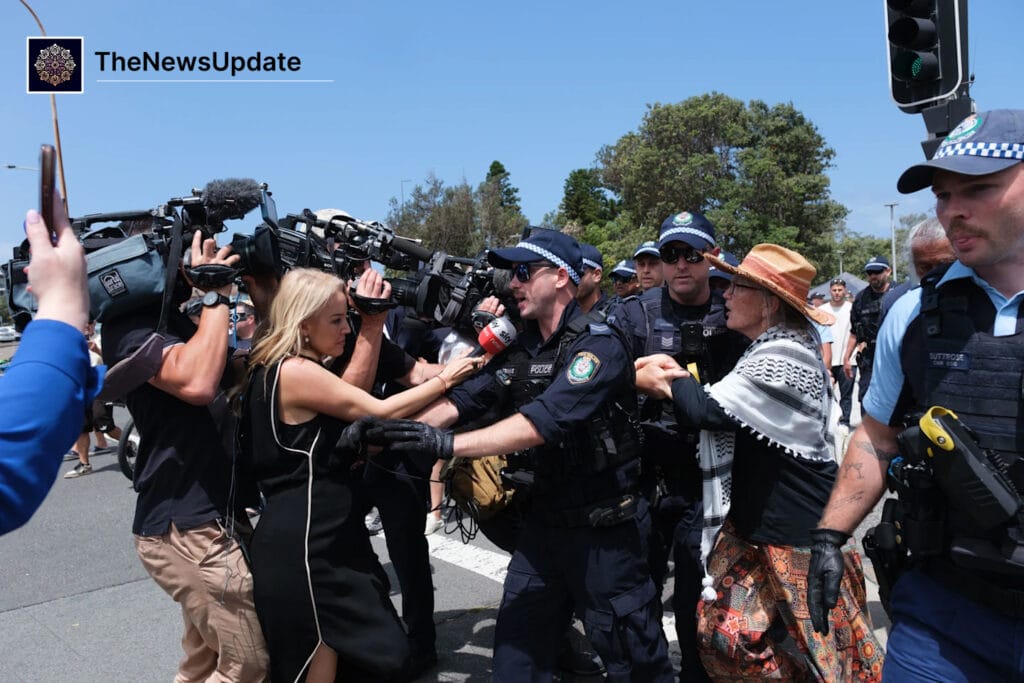
The attack has sparked intense political debate both within Australia and internationally. Prime Minister Albanese described the shooting as “an act of pure evil” and called for national unity. However, opposition leaders accuse his government of failing to curb antisemitic protests and ignoring warning signs.

Israeli Prime Minister Benjamin Netanyahu went further, directly criticising Albanese’s policies. Netanyahu accused the Australian government of “pouring fuel on the antisemitic fire” by recognising a Palestinian state and failing to act on earlier warnings.
World leaders also condemned the attack. US President Donald Trump labelled it an antisemitic terrorist act, while UK Prime Minister Keir Starmer called the incident “deeply distressing.”
The international attention has increased pressure on Canberra to reassess its counter-terrorism and hate-crime prevention strategies.

What Needs to Change
The Bondi Beach shooting Australia failures have triggered urgent calls for reform across multiple fronts. Security experts say intelligence agencies must adopt more dynamic threat assessments, especially for individuals previously linked to extremist networks.
Police training and rapid-response protocols for terror incidents are also under scrutiny. The alleged 20-minute delay in confronting active shooters highlights the need for clearer command structures and better preparedness.
Equally important is addressing the rise of antisemitism through stronger law enforcement, community engagement, and political leadership that draws clear red lines against hate.
For Australia’s Jewish community, the tragedy has shattered a sense of safety. Community leaders are demanding transparency, accountability, and concrete steps to ensure such a massacre never happens again.
The Bondi Beach shooting is now a defining moment — one that will test whether Australia can learn from its failures and rebuild trust in its institutions.
Related Reads

By The Morning News Informer Desk — Updated December 15, 2025