Table of Contents
- Overview: What Is Blue Origin NS-37?
- New Shepard: The Suborbital Vehicle
- The NS-37 Crew and Their Roles
- Accessibility Measures and Mission Prep
- Science, Outreach and Inclusion Opportunities
- Safety, Risk Mitigation and Regulatory Oversight
- Industry Impact: How Blue Origin NS-37 Could Move the Needle
- What to Watch on Launch Day
- Conclusion: A Milestone for Accessible Space
Blue Origin NS-37 is poised to mark a significant moment in commercial spaceflight history. Scheduled for liftoff on Dec. 18, 2025, the mission aims to carry aerospace engineer Michaela “Michi” Benthaus — a wheelchair user — aboard Blue Origin’s reusable New Shepard vehicle. If successful, Blue Origin NS-37 will be the first suborbital flight to explicitly demonstrate operational accessibility for a passenger who uses a wheelchair and will provide real-world lessons on inclusive mission design, operations, and safety. This extended article explains the mission timeline, the New Shepard experience, technical adaptations for the Blue Origin NS-37 crew, the broader significance for inclusive space access, and what observers should watch for on launch day.
Blue Origin NS-37 refers to the company’s thirty-seventh New Shepard mission carrying a six-person crew on a brief suborbital flight. The central narrative around Blue Origin NS-37 is inclusion: mission manifests and company statements name Michaela “Michi” Benthaus — a wheelchair user and aerospace engineer — among the passengers. Blue Origin NS-37 aims to cross the Kármán line (the widely recognised boundary of space) and deliver the standard New Shepard payload of a few minutes of microgravity and panoramic Earth views for the crew.
Blue Origin NS-37 is emblematic of a broader shift within commercial human spaceflight. The mission is less about being the first civilian tourist flight and more about testing whether routine suborbital missions can reasonably accommodate a wider range of human conditions and mobility needs. Blue Origin NS-37 will therefore be watched by engineers, disability advocates, regulators, and space companies hoping to make space more representative.
New Shepard: The Suborbital Vehicle
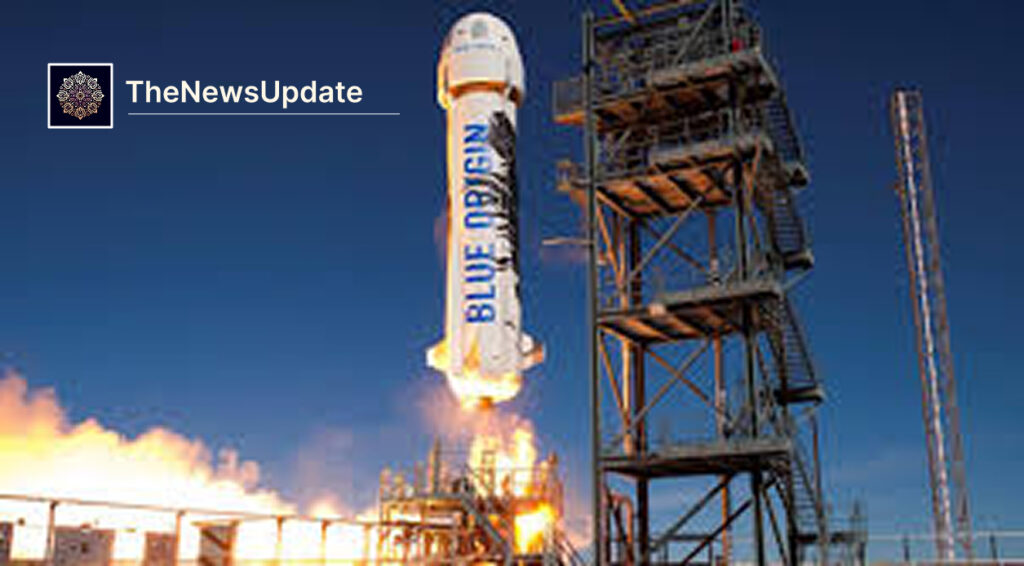
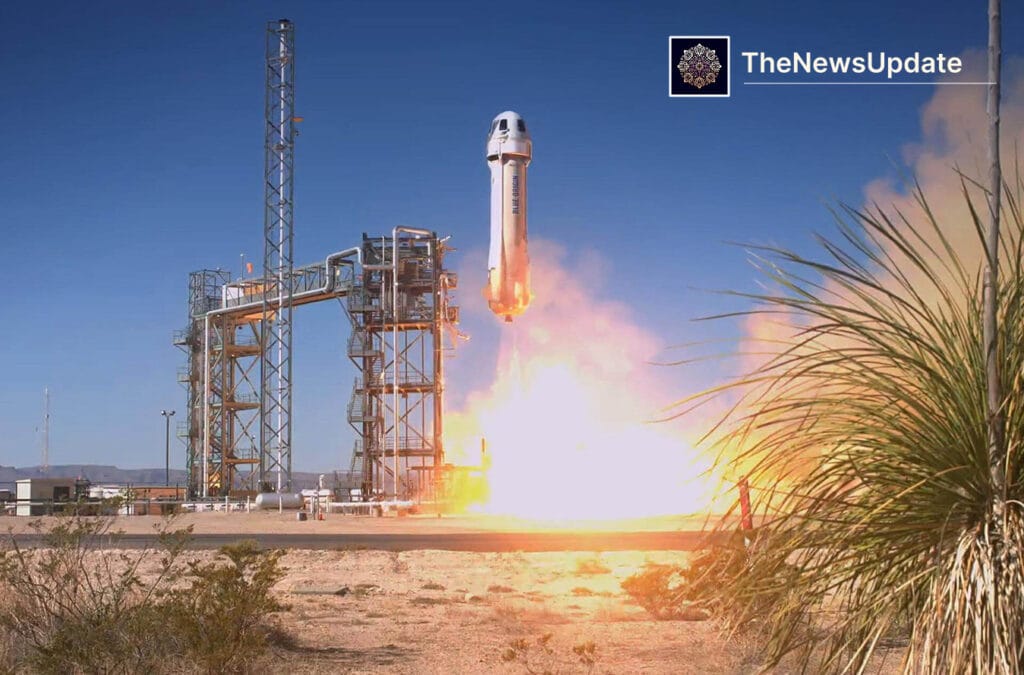
New Shepard is Blue Origin’s vertical-takeoff, vertical-landing suborbital system engineered for reusability. For Blue Origin NS-37, the New Shepard flight profile remains the familiar pattern: powered ascent to altitudes above the Kármán line, separation of booster and crew capsule, a few minutes of weightlessness, and a parachute-guided capsule descent back to the landing site in West Texas.
What makes Blue Origin NS-37 operationally important is how the New Shepard capsule and ground processes will be adapted for accessibility. New Shepard’s interior has historically been flight-certified for diverse passengers, but accommodating a wheelchair user requires integration across design, ground operations, and crew procedures. That cross-disciplinary adaptation is at the core of Blue Origin NS-37’s value.

The NS-37 Crew and Their Roles
The manifest for Blue Origin NS-37 includes a mix of investors, engineers, and citizens of spaceflight. Reported members joining Michaela Benthaus are investors and aerospace veterans who together provide a cross-section of the commercial passenger profile. The presence of experienced engineers on Blue Origin NS-37 helps ensure procedural and contingency readiness during the mission.
For the purposes of the mission, each crew member — including the passenger using a wheelchair — will undergo training tailored to their role and physical needs. Blue Origin NS-37 will therefore represent not just a single flight but a set of protocols that might become templates for future accommodations on other New Shepard missions.
Accessibility Measures and Mission Prep
Preparing Blue Origin NS-37 required a chain of practical decisions. These measure include:

- Ground handling and embarkation: Blue Origin NS-37 needed bespoke solutions for safe transfer from wheelchair to secured seating in the capsule while preserving dignity and privacy.
- Restraint systems and seating: The capsule’s restraint architecture was evaluated to ensure that crew safety harnesses accommodate differences in body position, transfers, and potential seating modifications for Blue Origin NS-37.
- Interface and communication: Crew interfaces — such as intercoms, emergency eject procedures, and crew briefings — were adapted to ensure comprehension and reach for the passenger who uses a wheelchair.
- Medical assessment and contingency planning: Blue Origin NS-37 included tailored medical screening and a contingency plan for ground and in-flight medical scenarios, coordinated with flight surgeons and emergency personnel.
- Training and simulations: The crew for Blue Origin NS-37 took part in tailored simulations to rehearse transfer procedures, timed crew ingress/egress, and what to do during microgravity with varying mobility configurations.
These interventions for Blue Origin NS-37 were designed to maintain safety margins while proving that with procedural care and modest design adjustments, suborbital vehicles can accommodate broader participant profiles.
Science, Outreach and Inclusion Opportunities
Beyond symbolism, Blue Origin NS-37 offers practical science and outreach benefits. Short suborbital flights are valuable platforms for limited-duration microgravity experiments, materials science demonstrations, and physiological studies. Blue Origin NS-37 may include experiments that measure human biomechanics in microgravity when a passenger has different baseline mobility — data that could inform future spacecraft cabin design and adaptive technologies.
Outreach from Blue Origin NS-37 can also inspire students and communities historically underrepresented in aerospace. When combined with STEM education efforts, the mission amplifies messages about access and representation — showing that people who use wheelchairs have a place in space exploration.
यह भी पढ़े:
 Samsung Bixby Perplexity AI Integration: 7 Key Signs Samsung Is Reinventing Its Voice Assistant
Safety, Risk Mitigation and Regulatory Oversight
Blue Origin NS-37 will proceed under existing U.S. commercial space regulations and internal company safety frameworks. Safety priorities for Blue Origin NS-37 include tested emergency restraints, verified life-support interfaces, and robust ground support during ascent and recovery. Regulators and insurers will watch Blue Origin NS-37 closely, as the mission may set precedents for crew medical certification, informed consent, and liability coverage when accommodating passengers with disabilities.
Blue Origin NS-37 also highlights the role of clear communication and transparency. Documented procedures and post-flight releases will likely be part of company communications to reassure the public that accessibility adaptations for Blue Origin NS-37 met stringent safety criteria.
Industry Impact: How Blue Origin NS-37 Could Move the Needle
Blue Origin NS-37, if successful, could catalyse industry-wide change. Space companies planning human missions may adopt more inclusive design standards, and mission operators could integrate accessibility checklists into certification. Blue Origin NS-37 therefore functions as both a proof-of-concept and a policy signal: inclusion can be operationalised without compromising safety or mission objectives.

Firms building next-generation suborbital and orbital vehicles will observe Blue Origin NS-37 for lessons in cabin ergonomics, transfer equipment and training regimens. Over time, these lessons could lower barriers to participation for diverse populations in commercial spaceflight.
What to Watch on Launch Day
Blue Origin NS-37 has a targeted liftoff window on Dec. 18, 2025 (about 9:30 a.m. EST). Key things to watch during the Blue Origin NS-37 launch day include:
- Weather and scrub decisions announced by Blue Origin.
- Live stream feed and real-time telemetry highlights from Blue Origin’s official channels.
- Post-flight briefings and any statements from Michaela Benthaus and the crew about accessibility procedures during the mission.
- Regulatory or insurance commentary following the flight that references Blue Origin NS-37’s adaptations.
Observers should also look for technical write-ups that explain how Blue Origin NS-37 implemented transfers, restraint calibrations, and the medical monitoring plan — these will be important resources for future missions.
यह भी पढ़े:
 New York Times Reporter, Authors Sue Google, OpenAI, Meta Over AI-Based Copyright Infringement
Conclusion: A Milestone for Accessible Space
Blue Origin NS-37 is more than a headline; it is an operational test of whether modern suborbital platforms can become genuinely inclusive. By flying a passenger who uses a wheelchair, the mission could produce valuable data, inspire public conversation, and set practical templates for making space accessible. Blue Origin NS-37 therefore stands at the intersection of technology, policy, and social progress: a short flight with potentially long reverberations across the commercial space industry.
Related Reads
By The News Update— Updated December 12, 2025