Background of the Bangladesh Lynching Case
The Bangladesh Hindu man lynching arrests case has once again placed the spotlight on mob violence and minority safety in the country. The killing of a young Hindu man in Mymensingh triggered nationwide outrage and prompted swift action from Bangladesh’s interim administration.
The incident occurred at a time when Bangladesh has been witnessing heightened political tensions and protests. Against this volatile backdrop, the brutal lynching intensified concerns about law and order, religious intolerance, and the state’s ability to protect vulnerable communities.
Human rights groups and political observers have described the case as a critical test for the interim government led by Nobel laureate Muhammad Yunus, which has repeatedly pledged to uphold justice and rule of law.
Who Was Dipu Das and What Happened
Dipu Chandra Das, a 27-year-old garment factory worker from Mymensingh, belonged to Bangladesh’s Hindu minority community. According to police and official accounts, he was accused by a local mob of making derogatory remarks about Prophet Muhammad.
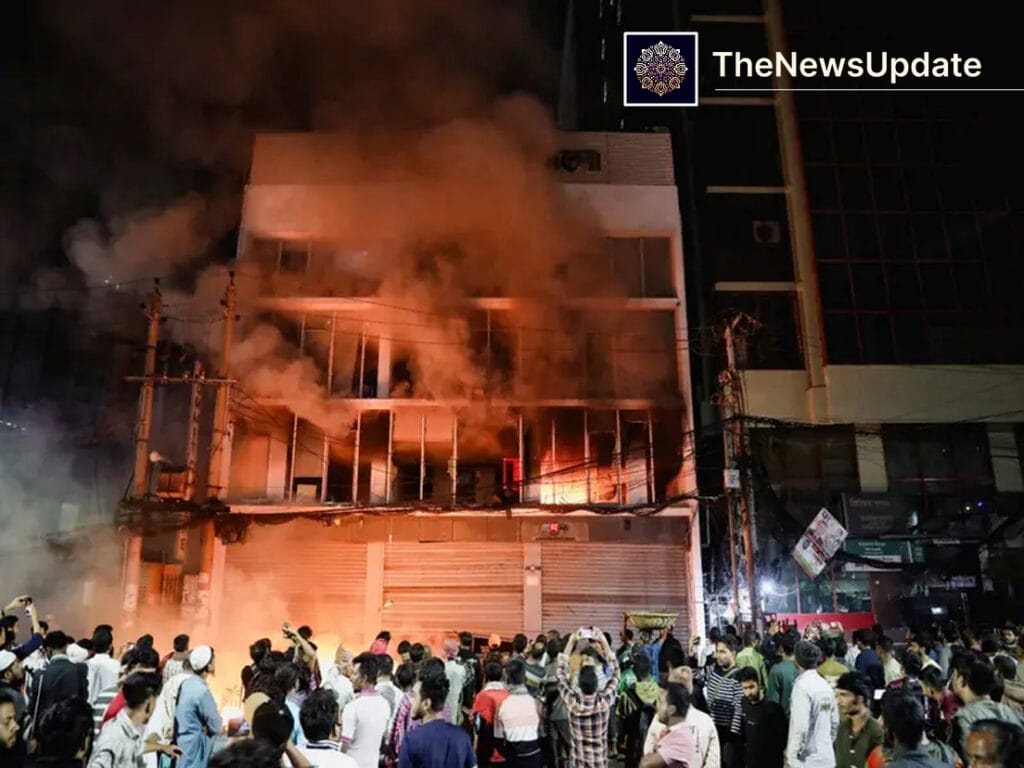
On Thursday night, around 9 pm, the situation escalated rapidly. A group of people allegedly attacked Dipu Das, beating him severely. The violence did not stop there.
According to investigators, the mob tied his body to a tree after the assault and set it on fire. By the time police arrived at the scene, Dipu Das had succumbed to his injuries.

The sheer brutality of the act sent shockwaves across Bangladesh and beyond, turning the Bangladesh Hindu man lynching arrests into a widely followed international news story.
Arrests Made by Bangladesh Authorities
Two days after the killing, Bangladesh’s Rapid Action Battalion (RAB) announced the arrest of seven suspects in connection with the lynching.
In a post on X, the Chief Advisor of the interim government confirmed that the arrests were carried out following coordinated operations by RAB-14 at multiple locations.

The arrested individuals were identified as:
- Md. Limon Sarkar (19)
- Md. Tarek Hossain
- Md. Manik Mia
- Ershad Ali (39)
- Nijum Uddin (20)
- Alomgir Hossain
- Md. Miraj Hossain Akon
Authorities stated that investigations are ongoing and that more arrests could follow if additional individuals are found to be involved.
Yunus Government’s Response and Official Statements
The interim government of Bangladesh, led by Muhammad Yunus, strongly condemned the lynching soon after the incident came to light.
यह भी पढ़े:
 Osman Hadi Killers Fled to India via Meghalaya Border: Dhaka Police Reveal Shocking Escape Route
In an official statement, the government asserted that mob violence has no place in what it described as the “New Bangladesh.” It assured citizens that those responsible would face the full force of the law.
The Bangladesh Hindu man lynching arrests were presented as evidence of the government’s commitment to swift justice, particularly in cases involving communal violence.
Officials also emphasised that blasphemy allegations cannot justify vigilantism and that disputes must be handled through legal channels.
Political Reactions and Cross-Border Impact
The lynching triggered strong political reactions, both within Bangladesh and in neighbouring India. In West Bengal, leaders from the Bharatiya Janata Party (BJP) condemned the killing and raised concerns about the safety of Hindu minorities in Bangladesh.
The BJP’s West Bengal unit drew parallels between the incident and alleged failures to protect Hindus in the state, directly criticising Chief Minister Mamata Banerjee.
“These killings are not isolated incidents,” the party said in a social media post, arguing that Hindus face targeted violence on both sides of the border.
यह भी पढ़े:
 Bulldozer Raj Karnataka Demolitions: Congress Govt Faces Backlash After 400 Muslims Left Homeless
Such statements have added a diplomatic and political dimension to the Bangladesh Hindu man lynching arrests, amplifying regional sensitivities.

Mob Violence, Blasphemy Allegations, and Minority Safety
Blasphemy-related accusations have historically triggered mob violence in parts of South Asia, often with devastating consequences for minority communities.
In Bangladesh, while the constitution guarantees religious freedom, incidents like the lynching of Dipu Das highlight gaps between legal protections and ground realities.

Human rights advocates argue that:
- Mob violence thrives in environments of misinformation
- Minorities are disproportionately targeted
- Swift arrests must be followed by fair and transparent trials
The Bangladesh Hindu man lynching arrests are being closely watched to see whether justice is delivered in a timely and credible manner.
What Happens Next
With seven suspects now in custody, the focus shifts to prosecution and judicial proceedings. Authorities are expected to file formal charges once investigations are completed.

The case may also prompt broader discussions within Bangladesh about preventing mob violence, countering religious extremism, and strengthening community policing.
For the Yunus-led interim government, the outcome will be seen as a measure of its resolve to protect minorities and uphold the rule of law.
As the nation mourns the loss of Dipu Das, many hope this tragedy becomes a turning point rather than another grim chapter in the history of communal violence.

Related Reads
By The News Update — Updated December 20, 2025