Table of Contents
- Background of the Assam Train Accident
- How the Rajdhani Express Hit the Elephant Herd
- Railway Response and Passenger Safety Measures
- Impact on Rail Traffic and Restoration Work
- Political and Environmental Reactions
- Wildlife Corridors and Rising Train Collisions
- What Happens Next
Background of the Assam Train Accident
The tragic Assam Rajdhani Express elephant deaths incident has once again drawn attention to the fragile coexistence between wildlife and infrastructure development in India’s Northeast. The accident occurred in Assam’s Hojai district, a region known for its proximity to forested areas and elephant movement corridors.
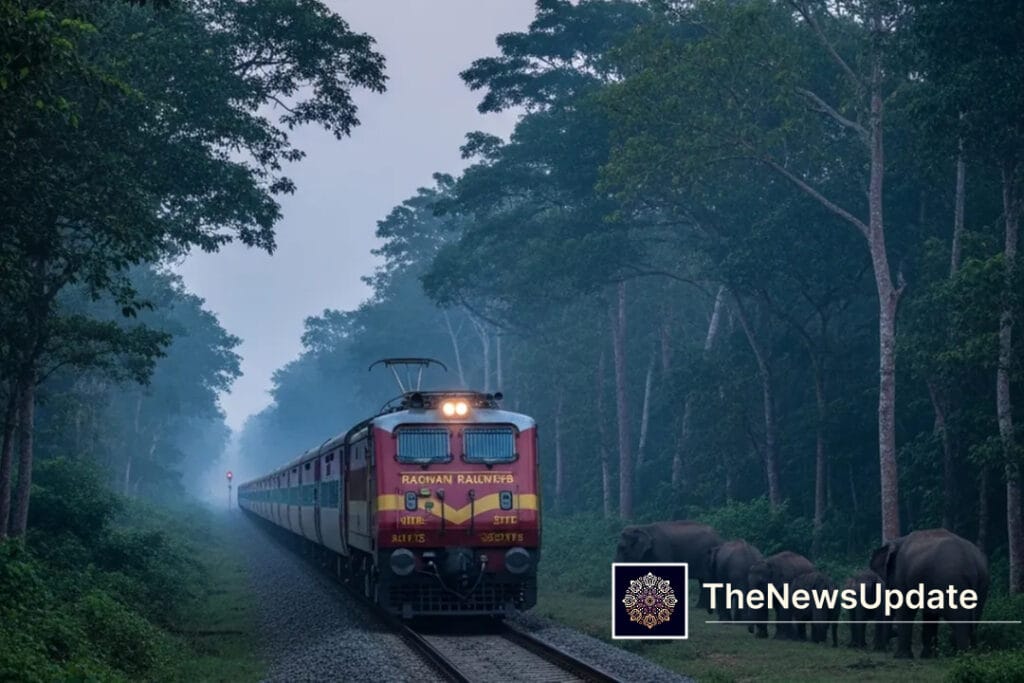
In the early hours of Saturday, the Sairang–New Delhi Rajdhani Express, one of Indian Railways’ premier long-distance trains, struck a herd of elephants on the tracks. Eight elephants were killed instantly, while another sustained injuries, according to forest officials.
यह भी पढ़े:
 Osman Hadi Killers Fled to India via Meghalaya Border: Dhaka Police Reveal Shocking Escape Route
Although no passengers were injured, the emotional and ecological impact of the incident has been profound, sparking outrage among conservationists and renewed scrutiny of railway safety measures in wildlife-sensitive zones.
How the Rajdhani Express Hit the Elephant Herd
According to the Northeast Frontier Railway (NF Railway), the collision occurred around 2:15 am in the Jamunamukh–Kampur section. A herd of elephants reportedly crossed the tracks suddenly, leaving the locomotive pilot with little time to react.
Railway officials stated that the loco pilot immediately applied emergency brakes upon spotting the elephants. However, due to the train’s speed and momentum, the Rajdhani Express could not be stopped in time.
यह भी पढ़े:
 Bulldozer Raj Karnataka Demolitions: Congress Govt Faces Backlash After 400 Muslims Left Homeless
The impact was severe enough to derail five coaches of the train. Despite the derailment, railway authorities confirmed that there were no human casualties, a factor that prevented the tragedy from becoming even more devastating.
The Assam Rajdhani Express elephant deaths incident highlights the ongoing risk posed by railway lines cutting through traditional wildlife movement routes.
Railway Response and Passenger Safety Measures
Following the accident, senior officials from the Northeast Frontier Railway acted swiftly. The General Manager of NF Railway and the Divisional Railway Manager of Lumding rushed to the accident site to oversee emergency response operations.

Passengers from the affected coaches were safely evacuated and temporarily accommodated in vacant berths available in other coaches. Railway officials ensured that there was no panic and that all passengers were accounted for.
After a halt of several hours, the Rajdhani Express resumed its journey around 6:15 am toward Guwahati. Authorities also confirmed that once the train reached Guwahati, additional coaches would be attached to accommodate passengers comfortably for the remainder of the journey.
This rapid response helped prevent further inconvenience to passengers while ensuring safety remained the top priority.

Impact on Rail Traffic and Restoration Work
The derailment caused significant disruption to rail traffic in the Jamunamukh–Kampur section of the NF Railway. Several scheduled trains were diverted through alternative routes, primarily using the UP line.
Forest officials from Assam’s Nagaon Division arrived at the site soon after the accident. Subhash Kadam, a senior forest official, confirmed that restoration work began immediately to clear the tracks and assess damage to the surrounding forest area.
Heavy machinery was deployed to remove derailed coaches and restore normal rail operations. Meanwhile, veterinary teams assessed the injured elephant, although officials acknowledged that survival chances in such cases are often slim.
यह भी पढ़े:
 Canada Hospital Killed Indian-Origin Man: Wife Alleges Medical Negligence After 8-Hour Wait
The Assam Rajdhani Express elephant deaths incident underscores how wildlife collisions can disrupt both ecosystems and essential transport networks.
Political and Environmental Reactions
The tragedy prompted political reactions across Assam and beyond. Congress MP Gaurav Gogoi expressed condolences over the death of the elephants and raised concerns about what he described as unplanned and poorly regulated development in the state.
In a post on X (formerly Twitter), Gogoi criticised the rapid destruction of forests under the current state government, arguing that shrinking habitats have disrupted natural migration routes for animals, pushing them closer to railway lines and highways.

Environmental activists echoed these concerns, calling for urgent policy intervention to protect elephant corridors and prevent further loss of wildlife.
The issue has once again put pressure on both state and central authorities to balance development with conservation.
Wildlife Corridors and Rising Train Collisions
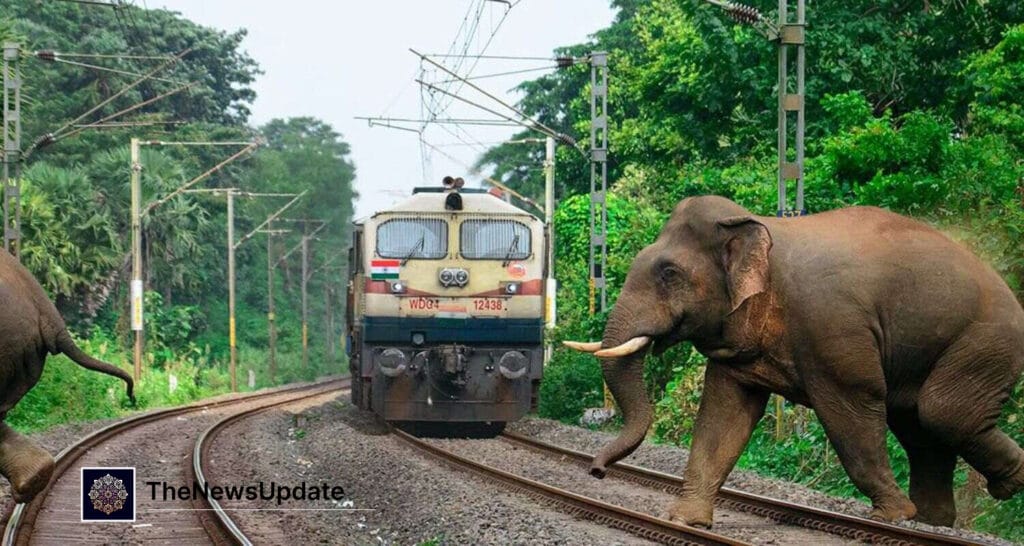
The Assam Rajdhani Express elephant deaths case is not an isolated incident. India has witnessed multiple train–elephant collisions over the past decade, particularly in Assam, West Bengal, and Odisha.

Experts point out that railway tracks often pass through established elephant corridors—paths that elephants have used for generations to move between forests, water sources, and feeding grounds.
Conservationists have long advocated measures such as:
- Speed restrictions in wildlife-sensitive zones
- Installation of AI-based animal detection systems
- Elevated tracks or underpasses in critical corridors
- Improved coordination between forest and railway departments
While some initiatives have been introduced, implementation remains inconsistent, leaving wildlife vulnerable to high-speed trains.

What Happens Next
In the aftermath of the Assam Rajdhani Express elephant deaths, railway and forest authorities are expected to conduct joint reviews to assess whether existing safety protocols were adequate.
The incident is likely to renew calls for stricter enforcement of speed limits and expanded use of early-warning systems in elephant corridors.
For now, the tragedy stands as a stark reminder of the cost of neglecting ecological realities in infrastructure planning. Without urgent corrective measures, such heartbreaking incidents risk becoming more frequent.

As investigations continue, the nation watches closely, hoping this loss leads to meaningful reforms rather than becoming another statistic.
Related Reads
By The Morning News Informer — Updated December 20, 2025