Apple’s chipset strategy is reportedly headed for a significant shift, as multiple industry analysts suggest the company is preparing to rely on Intel once again — but not for traditional CPUs. Instead, the renewed partnership is said to center around the manufacturing of Apple’s entry-level M-series processors, potentially marking the first time since the Apple Silicon transition began in 2020 that Intel will play a direct role in Apple’s long-term hardware roadmap.
According to the latest reports, Apple is exploring Intel as a second manufacturing source for its baseline M-series SoCs by 2027. These entry-level chips, widely used in popular devices such as the MacBook Air and the entry-level iPad Pro, form a crucial volume segment of Apple’s product lineup. If Intel successfully meets Apple’s expectations, it may produce millions of chips annually using its upcoming 18AP process — a major opportunity for the American semiconductor giant as it races to catch up with leading foundry competitors like TSMC and Samsung.
This development is particularly noteworthy because Apple has relied exclusively on TSMC for all of its M-series processors to date. The chipmaker’s shift to Intel would signal a rare strategic diversification in Apple’s otherwise tightly controlled supply chain. It could also mark one of the most significant milestones in Intel’s foundry resurgence plan, led by CEO Pat Gelsinger, who has spent years reorienting the company to win back its reputation for manufacturing excellence.

Highlights
- Intel may begin producing Apple’s entry-level M-series chips by 2027
- Chips are expected to be manufactured using Intel’s 18AP process node
- Apple has reportedly signed a non-disclosure agreement with Intel
- Partnership marks a strategic shift from Apple’s current TSMC-only dependency
- Entry-level M-series chips power devices like the MacBook Air and iPad Pro
Intel Tipped to Make Apple’s M-Series SoC
The claims originate from supply-chain analyst Ming-Chi Kuo, who has a strong track record of accurate Apple hardware predictions. In a detailed post on X (formerly Twitter), Kuo wrote that Intel could begin mass production of Apple’s entry-level M-series chips in 2027, provided the 18AP process development stays on schedule. The move, if confirmed, could represent a landmark moment for both Apple and Intel.
Kuo noted that Intel and Apple have signed a strict non-disclosure agreement (NDA), giving Intel access to Apple’s confidential 18AP process development kit (PDK). The PDK versions 1.0 and 1.1 are expected to be finalized by early 2026, setting the stage for test production runs and eventual volume ramp-up.
The entry-level M-series processors are a key segment of Apple’s overall business. Devices powered by these chips — such as the MacBook Air, entry-level MacBook models, basic configurations of the Mac mini, and some iPad Pro variants — account for a massive share of Apple’s total computer shipments. Because of their volume and relatively lower complexity compared to the high-performance M Pro, M Max, and M Ultra chips, they are considered ideal candidates for supply-chain diversification.

Why Apple May Be Turning to Intel
Apple’s potential collaboration with Intel is likely driven by several strategic factors. One of the most significant is the need to reduce exclusive dependence on TSMC. With global chip shortages, rising geopolitical tensions in the Taiwan region, and Apple’s massive scaling requirements for future products, the company appears increasingly interested in adding redundancy and flexibility to its semiconductor supply chain.
The M-series chips have become central to Apple’s hardware ecosystem. After Apple transitioned away from Intel CPUs in 2020, its in-house M-series processors quickly gained acclaim for their energy efficiency, performance-per-watt, and tight integration with macOS. Maintaining consistent, high-volume production of these chips is essential for Apple to continue delivering its most popular Macs and iPads without delays.
Partnering with Intel — a U.S.-based company — also fits into Apple’s broader goal of reshoring or diversifying manufacturing processes critical to its long-term hardware strategy. As the global semiconductor industry undergoes regulatory shifts and governments push for local manufacturing, Apple stands to benefit from aligning with Intel at a time when the American foundry sector is aggressively expanding.

For Intel, the potential deal would be enormously valuable. It would validate years of investment in next-generation process nodes and signal to the industry that Intel is once again a competitive foundry capable of meeting the needs of one of the world’s most demanding clients. The 18AP node — part of Intel’s “Angstrom era” roadmap — aims to deliver performance and efficiency gains necessary to compete with TSMC’s 2nm and Samsung’s advanced gate-all-around (GAA) processes.
How Many Chips Could Intel Produce for Apple?
According to Kuo’s estimates, Intel could ship between 15 million and 20 million M-series chips annually starting in 2027. This volume would make Apple one of Intel’s most important foundry customers. It would also give Intel a steady, predictable revenue stream from one of the world’s most profitable consumer electronics companies.
Apple’s entry-level devices may not use the highest-end chips, but they dominate the company’s sales volume. The MacBook Air alone is consistently the best-selling Mac worldwide, and Apple’s continued push into education, consumer, and enterprise markets practically guarantees ongoing demand.
यह भी पढ़े:
 Samsung Bixby Perplexity AI Integration: 7 Key Signs Samsung Is Reinventing Its Voice Assistant
If Intel’s 18AP node proves competitive, the company could potentially win additional Apple contracts. Rumors suggest that Apple may be evaluating Intel’s future 14A and 10A nodes for more advanced chips, though these discussions are still speculative.
What Makes Intel’s 18AP Node Important?
Intel’s 18AP (Angstrom Performance) node represents one of the company’s most ambitious manufacturing efforts in years. As part of Intel’s broader IDM 2.0 strategy, the node is meant to re-establish Intel as a leader in performance and efficiency while opening its factories to outside clients.
The 18AP node is expected to include:

- High-density transistor design optimized for low-power chips
- Enhanced logic scaling for efficient system-on-chip (SoC) layouts
- Better energy efficiency suitable for laptops and portable devices
- Manufacturing flexibility allowing for integration with Apple’s custom designs
If successful, it would restore confidence in Intel’s ability to compete in the advanced foundry space — a segment it previously dominated but later lost ground in due to process delays and execution issues in the 7nm and 10nm eras.
A Rare Reversal for Apple
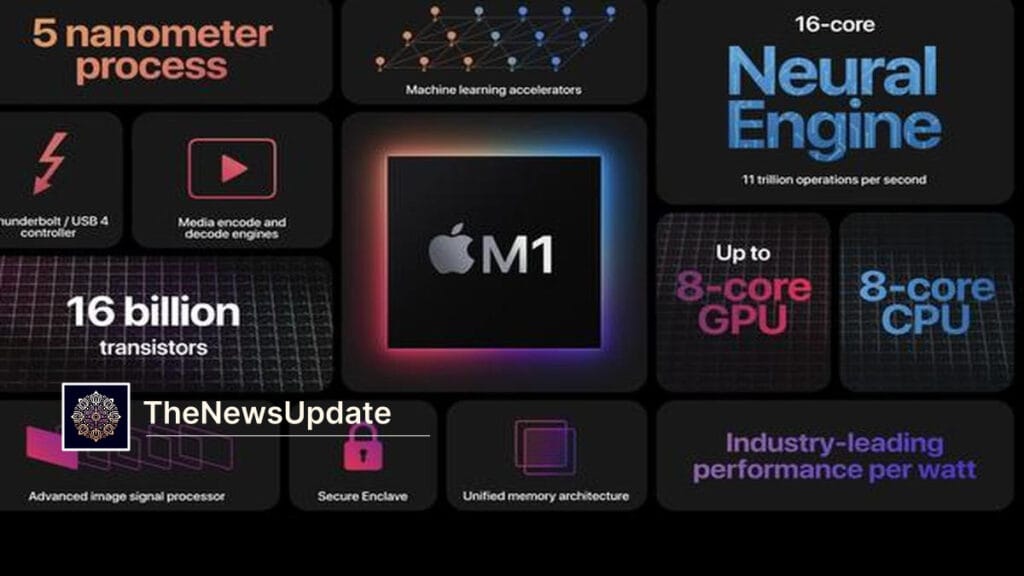
If Apple truly adopts Intel as a foundry partner, it would symbolize a notable reversal in their relationship. In 2020, when Apple completed its shift away from Intel processors in Macs, many assumed that the company would minimize its reliance on Intel indefinitely. Apple’s rollout of the M1 chip symbolized both technological independence and confidence in its own silicon design capabilities.
The potential new collaboration indicates that Apple’s break from Intel was never personal — it was strategic. Apple needed chips that Intel struggled to deliver at the time. Now, with Intel repositioning itself as a competitive foundry rather than a competitor in CPU design for Macs, the relationship makes financial and logistical sense.
यह भी पढ़े:
 New York Times Reporter, Authors Sue Google, OpenAI, Meta Over AI-Based Copyright Infringement
Furthermore, Apple likely sees benefits in encouraging multiple advanced semiconductor industries to thrive, especially within the United States. As manufacturing challenges become increasingly global, having more than one reliable partner reduces risk and promotes resilience.
TSMC Still Dominates Apple’s Chip Manufacturing
Despite the promising reports of Intel’s involvement, TSMC remains the dominant and primary foundry for Apple’s chips. The Taiwan-based semiconductor giant currently commands Apple’s full portfolio of A-series (iPhone/iPad) and M-series (Mac/iPad) processors — including the most advanced variants used in the MacBook Pro lineup.
TSMC’s advantages include:

- Leading-edge 3nm and upcoming 2nm nodes
- Unmatched reliability and yield rates
- Close engineering collaboration with Apple’s silicon teams
Apple is unlikely to shift away from TSMC for its high-performance chips in the immediate future. Instead, Intel is expected to support Apple by absorbing part of the large-scale demand generated by mainstream products.
Could Intel Make Higher-End M-Series Chips in the Future?
It is too early to determine whether Intel could eventually manufacture higher-tier Apple chips such as the M Pro, M Max, or M Ultra. These chips require extremely dense, high-performance designs, sophisticated packaging technologies, and highly reliable yields — areas where TSMC currently leads.
However, if Intel’s 18AP node is successful and future nodes like 14A achieve leadership performance, Apple may gradually offload more chip variants to Intel, especially if it aligns with Apple’s long-term supply-chain risk strategy.
यह भी पढ़े:
 Indie Band Claims AI Stole Their Billie Eilish Cover, Raising Fresh Fears Over Music Copyright
What This Means for the Market
If Intel successfully brings Apple onboard as a foundry customer, it could reshape the future of the semiconductor industry. Intel could regain credibility, investors might regain confidence in its long-term roadmap, and TSMC would face more competitive pressure. Apple would benefit from reduced risk and potentially better pricing options across suppliers.
For consumers, the impact would likely be positive. More competition in manufacturing translates to better chip supply, fewer production delays, and higher innovation in future Apple devices.
Conclusion
Apple’s potential decision to rely on Intel for entry-level M-series chipset manufacturing marks a significant turning point in both companies’ histories. For Apple, it reflects a calculated move toward expanding production capacity and reducing supply-chain vulnerability. For Intel, it represents a golden opportunity to demonstrate that its aggressive foundry comeback strategy is working.

As the semiconductor landscape evolves, partnerships like this may become increasingly common — blending the strengths of global tech leaders in pursuit of performance, stability, and scalability. If Intel’s roadmap stays on track, 2027 could mark the beginning of a new era in Apple’s hardware evolution and Intel’s foundry revival.