Table of Contents
- Background — The Announcement and Its Tone
- Numbers & Context — How Big Is This Wave?
- Four Career Lessons from the Amazon Layoffs
- Human Costs and Corporate Accountability
- The Role of AI: Scapegoat or Accelerator?
- Practical Steps for Employees and Employers
- Policy Implications & What Governments Should Do
- Conclusion — Learn, Unlearn, Relearn
Background — The Announcement and Its Tone
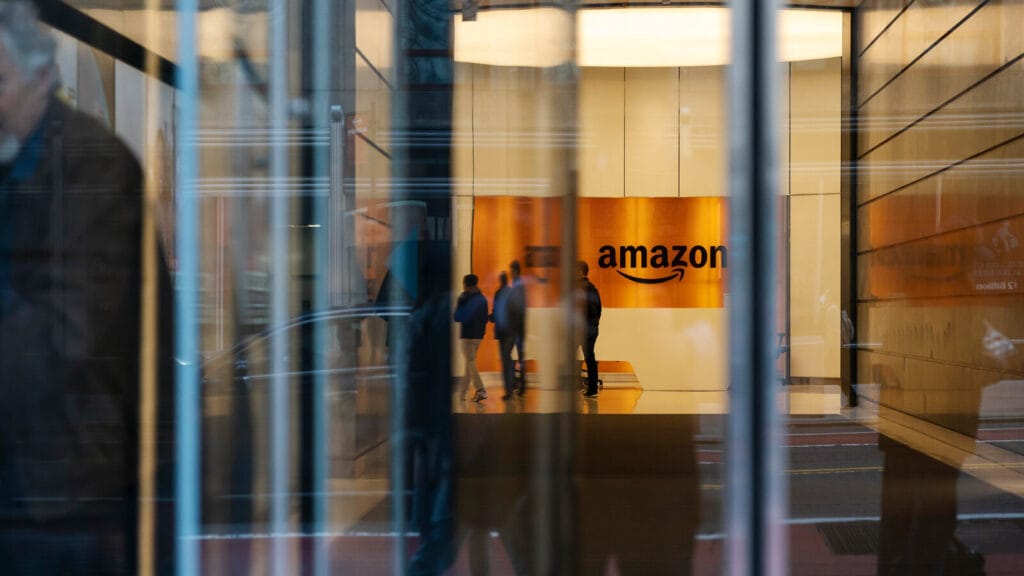
In October–November 2025, news broke that Amazon had decided to cut about 14,000 corporate jobs. Many employees reported learning the news via terse early-morning text messages or brief emails rather than face-to-face conversations or manager calls. That delivery — the shape and speed of the message — quickly became as important in public debate as the headcount itself.

The phrase Amazon layoffs 2025 has since come to symbolise not only large-scale restructuring but also a shift in how companies treat the human side of workforce change. For workers, a text announcing the end of employment is more than an administrative notice; it is a rupture in dignity and trust. For leaders, the method raises questions about executive responsibility, communications protocols, and long-term employer brand damage.

Numbers & Context — How Big Is This Wave?
Amazon’s 14,000 cuts were not an isolated event. The tech sector in 2025 has seen sustained job reductions across regions and companies as firms reconcile slower demand, tighter cost targets, and the economic realities of post-pandemic markets. In India alone, industry trackers reported over 112,000 job cuts across more than 200 companies in 2025; globally, dozens of large firms announced significant reductions. Against this backdrop, the label Amazon layoffs 2025 captures scale and symbolism.
Company statements framed the move as part of an “efficiency” and “streamlining” effort — flattening layers and reallocating investment toward strategic areas like AI and cloud services. But the human numbers — severance counts, affected teams, and the ripple effects into contract vendors and local economies — are where the policy, reputational, and social impacts become visible.
Four Career Lessons from the Amazon Layoffs
The fallout from the Amazon layoffs 2025 produces pragmatic lessons for anyone building a career in 2025. These are tactical and actionable — not doom-laden.

1. Skill Over Security
The era of lifetime employment at one employer is shrinking. Workers must prioritise transferable skills: data literacy, cloud tooling, AI-aware workflows, product thinking, and strong cross-functional communication. Recruiters are increasingly screening for outcomes and demonstrable skills rather than tenure alone.
2. Treat Your Role Like a Portfolio Project
Rather than anchoring identity to a single job, treat each role as a portfolio of measurable impact. Maintain external artifacts — case studies, GitHub repos, public write-ups — that document achievements. This portfolio mindset makes transitions far smoother when layoffs occur.
3. Watch for Signals
Layoffs rarely happen without warning. Hiring freezes, repeated reorganisations, “efficiency” meetings, and leadership churn are signals to update your CV, reconnect with mentors, and open exploratory conversations. Responding early is far less costly than scrambling during a sudden notice period.

4. Students: Redefine the Dream Job
For students and early-career professionals, brand prestige matters less than learning velocity. Choose roles that offer exposure to modern tooling and product cycles; your accumulation of applied experience is what will protect employability more than a marquee employer logo.
Human Costs and Corporate Accountability
Numbers obscure real lives. The Amazon layoffs 2025 story is magnets-and-summaries for analysts, but behind every figure is a family budget, a planned relocation, or a child’s tuition. Impersonal notifications exacerbate trauma, creating reputational fallout that can affect hiring, employee trust, and customer perception.
Some companies try to offset harm with severance packages, transitional pay, and internal placement windows. These measures matter, but they do not erase the psychological and logistical shocks of sudden unemployment. Employers that want to preserve trust must invest in fair processes, personalised transitions, and transparent rationale.
यह भी पढ़े:
 Top Sarkari Naukri Schemes in Bihar: 10 Employment & Skilling Initiatives Launched by Nitish Kumar
The Role of AI: Scapegoat or Accelerator?
Executives often cite automation and AI as drivers of workforce change. In many cases, AI acts as an accelerant rather than the sole cause: it changes required tasks and reduces demand for routine work, prompting firms to reconfigure roles and headcounts.
The phrase Amazon layoffs 2025 therefore carries an implicit policy debate: how do organisations balance efficiency gains from AI with social responsibilities to workers whose skills are displaced? The honest reality is that AI reshapes job content and speed; it does not, by itself, relieve organisations of their duty to manage transitions ethically.
Practical Steps for Employees and Employers
For Employees
- Map transferable skills: Identify which capabilities travel across roles and industries and invest in them.
- Build an external network: Regularly engage with peers, mentors, and recruiters.
- Maintain a living portfolio: Publish case studies, tutorials, or code that demonstrates measurable impact.
- Negotiate safety nets: When changing jobs, clarify severance, notice periods, and options for internal mobility.
For Employers
- Communicate with dignity: Where possible, use direct conversations rather than impersonal messages. Transparency preserves trust.
- Invest in reskilling: Offer clear pathways and time-limited training to help affected staff transition.
- Be transparent about strategy: Share the data and rationale behind decisions to reduce speculation and internal churn.
Policy Implications & What Governments Should Do
Large-scale layoffs such as Amazon’s prompt public policy questions about social safety nets and workforce transitions. Lifelong-learning subsidies, rapid re-skilling vouchers, and portable benefits are potential responses. Some countries already subsidise reskilling programs; scaling those models could support market resilience and reduce the human cost of structural shifts.

Policymakers must also consider tax incentives for companies that invest in internal mobility, and regulations that encourage humane transition practices. If a text can end a career chapter, public institutions need to ensure a robust buffer exists to protect income and retraining opportunities.
Voices from the Market
Recruiters and industry leaders are reframing career advice around adaptability. “Adaptability is the new longevity,” said a senior recruiter in recent coverage — a sentiment echoed across boardrooms and career forums. Workers who continuously refresh their technical and interpersonal toolkits are more resilient in turbulent labour markets.
For more hands-on guidance, visit our Career Advice hub for resume templates, interview prep tips, and reskilling pathways.

What This Means for India
India’s tech ecosystem is particularly exposed: a large share of global corporate operations and a young workforce mean that global layoffs ripple quickly through local markets. With over 112,000 tech job cuts reported across India in 2025, the Amazon layoffs 2025 episode is a catalyst for policy conversations around vocational training, industry-academia linkages, and unemployment mitigation.
How to Tell If You’re At Risk
Common precursors to layoffs include hiring freezes, budget cautions, repeated “efficiency” meetings, and leadership reshuffles. If your company shows these signals, treat them as an alert: upskill, network, and prepare a financial runway. Practical readiness can shorten time-to-rehire significantly.
Conclusion — Learn, Unlearn, Relearn
The Amazon layoffs 2025 will be analysed in boardrooms and classrooms for years. For individuals, the immediate lesson is clear: cultivate agility. Prioritise skills that are hard to automate, document impact publicly, and treat your career like a portfolio of projects.

In a world where a text can end a career chapter, the best protection you can build is adaptability — skill, network, and a habit of continuous learning. That is the real future of work.
Related Reads
By The News Update — Updated November 4, 2025