Table of Contents
- India’s Rise in the Global Developer Landscape
- AI Lowers Entry Barrier for Indian Developers
- The Third Wave of Software Development
- Vibecoding and the Democratization of Coding
- Why GitHub Sees India as a Global Tech Powerhouse
- AI’s Impact on Developers: Challenges and Opportunities
- Conclusion: India’s Pivotal Role in the AI-Powered Future
India’s Rise in the Global Developer Landscape
India’s developer ecosystem is experiencing a historic transformation. With over 21.9 million developers on GitHub, the country now ranks second only to the United States. Yet, India leads the world in open-source contributions, AI repositories, and GitHub Education users — making it one of the most dynamic tech communities on the planet Indian Developers.
According to Sharryn Napier, Vice President for Asia Pacific at GitHub, this remarkable growth is no accident. “India’s developer community is young, vibrant, and deeply creative,” Napier shared at GitHub Universe 2025 in San Francisco. “With so much support for global enterprises coming out of India, it’s a reflection of the country’s quality, skill, and innovation.”
Over the last year alone, India added 5.2 million new developers to GitHub, marking a growth rate of 31%. This surge reflects how AI technologies and open-source collaboration have empowered Indian talent to take the lead in shaping the future of software development worldwide.
AI Lowers Entry Barrier for Indian Developers
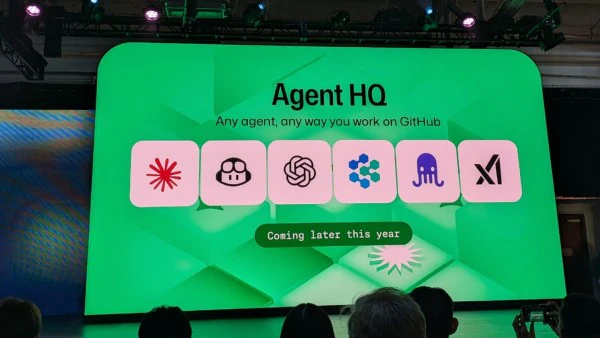
One of the most transformative trends Napier discussed is how AI lowers entry barrier for Indian developers. Tools like GitHub Copilot — an AI-powered coding assistant with over 26 million users — are making it easier than ever for aspiring programmers to start coding without needing years of formal education.
Traditionally, learning to code meant first mastering English, as most programming languages and documentation are written in it. However, with AI systems now capable of interpreting natural language prompts, that barrier is rapidly disappearing. “Copilot allows users to write code in their own language, whether it’s Hindi, Japanese, or Korean,” Napier explained. “For India’s massive young population, that’s an incredible opportunity.”

This shift means that millions of non-English speakers can now contribute to global projects, learn coding concepts intuitively, and even build real-world applications through natural language interaction. As a result, India’s developer base is expanding beyond traditional computer science graduates to include students, hobbyists, and professionals from non-technical fields.
The Third Wave of Software Development
Napier described today’s AI revolution as the “third wave” of software development. The first wave was driven by basic programming, the second by cloud computing and DevOps, and now, the third — by agentic AI, where AI agents help developers automate complex workflows and write better code.
“Everyone is figuring out how to work with agentic AI,” she said. “It’s a complete transformation of the entire industry. My advice to young developers is to embrace these tools and skill up, because everyone is learning together.”
AI-powered tools are no longer seen as replacements for developers but as collaborators that boost productivity. Developers can now focus more on creative problem-solving while delegating repetitive tasks to AI-driven coding assistants.
Vibecoding and the Democratization of Coding
Another exciting trend Napier mentioned is “vibecoding,” a term popularized by AI researcher Andrej Karpathy. Vibecoding refers to using AI tools to create full applications by simply describing them in natural language. No prior coding knowledge is required — just an idea and a prompt.
This development is breaking down long-standing barriers in the software world. Non-engineers, designers, entrepreneurs, and students can now build real software products, leading to a more inclusive digital economy. Napier noted that this change is particularly empowering in India, where creativity and ambition run deep across its youth demographic.
यह भी पढ़े:
 Samsung Bixby Perplexity AI Integration: 7 Key Signs Samsung Is Reinventing Its Voice Assistant
Why GitHub Sees India as a Global Tech Powerhouse
For GitHub and its parent company Microsoft, India is not just a key market — it’s the heartbeat of global software innovation. The company has tripled its team size in India and continues to invest heavily in AI-driven developer education and collaboration initiatives.
“When you visit India, you see that the domestic scale is enormous, but what’s really striking is the global impact,” Napier said. “The work that happens in India creates ripple effects across the world.”
GitHub’s open-source ecosystem provides Indian developers with unprecedented access to global projects. It allows them to collaborate with international teams, build software that solves real-world problems, and showcase their skills to leading organizations worldwide.

AI’s Impact on Developers: Challenges and Opportunities
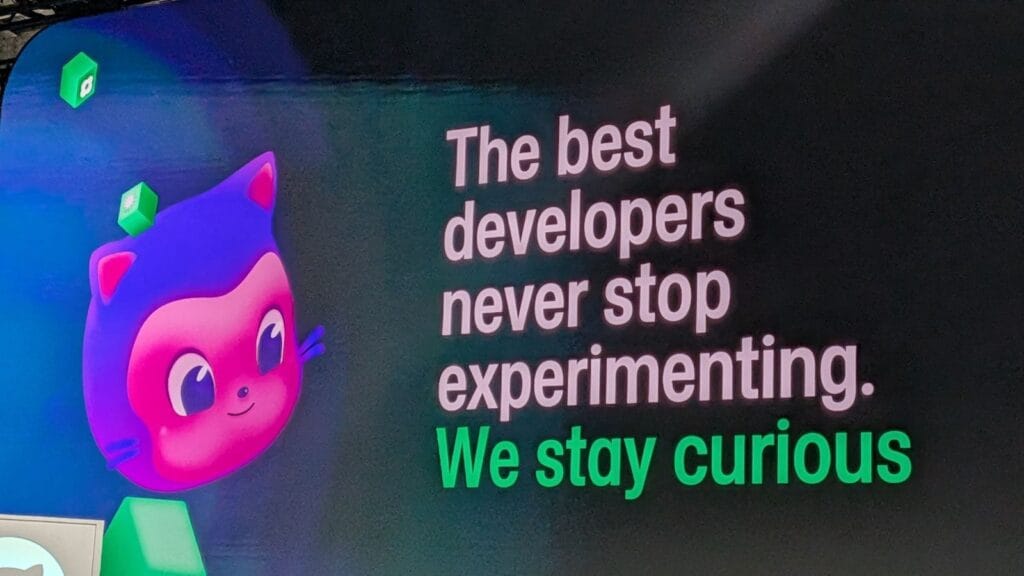
While the AI boom is reshaping software development, it also raises questions about the future of jobs. Could AI tools eventually automate coding entirely? Napier doesn’t think so. “AI is an evolution, not extinction,” she said. “It’s making developers faster, more efficient, and more creative.”
For junior developers, AI tools like Copilot accelerate onboarding by helping them understand existing codebases quickly. For senior engineers, these tools handle routine coding tasks, allowing them to focus on architecture, design, and innovation.
Global leaders like Satya Nadella (Microsoft CEO) and Sundar Pichai (Google CEO) have acknowledged that 25–30% of new code in their companies is now written by AI. Yet, instead of reducing human input, it’s enabling teams to ship higher-quality software faster. Napier added that code quality has improved significantly as developers learn to orchestrate AI agents effectively.
यह भी पढ़े:
 New York Times Reporter, Authors Sue Google, OpenAI, Meta Over AI-Based Copyright Infringement
There’s also an undeniable excitement among developers about what AI can achieve next. “We’ve moved past the fear stage,” Napier said. “Now, it’s about discovering new ways to collaborate with AI and expanding what’s possible.”
Conclusion: India’s Pivotal Role in the AI-Powered Future
AI’s role in software development is expanding daily, and India sits at the center of this transformation. With millions of skilled and motivated developers, a thriving open-source culture, and companies like GitHub fostering inclusive growth, the country is shaping the next chapter of the digital revolution.
As Napier concluded, “AI lowers entry barrier for Indian developers, but it’s also elevating India’s position as a global innovation hub.” The convergence of AI, creativity, and collaboration has made India a cornerstone of the world’s technological progress — and the ripple effects are just beginning.

Related Reads
By The Morning News Informer Tech Desk — Updated October 30, 2025