After nearly two decades of failed IVF attempts, a couple has finally conceived thanks to an AI-powered fertility breakthrough known as the STAR system. AI helps couple conceive Developed by researchers at Columbia University’s Fertility Center, this revolutionary Artificial Intelligence (AI) technology has offered new hope to millions struggling with infertility around the world.
How AI Changed the Course of Infertility Treatment AI helps couple conceive
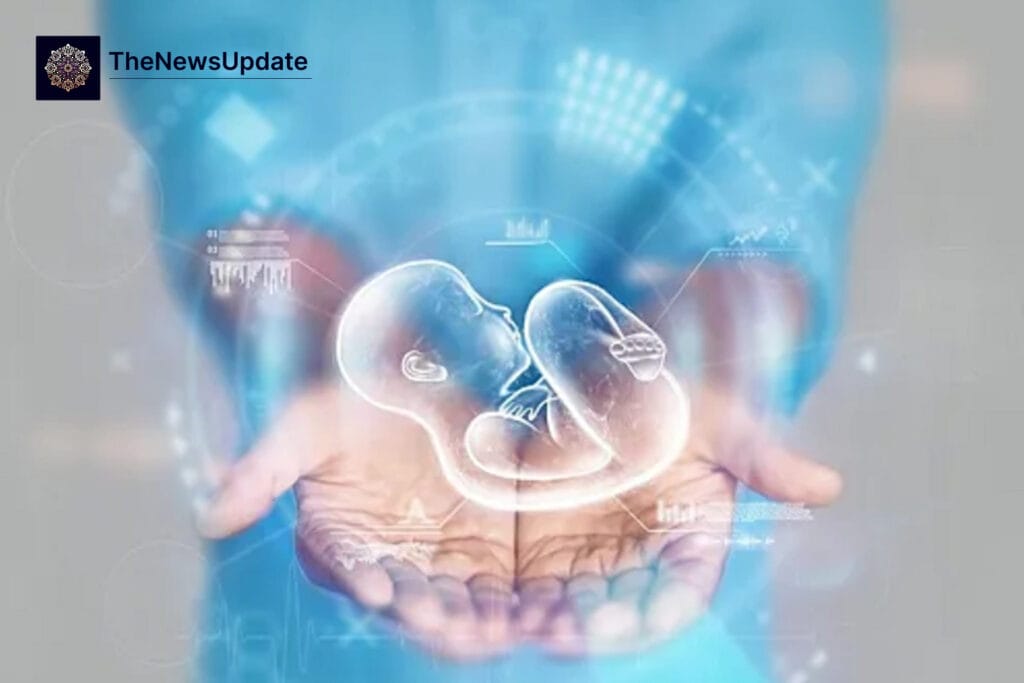
Infertility affects over 15% of couples globally, and for many, the cause lies in male-factor infertility. In this particular case, the 39-year-old male suffered from azoospermia — a medical condition where semen contains no visible sperm. Despite undergoing 15 failed in vitro fertilisation (IVF) attempts and multiple painful surgeries, the couple had no success until they turned to the new AI-based solution known as the STAR (Sperm Tracking and Recovery) system.
Developed by the Columbia University Fertility Center, the STAR system employs high-powered imaging and advanced AI algorithms to detect sperm cells invisible to the human eye. Within just two hours, the AI scanned 2.5 million microscopic images and detected seven sperm cells — two of which were viable and motile. This unprecedented detection made conception possible after 19 long years.
Inside the STAR System: AI’s Role in Identifying the Invisible
The STAR fertility system functions similarly to how astronomers use AI to discover new celestial bodies amid cosmic noise. By applying this principle to biology, researchers trained an AI model to scan sperm samples for the rarest and faintest traces of sperm cells. The technology uses a high-resolution camera and deep-learning algorithms to differentiate sperm from cellular debris — a task that even skilled embryologists struggle with under traditional microscopy.
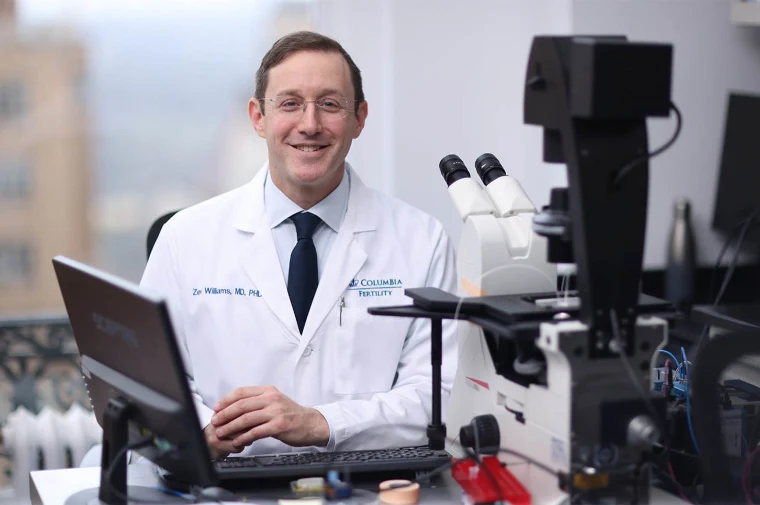
According to Dr. Zev Williams, director of the Columbia University Fertility Center and senior author of the study published in The Lancet, “Many couples with male-factor infertility are told they have little chance of having a biological child. The STAR system changes that narrative.”
The system’s ability to isolate motile sperm using a microfluidic chip and robotic precision means that AI is no longer just analyzing — it’s actively participating in the recovery and selection of sperm cells. The recovered sperm were then used in the Intracytoplasmic Sperm Injection (ICSI) procedure, a process where a single sperm is injected directly into an egg to create embryos.

From Desperation to Discovery: The Couple’s Journey
The couple’s story is one of resilience. After facing emotional and physical exhaustion from years of treatments, they had nearly lost hope. But when they heard about the STAR system’s pilot program, they agreed to participate as a last resort.
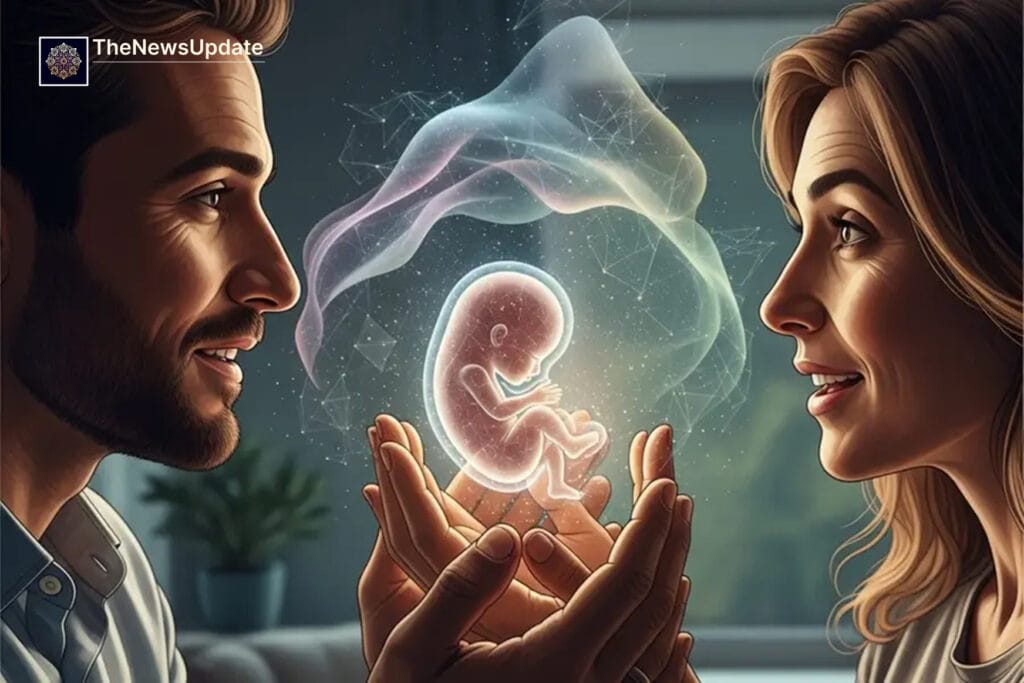
The AI-based process identified two viable sperm cells — a discovery that marked the turning point. After fertilization and embryo transfer, the woman received her first positive pregnancy test in 19 years. At the eight-week mark, an ultrasound confirmed a healthy clinical pregnancy, complete with a strong heartbeat.
This event marked the world’s first successful clinical pregnancy achieved using AI to detect and recover sperm in a complex azoospermia case. It not only changed their lives but also opened a new chapter in reproductive science.

What Makes the STAR Fertility System a Game-Changer?
- Unmatched accuracy: The AI analyzes millions of microscopic images within hours, identifying rare sperm cells invisible to humans.
- Reduced invasiveness: It minimizes the need for painful surgical sperm extraction procedures.
- Improved IVF outcomes: With accurate sperm detection, the success rate of ICSI and IVF procedures could increase significantly.
- Scalability: The AI model can be trained further to handle different sperm disorders and fertility challenges.
Researchers believe the system could soon become a global fertility standard once validated through ongoing clinical trials. The results from these studies may redefine how clinics approach severe cases of male infertility.
The Broader Impact of AI in Reproductive Medicine
AI has already revolutionized diagnostic imaging, oncology, and personalized healthcare. Now, with fertility being one of the most emotionally challenging medical areas, AI is stepping in as a compassionate technological ally. From embryo grading to genetic analysis, machine learning algorithms are improving success rates and reducing human error in IVF procedures worldwide.
The success of the STAR system underscores how AI-powered fertility treatment is not about replacing doctors but empowering them. As Dr. Williams noted, “AI helps us see what humans can’t — and that’s often where hope begins.”
यह भी पढ़े:
 Samsung Bixby Perplexity AI Integration: 7 Key Signs Samsung Is Reinventing Its Voice Assistant
Ethical and Emotional Implications
While the STAR technology brings new optimism, it also raises ethical questions about the role of AI in human reproduction. Critics argue that the technology could lead to “designer baby” concerns or increased dependency on algorithmic decision-making in reproductive health. However, experts emphasize that AI systems like STAR are currently used only as diagnostic and assistive tools under strict medical supervision.
For couples enduring the pain of repeated IVF failures, however, this innovation offers a life-changing opportunity. With AI detecting viable sperm where humans could not, the emotional impact of newfound hope outweighs any speculative concerns.
Global Reactions and Future Prospects
The report published in The Lancet has generated global attention, with fertility centers across Europe, Japan, and India expressing interest in adopting similar AI-assisted systems. The next step for the Columbia team involves scaling the STAR model and initiating multi-center clinical trials to confirm its efficacy across diverse genetic and biological backgrounds.

If proven successful, the technology could potentially reduce global infertility rates, especially in cases where sperm retrieval was previously considered impossible.
Conclusion: A New Era of Hope Driven by AI
The case of this couple conceiving after 19 years of heartbreak represents more than a medical milestone — it symbolizes the fusion of human resilience and machine intelligence. The STAR system’s success story will likely inspire continued innovation in the field of AI-powered fertility treatment.
As larger trials continue, the global medical community eagerly awaits confirmation that AI can reliably aid in one of humanity’s most intimate challenges — bringing new life into the world. For now, the couple’s story stands as a testament to the miracles made possible when technology and compassion unite.
यह भी पढ़े:
 New York Times Reporter, Authors Sue Google, OpenAI, Meta Over AI-Based Copyright Infringement
Read More: Latest AI and TechnSTAR fertility system
ology News