Author: The News Update | Published: November 12, 2025 | Category: Opinion
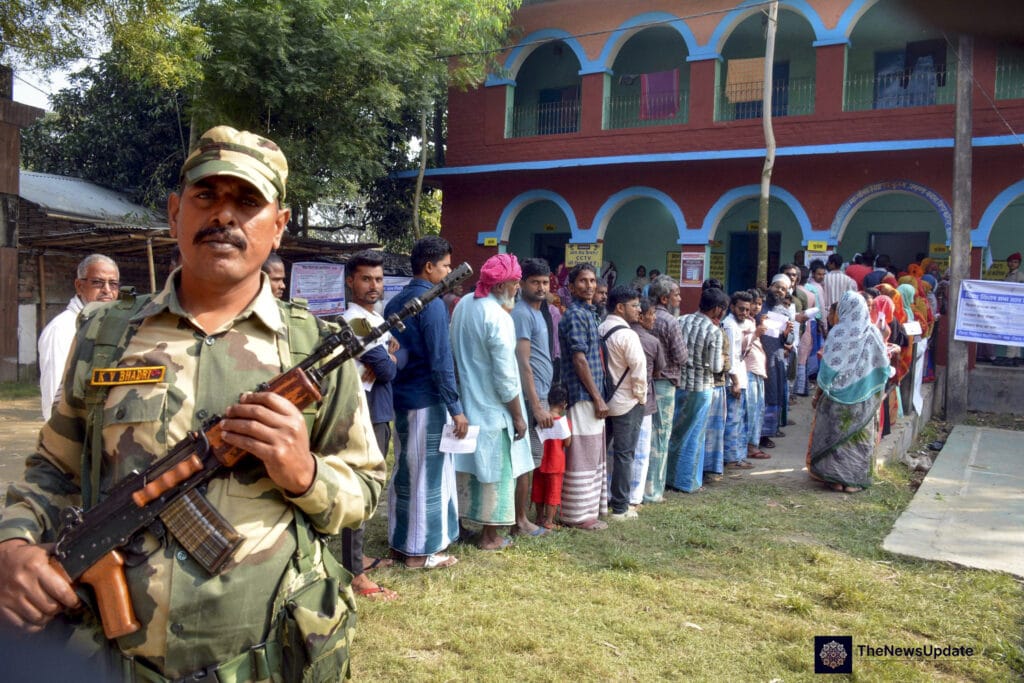
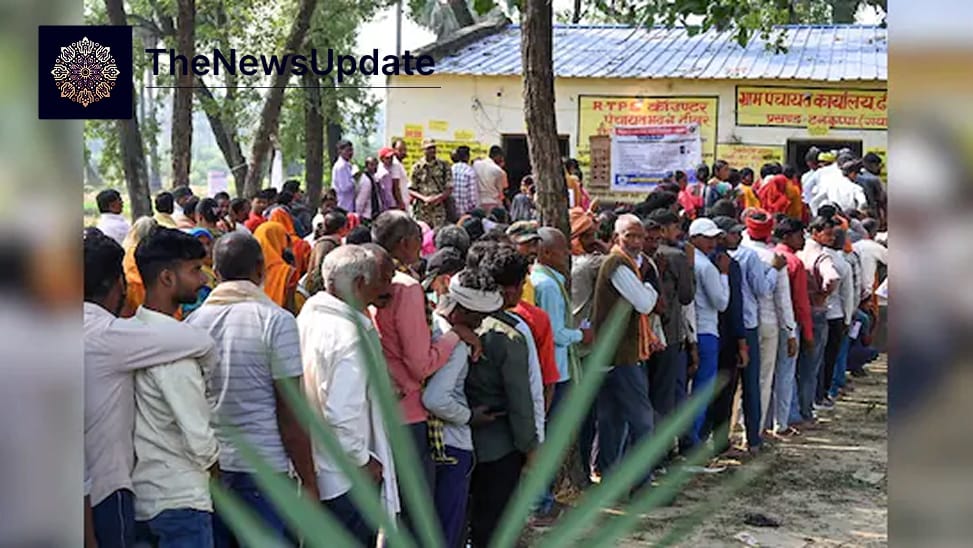
The Bihar Assembly Election 2025 has drawn nationwide attention, Bihar Record Voter not just for its political stakes but also for its record-breaking voter turnout. The Election Commission of India has reported a provisional turnout of 69.1%, a remarkable increase of nearly twelve percentage points over the 2020 polls. Even more striking is the estimated 71.6% participation of women voters, up from 59.7% five years ago. But behind this surge in participation lies a deeper question — does the record turnout really signify a political shift, or is it simply a statistical illusion?
The Numbers Behind the Bihar Record Voter
Historically, Bihar’s voter turnout has oscillated with the state’s changing political landscape. During the 1990s, the “Mandal-era” politics of social justice and caste mobilisation drove participation to over 60%. However, as the decade waned and governance fatigue set in, the turnout dropped dramatically — reaching just 46.5% in 2005. Since then, the state has witnessed a slow but steady rise: 52.7% in 2010, 56.3% in 2015, and 57.29% in 2020.
यह भी पढ़े:
 Osman Hadi Killers Fled to India via Meghalaya Border: Dhaka Police Reveal Shocking Escape Route
In the 2025 election, however, the jump is extraordinary — nearly 12 percentage points higher. But before celebrating it as a renewed democratic awakening, we must consider the context. The Special Intensive Revision (SIR) of the electoral rolls, a controversial exercise conducted earlier this year, reduced Bihar’s total registered voters from 7.89 crore to 7.45 crore — a drop of 44 lakh names, or around 5.6%. This trimming of the rolls automatically inflates turnout percentages, even if the actual number of voters remains similar to previous elections.
The Statistical Mirage: What Turnout Doesn’t Tell Us
As experts point out, percentage figures alone can be misleading. The key metric is not the turnout rate but the total number of votes cast. According to the Election Commission’s data, around 90 lakh more votes were cast in 2025 compared to 2020. After accounting for the usual 25–30 lakh increase that comes naturally over successive polls, the real spike stands at approximately 65 lakh votes — about 8% of the electorate. The question then becomes: who are these 65 lakh new or returning voters?
Some attribute this jump to the emergence of Prashant Kishor’s Jan Suraaj Party (JSP), which entered the political fray for the first time. In a state long dominated by the Nitish Kumar vs. Lalu Prasad Yadav binary, the arrival of a third force may have re-energised disenchanted voters who had previously opted out of the process. This trend aligns with past examples in other states where new entrants have sparked similar surges in participation.
यह भी पढ़े:
 Bulldozer Raj Karnataka Demolitions: Congress Govt Faces Backlash After 400 Muslims Left Homeless
Learning from Other States’ Experiences
For instance, Delhi’s 2013 election saw an 8-percentage-point jump in turnout when the Aam Aadmi Party first contested, breaking the traditional Congress–BJP duopoly. Similarly, Tamil Nadu witnessed an 11-point increase in 2006 when actor-politician Vijayakanth entered the race, adding excitement to a usually bipolar contest. Bihar may be experiencing a comparable dynamic today, with the Jan Suraaj Party acting as a disruptive entrant attracting new sections of voters.
The Gender Factor: Women’s Voter Mobilisation
Equally significant is the unprecedented rise in women’s participation. At 71.6%, women’s turnout in Bihar this year surpasses that of men in several constituencies. The phenomenon isn’t accidental. Both the ruling National Democratic Alliance (NDA) and the opposition Mahagathbandhan have consciously targeted women through welfare promises — from subsidised LPG cylinders and cash transfers to job schemes and health benefits. Nitish Kumar’s long-standing emphasis on women’s education and self-help groups continues to yield dividends, while the opposition countered with pledges focused on economic empowerment.
According to political observers, this growing female participation could be transformative. “The women’s vote in Bihar has evolved from gratitude-based support for welfare to issue-based participation,” says political analyst Dr. Nandini Sinha. “It’s not just about benefits anymore; it’s about recognition and representation.”

The Prashant Kishor Factor and the ‘New Voter’
Prashant Kishor’s Jan Suraaj Yatra has been one of the most ambitious grassroots campaigns in Bihar’s modern history. His strategy of door-to-door engagement, town hall discussions, and focus on local governance has struck a chord, particularly with young voters and first-time participants. With over 18 lakh first-time voters registered in the 2025 election, JSP’s campaign seems to have successfully tapped into their aspirations for change.
However, analysts warn against overestimating Kishor’s immediate impact. “High turnout doesn’t necessarily mean high vote share,” says Patna-based journalist Shashi Anand. “While JSP may have mobilised people to vote, it doesn’t guarantee that all those votes went their way. Sometimes, just the presence of a credible third alternative reinvigorates democracy itself.”
Minority and Migrant Voters: The Silent Push
Beyond JSP, several other socio-political factors likely influenced the numbers. The implementation debate around the Citizenship (Amendment) Act (CAA) and the fears surrounding voter list deletions among minorities may have motivated communities to turn out in greater numbers. Similarly, the Election Commission’s decision to schedule polls after the festival season ensured that migrant labourers, a significant chunk of Bihar’s electorate, were present to cast their votes.
According to RJD sources, the party’s local networks in districts like Darbhanga, Madhubani, and Purnea worked extensively to mobilise minorities and returnee migrants. Meanwhile, the NDA coalition leveraged its organisational machinery to ensure maximum reach across rural areas. The result: heightened competition and increased participation across demographic lines.
How Much of This Is Real Change?
Despite the enthusiasm, experts caution against reading too much into turnout figures before results are declared. Historically, high voter participation doesn’t necessarily favour one side. In many Indian elections, both ruling and opposition camps have benefited from increased turnout, depending on the local context. As The Morning News Informer’s political desk points out, “Turnout is often a mirror of mobilisation, not sentiment. In Bihar, where every vote matters, all sides have fought equally hard.”
The narrowing margins of victory in 2020 — with several constituencies decided by less than 2,000 votes — have made every political party intensify their ground efforts. Both Nitish Kumar and Tejashwi Yadav campaigned extensively across all regions, aware that the 2025 election could mark a turning point for Bihar’s political future.
यह भी पढ़े:
 Canada Hospital Killed Indian-Origin Man: Wife Alleges Medical Negligence After 8-Hour Wait
Voter Turnout and the End of an Era
Bihar’s 2025 election is widely seen as the last major political battle featuring both Nitish Kumar and Lalu Prasad Yadav — two towering figures who have shaped the state’s politics for decades. The emotional weight of this transition may have also inspired higher participation, as voters sensed the end of an era. Younger voters, too, appear motivated by a desire to define the next phase of Bihar’s journey — one focused on jobs, education, and migration challenges rather than legacy politics.
For the first time in years, the conversation in Bihar’s small towns and villages is not about caste equations but about aspirations. Social media campaigns, local influencers, and independent citizen groups have amplified the importance of voting, particularly among rural youth and women. These civic movements, though small, have created a ripple effect that cannot be ignored.
The Bottom Line: Numbers Without Certainty
Ultimately, Bihar’s record voter turnout may not signify a seismic political shift but rather a combination of statistical, social, and procedural factors. A trimmed voter list, the presence of a new political player, targeted outreach to women and minorities, and better electoral logistics have all contributed to this surge. Whether it translates into a reshaped political map remains to be seen once results are declared.
High turnouts, as electoral history suggests, are double-edged swords — a symbol of engagement, but not a guarantee of transformation. Bihar’s democracy appears vibrant, but its direction will only be revealed when ballots turn into seats.
For now, one thing is certain: the people of Bihar have spoken louder than ever. What remains unclear is what exactly they have said.