By The Morning News Informer | Updated: November 12, 2025
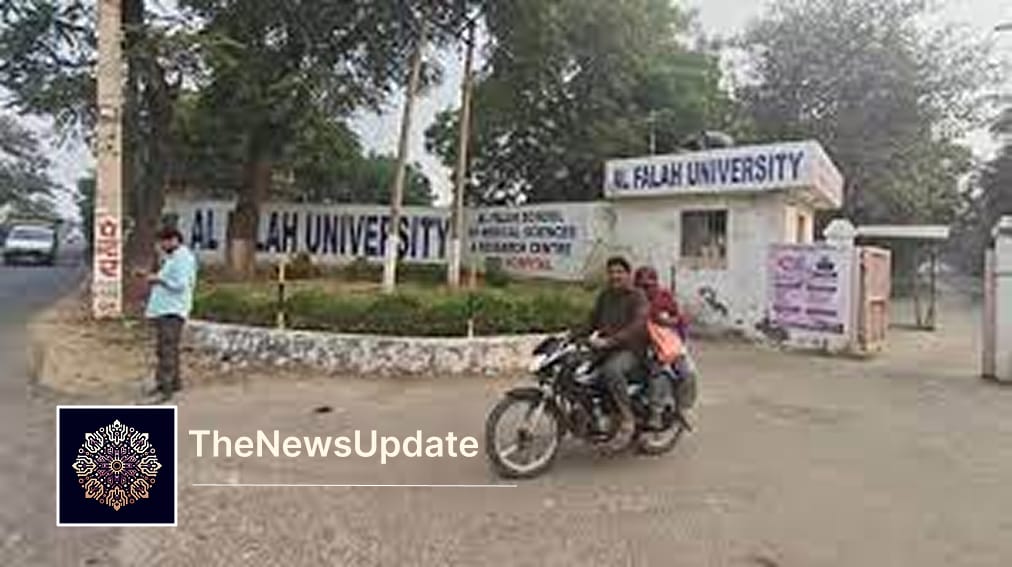
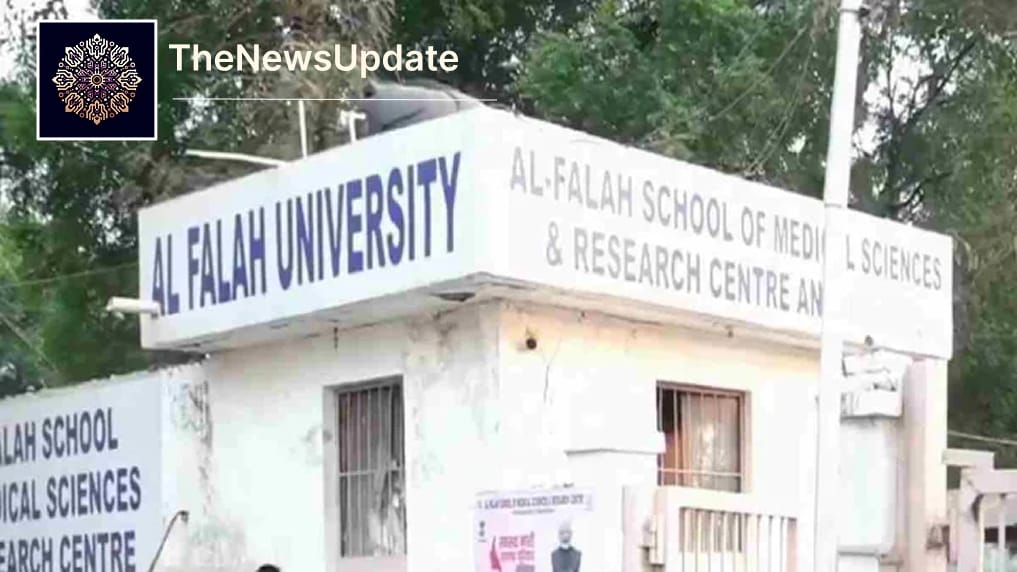
The serene Dhauj village in Faridabad, known for its lush agricultural fields and peaceful community, has suddenly found itself at the epicenter of a high-profile terror investigation. The National Investigation Agency (NIA) and Delhi Police’s Special Cell are probing links between the recent Red Fort blast in Delhi and the alleged ‘white-collar’ terror module connected to Al Falah University.
From Peaceful Campus to National Spotlight
Founded in 1997 as an engineering college and granted full university status in 2014, Al Falah University has long been recognized as an educational institution offering higher studies in engineering, medicine, and management. Located over 30 kilometers from Delhi, the campus sits quietly across 76 acres of green farmland. But that quiet was shattered when investigators uncovered 360 kg of explosives from the rented home of one of its faculty members, Dr. Muzammil Ganaie.
यह भी पढ़े:
 Osman Hadi Killers Fled to India via Meghalaya Border: Dhaka Police Reveal Shocking Escape Route
Hours later, a car explosion near Red Fort in Delhi deepened the mystery — the prime suspect behind the wheel was Dr. Umar Un Nabi, another faculty member from the same university’s medical college. The discovery has put Al Falah University at the centre of what investigators are calling a potential “white-collar radical network.”
Key Suspects Tied to the University
According to official sources, both Dr. Umar and Dr. Muzammil were employed at the Al Falah Medical College, a part of the university established in 2019. Another person linked to the university, Dr. Shaheen Sayeed, was also arrested for alleged connections to the recently formed Jamaat-ul-Mominaat, believed to have ideological ties with Jaish-e-Mohammed.
Investigators have found that Room No. 13 inside the medical college played a pivotal role. It allegedly served as a coordination point for planning the logistics and transportation routes for ammonium nitrate — a chemical commonly used in explosives.
यह भी पढ़े:
 Bulldozer Raj Karnataka Demolitions: Congress Govt Faces Backlash After 400 Muslims Left Homeless
“We suspect that Room 13 was not used for academic discussions but for operational coordination. Several electronic devices and documents were recovered from the site,” an investigator told HT.
Inside the Faridabad Terror Module Case
The case began when the Haryana Police recovered nearly 360 kilograms of ammonium nitrate from the home of Dr. Ganaie in Faridabad. The chemicals were reportedly intended for multiple coordinated blasts across Delhi and nearby regions. The Red Fort car explosion — allegedly involving Dr. Umar — is believed to have been part of this larger network.
Police have also detained a local cleric, Maulvi Ishtiyaq, who conducted sermons at the Al Falah campus mosque. Authorities suspect that the cleric acted as a spiritual motivator and possibly facilitated connections with extremist groups.

How Al Falah Became a Hub of Suspicion
What makes the probe particularly alarming is the academic profile of those involved. Unlike conventional terror cases dominated by foot soldiers, this investigation reveals a disturbing pattern of highly educated individuals — doctors, professors, and researchers — allegedly aiding terror plots through logistics and technology.
Investigators have said that at least three suspects linked to the Delhi blast and Faridabad terror case have institutional or professional ties with Al Falah University. The highlighted that nearly half of the university’s medical staff hail from Jammu and Kashmir, suggesting a recruitment pattern that may now face scrutiny.
Flawed Accreditation and Oversight
Adding to the controversy, Al Falah University’s website reportedly claims that its engineering and education schools are accredited by the National Assessment and Accreditation Council (NAAC). However, officials revealed that these accreditations had expired years ago.
A senior education department officer told Hindustan Times that “the university never renewed its NAAC accreditation,” noting that its engineering wing was rated ‘A’ in 2013 and its teacher education program in 2011 — both valid only for five years.
The Al Falah Medical College, launched in 2019, was approved by the National Medical Commission (NMC). However, the NMC has yet to decide on disciplinary action following the exposure of the alleged terror connections.
University’s Response: ‘We Condemn and Cooperate’
In an official statement, Vice-Chancellor Bhupinder Kaur distanced the institution from the accused individuals, asserting that the university “has no connection with the activities of the detained doctors apart from their employment.”
यह भी पढ़े:
 Canada Hospital Killed Indian-Origin Man: Wife Alleges Medical Negligence After 8-Hour Wait
“We are anguished by the unfortunate developments that took place and condemn the same. The university has extended full cooperation to the investigating agencies,” the VC said.
The university also clarified that no explosive materials are stored on campus and that faculty access to chemical materials is strictly regulated through the medical college’s research labs.
Dhauj Village Reacts to the Allegations
Residents of Dhauj, a predominantly Muslim village with a reputation for hospitality and peace, expressed disbelief. Many locals said the accused doctors were polite professionals who rarely interacted outside their academic circle. However, the sudden surge of police and NIA teams on campus has unsettled the community.
“We never thought something like this could happen here. It’s shocking to see our local university linked to such allegations,” said a shopkeeper near the university gate.
The Broader Security Implications
The Al Falah University terror probe is reshaping the national conversation on how extremist ideologies can infiltrate academic spaces. Experts argue that “intellectual radicalization” — where educated individuals leverage their expertise for extremist goals — poses a significant challenge to security agencies.
Security experts also warn that India needs a robust policy framework for monitoring private institutions that host large international and interstate student populations, particularly in regions close to national capitals.

What Lies Ahead in the Investigation
As of now, the NIA and Delhi Police are working to map the full network of individuals associated with both the Faridabad module and the Red Fort car blast. Authorities believe that the explosives recovered in Faridabad were part of a wider terror logistics chain possibly linked to sleeper cells operating across northern India.
Multiple teams are also verifying the financial trails of the accused, focusing on academic grants, foreign travel, and donations received by charitable trusts affiliated with the university.
Conclusion
The unfolding Al Falah University terror probe has exposed how institutions of learning can unintentionally become conduits for radical networks. Whether through negligence, manipulation, or ideological infiltration, the case underscores the need for closer oversight and stronger academic vetting mechanisms.
As investigators dig deeper into the university’s role, one question lingers: how did a quiet educational institution in rural Haryana find itself connected to one of Delhi’s most disturbing explosions in recent memory?
For Latest Update https://thenewsupdate.blog/