Table of Contents
- Background: The Red Fort Blast and Initial Findings
- Main Investigation: 4 Questions Driving the Red Fort Blast Probe
- Reactions, Forensic Clues, and Investigative Analysis
- Conclusion: What Lies Ahead in the Red Fort Blast Investigation
The Red Fort blast investigation has raised four key questions—was the detonator planted in the car’s bonnet, why was the busy Red Fort area chosen, and was the explosion accidental or planned? Authorities are piecing together clues around suspect Dr. Umar un-Nabi and the mysterious Hyundai i20 that exploded, killing 10 and injuring dozens.
Background: The Red Fort Blast and Initial Findings
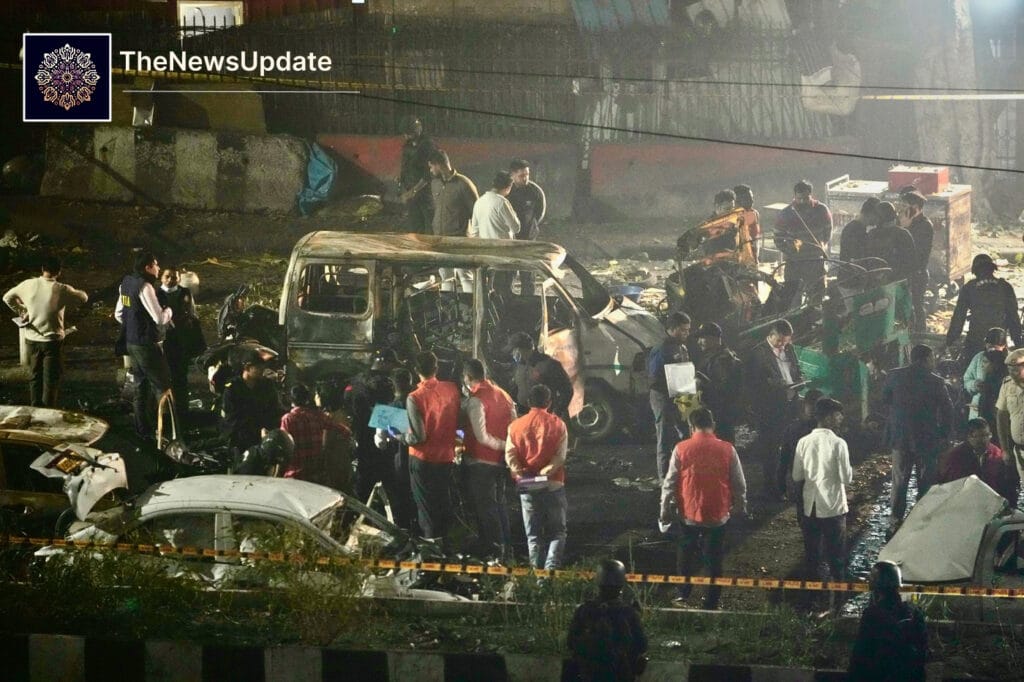
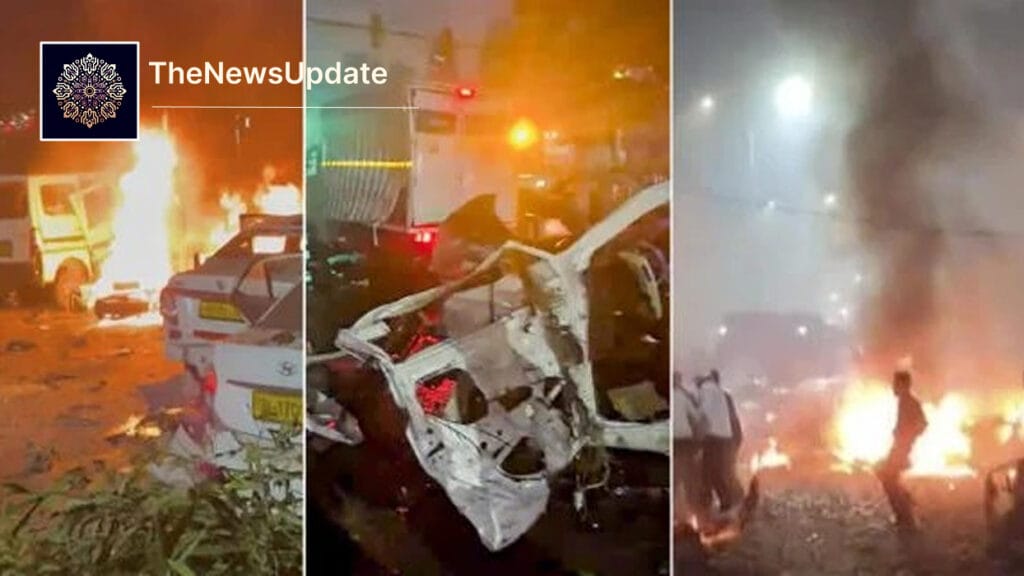
The Red Fort blast investigation has entered a crucial stage as police and forensic experts scramble to uncover how a Hyundai i20 exploded near one of India’s most iconic monuments on Monday evening. The explosion, which occurred at approximately 6:52 PM, killed at least ten people and injured several dozen more, sending shockwaves through Old Delhi’s densely packed lanes. The National Investigation Agency (NIA) and Delhi Police’s Special Cell are jointly handling the probe, which now hinges on four key questions.
यह भी पढ़े:
 Osman Hadi Killers Fled to India via Meghalaya Border: Dhaka Police Reveal Shocking Escape Route
Preliminary CCTV footage and forensic analysis indicate that the white Hyundai i20—allegedly driven by Dr. Umar un-Nabi—was in the vicinity for nearly four hours before the explosion. The car was spotted parked near Sunehri Masjid and later seen moving along Netaji Subhash Marg and Shantivan Road, key routes that connect Daryaganj to Chandni Chowk.
Witnesses described hearing a deafening blast followed by chaos as commuters and shopkeepers rushed to help victims. The area outside Red Fort is among the most secure zones in Delhi, especially given its historical significance and proximity to major traffic intersections. Yet, despite the heavy security, a car loaded with explosives managed to remain in the area for hours—a fact that has deeply unsettled law enforcement.
Main Investigation: 4 Questions Driving the Red Fort Blast Probe
The Red Fort blast investigation is now centered on four critical questions: Why this location? Was the blast deliberate or accidental? Was a detonator hidden inside the car’s bonnet? And who was inside the vehicle? These form the backbone of what investigators call one of the most complex urban terror probes in recent years.
यह भी पढ़े:
 Bulldozer Raj Karnataka Demolitions: Congress Govt Faces Backlash After 400 Muslims Left Homeless
1. Why This Location?
The first and most troubling question is why the attacker chose the Red Fort area—a high-security heritage site under constant surveillance. Investigators suspect that the choice was not random. According to sources within the Delhi Police, Dr. Umar may have been targeting the vicinity of the Mughal-era monument and the adjoining Chandni Chowk market, which is typically crowded during evening hours.
CCTV evidence shows the vehicle was parked near Sunehri Masjid for over three hours and later moved along Netaji Subhash Marg, briefly halting near a prominent temple. Officers believe that Umar may have initially planned to detonate the device near the temple but moved the car because the area was a no-parking zone and police presence was heavy. One officer noted, “He likely panicked and moved ahead when he sensed he might be noticed.”
2. Planned or Accidental?
The second question dominating the investigation is whether the explosion was meticulously planned or an unintended detonation caused by panic or mechanical failure. Investigators are evaluating three scenarios—premeditated attack, panic-induced blast, or accidental ignition due to an unstable device.

Senior officers revealed that Umar’s network was under pressure following multiple arrests of his associates across different states. Monday’s explosion might have been an improvised, desperate act as he attempted to flee with an unstable explosive device. Interestingly, the Red Fort monument itself remains closed on Mondays, suggesting the attacker’s plan might not have gone as intended.
3. Was the Detonator Hidden in the Bonnet?
Perhaps the most striking development in the Red Fort blast investigation involves forensic evidence indicating that the explosive was placed under the car’s bonnet. Officials observed that in earlier footage from Faridabad, the car appeared normal. However, in later footage captured near Sunehri Masjid, the bonnet appeared partially open and secured with a rope.
According to a Delhi Police official, “We have reason to believe that Umar concealed the detonator and possibly an ammonium nitrate fuel oil (ANFO) mixture inside the bonnet. Our suspicions were confirmed after forensic tests revealed high traces of ammonium nitrate concentrated in that section.”
If proven true, this could signal a new level of sophistication in urban bomb-making tactics—using car compartments designed to mislead security checkpoints. The forensic unit’s findings indicate the bonnet area was the explosion’s point of origin, confirming that the device’s placement was deliberate.
4. Who Was in the Car?
Initial reports suggested multiple passengers, but investigators now believe that Umar was alone when the explosion occurred. Earlier footage from Faridabad showed him accompanied by two unidentified men on October 29 at a vehicle pollution check center. However, in subsequent sightings, he was seen alone, including during his entry into Delhi.
Investigators are now tracking the two men to determine their roles in assembling the device. A senior officer from the Special Cell commented, “We have some leads about the identities of the two men and are verifying their locations over the past week.”
यह भी पढ़े:
 Canada Hospital Killed Indian-Origin Man: Wife Alleges Medical Negligence After 8-Hour Wait
Reactions, Forensic Clues, and Investigative Analysis
The Red Fort blast investigation has triggered widespread alarm across Delhi, prompting enhanced security in major markets and transport hubs. The National Security Guard (NSG) and NIA have joined the investigation, deploying advanced bomb-detection teams and forensic analysts to reconstruct the car’s remnants.
Forensic experts are analyzing residues collected from the bonnet, chassis, and surrounding road area. Early tests indicate traces of ammonium nitrate fuel oil (ANFO), a chemical compound often used in improvised explosive devices (IEDs). Investigators also suspect that a secondary triggering mechanism—possibly remote-controlled or manually operated—was installed but malfunctioned.
Officials are not ruling out connections to previously busted terror networks active in Jammu and Kashmir and Faridabad. “We are mapping communications and movement patterns that could reveal a larger nexus,” said an NIA official on condition of anonymity.
Security experts believe this blast mirrors tactics used in earlier urban attacks, including the 2011 Delhi High Court bombing. However, unlike past incidents, this explosion occurred in one of the most monitored zones of the capital, highlighting potential intelligence lapses.
Conclusion: What Lies Ahead in the Red Fort Blast Investigation
As the Red Fort blast investigation deepens, authorities are focusing on reconstructing the final movements of Dr. Umar un-Nabi and his alleged accomplices. Investigators are awaiting results from the Central Forensic Science Laboratory (CFSL) to confirm the exact chemical composition of the explosives.
Meanwhile, Delhi Police have stepped up security across sensitive areas, with additional checkpoints installed near historical sites, metro stations, and markets. Intelligence agencies are working in tandem with local police to trace any cross-border communication that could link the explosion to wider terror networks.
Although early evidence points toward a panic-triggered detonation rather than a fully orchestrated attack, officials are cautious. The incident underscores the need for robust surveillance, intelligence sharing, and swift forensic analysis to prevent future urban terror attempts.
Related Reads
- From Pulwama to Faridabad: Red Fort Blast Probe Focuses on Terror Web
- Read Latest India News on The News Update
By The News Update — Updated November 12, 2025