Table of Contents
- Background on Delhi’s Air Pollution Crisis
- Delhi AQI Slips to Severe Category at 428
- Stage III of GRAP and CAQM’s Nine-Point Action Plan
- Public Health Impact and Citizen Response
- Expert Opinions and Long-Term Solutions
- Conclusion — What’s Next for Delhi-NCR
Background on Delhi’s Air Pollution Crisis
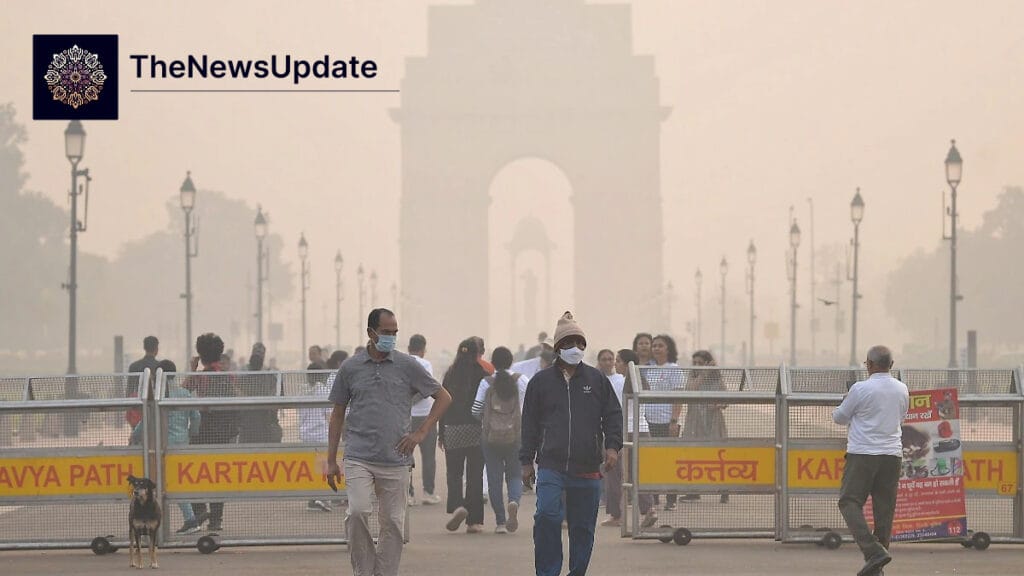
Delhi’s air pollution problem is an annual nightmare that resurfaces as winter approaches. With a dense mixture of vehicle emissions, industrial discharges, biomass burning, and crop stubble smoke from neighboring states, the capital city regularly records the worst air quality among major metropolises worldwide. Meteorological factors like low wind speed and temperature inversion trap pollutants close to the ground, turning the sky into a toxic blanket of smog.
The Air Quality Index (AQI) serves as an indicator of overall air pollution levels. It categorizes air quality into six bands—good, satisfactory, moderate, poor, very poor, and severe. An AQI above 400 is classified as severe, meaning that even healthy individuals may experience breathing difficulties and those with respiratory conditions could face serious health risks.
यह भी पढ़े:
 Osman Hadi Killers Fled to India via Meghalaya Border: Dhaka Police Reveal Shocking Escape Route
Delhi AQI Slips to Severe Category at 428
On Tuesday evening, Delhi’s AQI reached a startling 428—its first entry into the severe category this year. The last such occurrence was recorded in December 2024. According to data from the Central Pollution Control Board (CPCB), this spike resulted from a combination of stagnant weather conditions, rising vehicular emissions, and crop-burning in Punjab and Haryana.
The Commission for Air Quality Management (CAQM) responded promptly by activating Stage III of the Graded Response Action Plan (GRAP). This trigger represents a crucial threshold where emergency curbs are imposed to prevent the situation from deteriorating further. Construction and demolition activities were halted across Delhi-NCR, and school classes for students up to Class 5 were shifted to a hybrid mode to reduce outdoor exposure.
Stage III of GRAP and CAQM’s Nine-Point Action Plan
Stage III of the Graded Response Action Plan introduces nine critical measures to curb pollution sources and safeguard public health. The CAQM’s directives are binding for all Delhi-NCR states, including Haryana, Uttar Pradesh, and Rajasthan. Key actions include:
यह भी पढ़े:
 Bulldozer Raj Karnataka Demolitions: Congress Govt Faces Backlash After 400 Muslims Left Homeless
- Ban on construction and demolition activities to control dust pollution, except for projects classified as essential under CAQM rules.
- Closure of stone crushers and mining operations throughout NCR.
- Restrictions on BS-III petrol and BS-IV diesel vehicles in Delhi, Gurugram, Faridabad, Ghaziabad, and Gautam Buddh Nagar.
- Hybrid schooling for students up to Class V to minimize children’s exposure to polluted air.
- Staggered office hours and public-transport promotion to reduce rush-hour traffic emissions.
- Encouragement of cycling and walking for short distances and avoidance of coal and wood burning.
Authorities have also urged citizens to work from home where possible and to replace open fires with electric heaters for security and domestic staff. Violations of these orders could lead to penalties under the Air (Prevention and Control of Pollution) Act, 1981.
Public Health Impact and Citizen Response
Doctors have warned that an AQI in the severe range poses serious risks to both respiratory and cardiovascular systems. Dr. Arvind Kumar of Medanta Hospital stated that the rise in pollution levels has already led to a surge in outpatient visits for asthma, chronic obstructive pulmonary disease (COPD), and eye irritation cases.
Citizens have responded with a mix of concern and adaptation. Many offices are encouraging remote work, while schools have suspended outdoor activities. Online platforms and resident welfare associations are circulating air-quality updates and mask distribution drives. Meanwhile, the Delhi government’s “Red Light On, Gaadi Off” campaign has been re-launched to reduce vehicle idling emissions at traffic signals.

Expert Opinions and Long-Term Solutions
Environmental experts emphasize that short-term curbs cannot solve Delhi’s pollution problem unless long-term systemic changes are made. Sunita Narain from the Centre for Science and Environment (CSE) urges integration of urban planning with air-quality management. She highlights the need for better public transport networks, electrification of freight corridors, and incentives for green construction materials.
The National Clean Air Programme (NCAP), launched in 2019, aims for a 40% reduction in PM 2.5 levels by 2026, but implementation lags behind schedule. Experts say that coordination between central and state governments remains the key challenge. Without robust enforcement, Delhi risks repeating this annual cycle of toxic air every winter.
Conclusion — What’s Next for Delhi-NCR
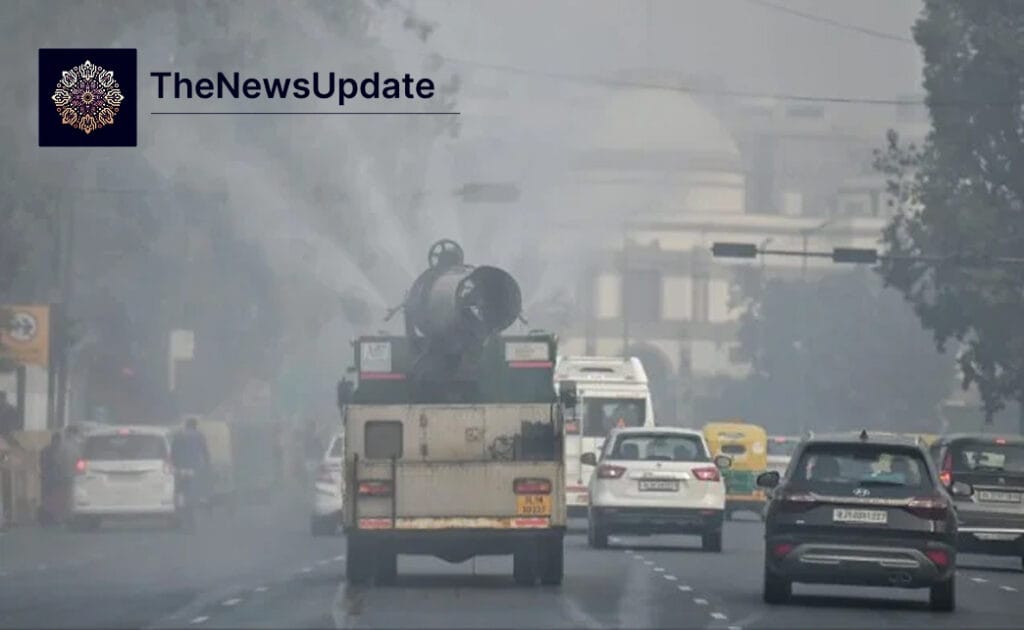
The recorded reading of 428 marks a critical juncture for Delhi’s environmental health. As Stage III restrictions remain in force, residents hope for favorable weather and sustained policy action to bring relief. Authorities are monitoring wind patterns closely, and if conditions do not improve, Stage IV (“severe plus”) measures—including a ban on trucks and closure of non-essential industries—may be enforced.
Delhi’s battle against air pollution is a reminder that individual efforts and government policies must go hand in hand. Cleaner energy, sustainable mobility, and regional coordination remain the cornerstones for achieving breathable air in the nation’s capital.
Related Reads
Follow for latest updates https://thenewsupdate.blog/
By The News Update — Updated Nov 11, 2025