Background: Delhi’s long lull and shifting terror targets
The historic capital, Delhi, had gone over a decade without a major terror strike in its crowded heart India Red Fort blast. Prior large-scale attacks in the city dated back to 2011 and earlier — making the recent incident at the Red Fort metro station all the more striking. (Indian Express)
Between 2000 and 2010, terrorist attacks in India often targeted public spaces, busy marketplaces, trains and civilian concentrations — for example, the 2005 Paharganj blasts, 2008 serial bombings in Delhi and the 2008–11 Mumbai attacks. From around 2011 onwards, the trend shifted: more attacks were aimed at security forces, installations in conflict zones such as Jammu & Kashmir, and fewer strikes in metros and civilian hubs.
The result: a sense of calm in major cities like Delhi and Mumbai — until now. Now the question being asked is: why did the blast near the Red Fort represent a break in that pattern, and what does it signal for the future of India’s counter-terror strategy?

The explosion: What happened near the Red Fort metro station
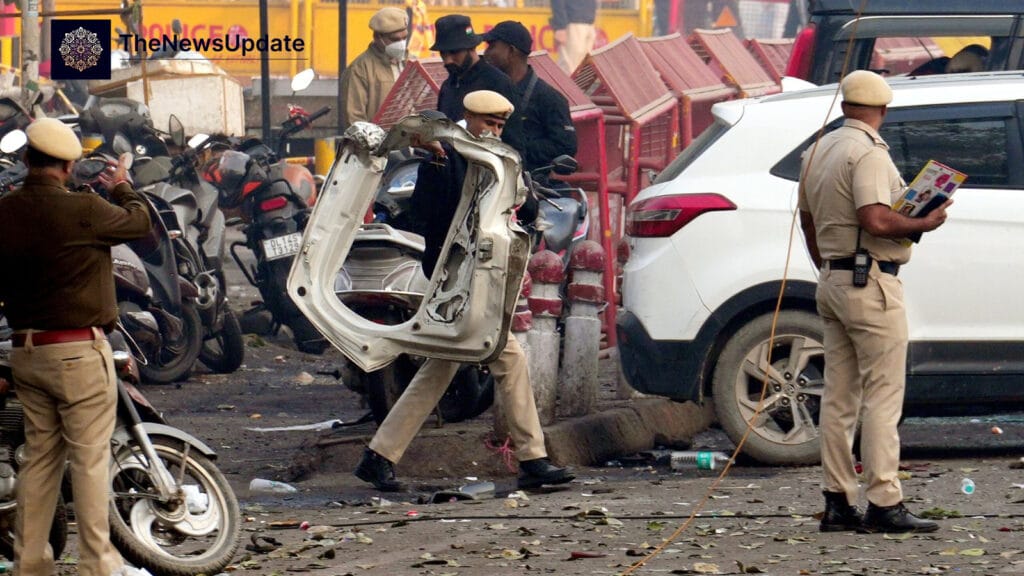
On the evening of November 10, 2025, at around 6:50 pm IST, a slow-moving car — later identified as a Hyundai i20 — came to a stop at a traffic signal near Gate 1 of the Red Fort metro station in Old Delhi. Moments later, the vehicle exploded with devastating effect, killing and injuring several people. (AP News)
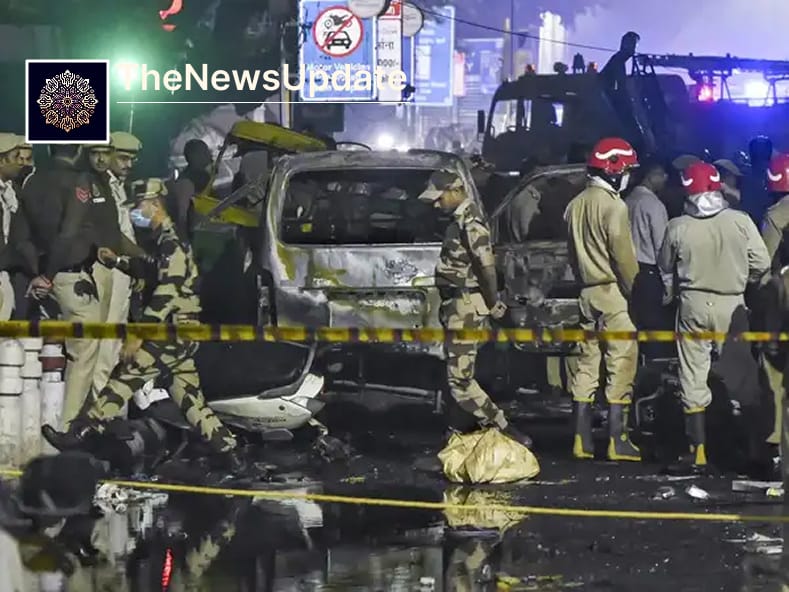
According to official statements from the Delhi Police and fire services, at least eight people were killed and many more injured (reports suggest up to twelve) in the blast and ensuing fire that consumed nearby vehicles and auto-rickshaws. (Times of India)
The scene was one of chaos: vehicles incinerated, bystanders fleeing, windows shattered and a dense security cordon quickly established. Authorities immediately placed Delhi — and key infrastructure in neighbouring states — on high alert.

Investigation takes a sharp turn: What the probe reveals so far
The investigation has rapidly escalated from a local police enquiry to a full-blown national security operation. The case has been officially handed over to the National Investigation Agency (NIA), with involvement from the Forensic Science Laboratory (FSL), the National Security Guard (NSG) and other elite teams.
- The Hyundai i20 is traced to a resident of Pulwama in Jammu & Kashmir, linking the vehicle to the disputed region.
- Investigators are probing use of high-explosive materials such as ammonium-nitrate (ANFO) and a panic reaction by a suspect who may have detonated the device prematurely.
- Authorities have registered an FIR under the Unlawful Activities (Prevention) Act (UAPA), the Explosives Act and other sections of the Bharatiya Nyaya Sanhita.
- Links are emerging to a “white-collar” terror module involving doctors and students in Faridabad, and the Pakistan-based Jaish e Mohammed (JeM). One woman doctor, Dr Shaheen Sayeed from Uttar Pradesh, is alleged to have planned the women’s recruitment wing of JeM in India.
- Security agencies are coordinating nationwide raids and intelligence operations, including across Uttar Pradesh, Jammu & Kashmir and Mumbai. Forensic labs are racing to match samples and review CCTV footage.
Why the blast broke India’s recent terror pattern
The incident near the Red Fort marks several distinct departures from past terror patterns in India:
- Return to public-space targeting — After years of focus on security forces and remote areas, this attack hit an iconic, crowded heritage and civilian zone in the capital.
- Hybrid terror module — The involvement of “white-collar” suspects (doctors, students) and possible women’s wing recruitment suggests a change in operational strategy.
- Domestic resurgence & external link overlap — While the attack appears domestically executed, the JeM link signals cross-border support, sustaining the Pakistan proxy threat in an evolved form.
- High-visibility symbolic target — The Red Fort is not just a tourist landmark; it’s central to India’s national identity. An attack here sends a powerful message beyond casualties.
For counter-terror experts, this incident emphasises the need to rethink the current threat assessment model. The fact that Delhi — previously regarded as relatively insulated from mass-casualty terror — has been struck, is a wake-up call.

Impact on Indian security posture and what’s next
In response to the blast, the Indian government and security agencies have taken swift action to contain further risk and signal deterrence:
- High alert issued in Delhi, Mumbai, Uttar Pradesh and other states; the Lal Quila Metro station and the Red Fort complex were shut for three days for investigations.
- National review meetings convened; Home Minister Amit Shah chaired rapid briefings and directed FSL to match samples and accelerate forensic outcomes.
- For intelligence services, this attack reinforces the need for inter-agency coordination, surveillance of unconventional terror modules (professionals, educated recruits), and crisis-management preparedness in heritage zones.
- From a policy angle, the attack may prompt adjustments in the national terror threat matrix, heritage-zone security protocols and urban bomb threat readiness.
- There is also a diplomatic dimension: the suspected JeM link and Pakistan derivative support may influence India’s cross-border counter-terror posture.
What to watch: Upcoming leads & key benchmarks
The investigation is now at a decisive juncture. Some of the near-term developments to monitor include:
- Forensic Science Laboratory (FSL) report on blast materials and car traces — expected imminently.
- Formal charging of suspects under UAPA and Explosives Act, with first court appearances likely this week.
- Public disclosures by NIA regarding cross-border links, module funding and recruitment networks — especially the women’s wing of JeM under scrutiny.
- Security audit of heritage monuments, crowded public zones and metro stations — new measures expected soon.
- Diplomatic implications: the JeM link could reshape India–Pakistan counter-terror dialogue.
For residents and travellers in Delhi, key alerts remain in place: avoid the affected area near Lal Quila/Chandni Chowk until further notice; be alert and report suspicious behaviour.

Related Reads
By India Today Bureau — Updated: November 11, 2025